 Ultimate guide
Operational Requirements for Indoor Play Businesses
Last Updated: November 18, 2026
Quick Summary
Operational requirements for indoor play businesses are the licenses, permits, safety standards, staffing rules, and cleaning and maintenance routines that keep a space legal and safe every day. Each area must be documented, not just remembered. Requirements are set locally, so confirm your city, county, and state rules before signing a lease.
- Confirm zoning in writing from the planning department before signing a lease.
- Keep a compliance register listing each permit's authority, number, and renewal date.
- Record every equipment inspection with a date, inspector initials, and any corrective action.
- Write a supervision policy that states floor ratios in numbers for each age group.
- Run emergency drills at least quarterly and log the scenario and what changed.
Table of Contents
- What Operational Requirements Cover for an Indoor Play Business
- Licenses and Permits an Indoor Playground Needs Before Opening
- Indoor Play Area Safety Standards and Equipment Requirements
- Staffing, Supervision and Emergency Preparedness
- Indoor Playground Cleaning and Maintenance Schedules
- Building a Daily Operations Checklist for Your Indoor Play Business
- Planning Your Next Step Toward Opening or Running a Compliant Space
- Frequently Asked Questions
What Operational Requirements Cover for an Indoor Play Business
Operational requirements for indoor play businesses are the rules, routines, and records that keep a space legal, safe, and running day to day. They go well beyond the opening-day paperwork. A well-run indoor play space has to satisfy licensing and permit obligations, follow equipment and sanitation standards, staff and supervise children properly, and maintain consistent cleaning and daily checks. Each of these areas has to be documented, not just remembered.
Requirements vary by jurisdiction, so the practical starting point is to confirm what your city, county, and state require before you commit to a lease or a layout.
Most operators find it useful to split requirements into four buckets:
- Regulatory: licenses, permits, inspections, and zoning approvals
- Physical: equipment selection, safety surfacing, and facility layout
- People: staffing ratios, supervision practices, and emergency training
- Routine: cleaning schedules, maintenance logs, and daily checklists
Treating these as one connected system, rather than four separate tasks, makes compliance far easier to sustain.
Licenses and Permits an Indoor Playground Needs Before Opening
Licensing is the first gate, and it is set locally. The practical problem is not knowing that permits exist, it is knowing which office issues each one, in what order, and what happens after opening day.
Start with the approvals most children's play venues typically need:
- Business registration with the state, plus any assumed-name filing if you trade under a different name.
- Local business license from the city or county, which may be separate from zoning approval.
- Zoning confirmation that the site allows a children's play or high-occupancy use. Ask the planning department for written confirmation before signing a lease.
- Building permit if you alter the space, add walls, change egress, or install equipment that affects the structure.
Fire and occupancy inspections typically follow. Confirm the occupancy limit with your local fire marshal in writing and post it where staff can see it.
Two requirements are easy to miss. First, a food service permit may apply if you sell snacks or beverages. Second, signage and certificate-of-occupancy requirements may apply to a change of use even when you are not doing construction.
Build a compliance register rather than a binder of loose paper. For each item, list the authority, the license or permit number, the issue date, the expiration or next inspection date, and the staff member responsible for renewal. Review the register regularly and set reminders well ahead of each expiration.
Watch out: signing a lease before zoning is confirmed is the most expensive sequencing error in this category. A site that works for retail may not allow a high-occupancy children's venue, and unwinding that after the fact can cost the deposit and the build-out.
If you are evaluating this as a prospective operator rather than a local parent, the Founding Partner path at Work Play Stay is the place to learn how the model approaches site selection and compliance planning before you commit.
The main approvals most children's play venues typically need are summarised below.
| Requirement | Issuing body | Key note |
|---|---|---|
| Business registration | State | Plus assumed-name filing if trading under another name |
| Local business license | City or county | May be separate from zoning approval |
| Zoning confirmation | Planning department | Get written confirmation before signing a lease |
| Building permit | Local building authority | Needed if you alter space, walls, egress or structure |
| Fire occupancy limit | Local fire marshal | Confirm in writing and post where staff can see it |
| Food service permit | Local health authority | May apply if you sell snacks or beverages |
Indoor Play Area Safety Standards and Equipment Requirements
Safety standards for an indoor play space cover equipment, surfacing, layout, and inspection. Equipment should be commercial-grade and installed to the manufacturer's specifications, with fall-zone surfacing rated for the height of each structure. Entrances, exits, and any gaps that could trap a small child need to be checked against the applicable guidelines.
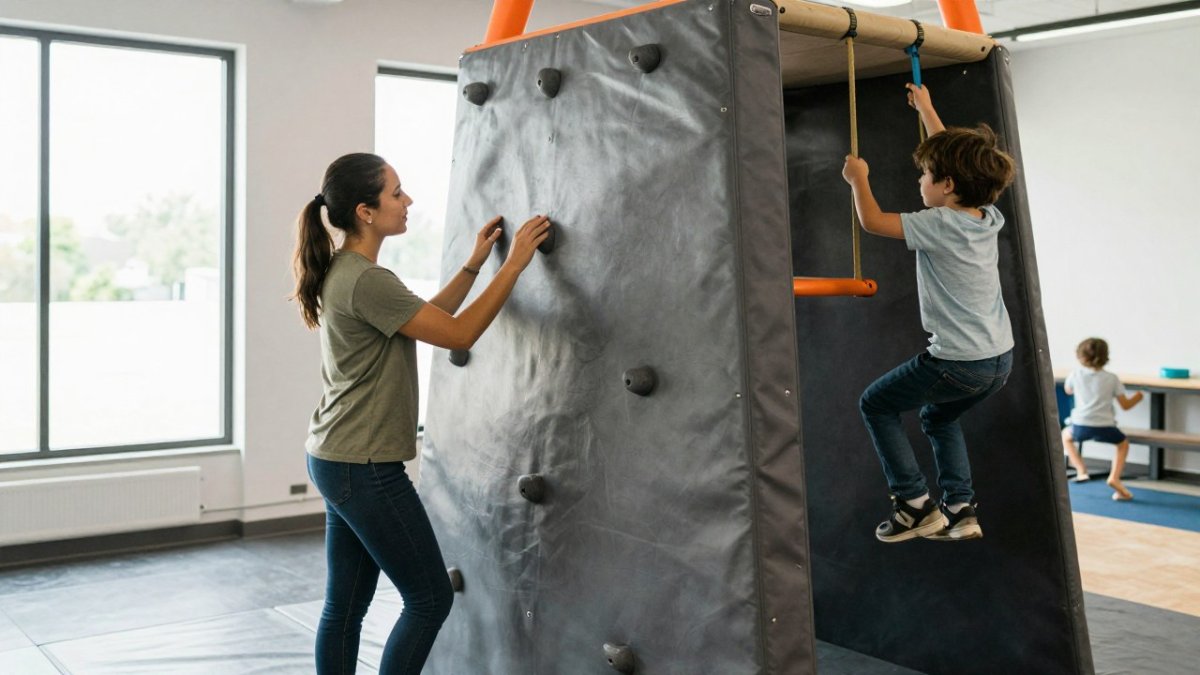
Build a written inspection schedule. Daily checks should look for loose hardware, worn padding, and sharp edges. Weekly or monthly checks should review anchoring, seams, and any moving parts. Record each inspection with a date, the inspector's initials, and any corrective action taken. These logs are the evidence you will need if an incident occurs.
Parents researching these standards can review the detailed safety protocols and equipment inspection checklists in our guide, Indoor Playground Safety Protocols Explained for Parents.
WATCH OUT: Equipment bought second-hand or assembled from a kit often lacks the documentation an inspector or insurer expects. Keep manufacturer manuals and installation records for every structure.
Staffing, Supervision and Emergency Preparedness
Staffing is one of the most consequential operational decisions, and the gap most operators leave is measurement. Parents can review the questions to ask about supervision practices and staff qualifications before choosing a space.
Define roles before you hire. A common pattern is three layers: a floor supervisor who owns the play area and the ratio, play attendants who watch zones and manage check-in and check-out, and a shift lead who handles incidents, parent questions, and the closing checklist.
Training records matter as much as training. Keep a file per employee showing first aid and CPR certification dates, emergency-procedure training, and any equipment-specific instruction. Set renewal reminders before certifications lapse, and note who covered which shift so coverage gaps are visible.
Emergency preparedness is where the draft gap is largest. Write procedures for the scenarios that actually happen in a children's venue: injury, medical event, fire, severe weather, and a missing child. For each, specify who calls emergency services, who clears the floor, who accounts for children, and who communicates with caregivers.
Incident documentation should be a same-day workflow, not an afterthought. Use one incident report form that captures the time, the people involved, witnesses, what happened, the response, and any follow-up.
Watch out: a supervision policy that exists only in a binder is not a supervision standard. If staff cannot state the current floor ratio and the missing-child procedure from memory, the policy is not operating.
For local readers who want to see how supervised childcare and workspace fit together, Work & Stay explains the membership and day-pass options for parents who need flexible childcare while they work.
Indoor Playground Cleaning and Maintenance Schedules
Cleaning and maintenance are continuous obligations rather than occasional tasks. Create a schedule that assigns each area a frequency: high-touch surfaces and play equipment daily, soft play and padding on a set weekly rotation, and deep cleaning and sanitation on a fixed monthly cycle. A guide to evaluating how clean indoor playgrounds are kept in practice shows what to look for. Use disinfectants labeled for children's environments and follow the contact times printed on the label.
Handwashing stations, restrooms, and food areas need their own checklist. Log each cleaning task with the time, the staff member, and the area covered. Consistent logs show inspectors and parents that the space is maintained in practice, not just on paper.
Maintenance follows the same logic. Schedule preventive repairs for equipment, lighting, HVAC, and plumbing, and keep a repair log so problems are caught before they become hazards. If you want a sense of what cleanliness looks like from the customer side, our guide How to Find Clean Indoor Playgrounds: A Scottsdale Guide walks through what to look for.
Building a Daily Operations Checklist for Your Indoor Play Business
A daily checklist turns all of the above into a routine. Open with a walkthrough of the floor, equipment inspection, restroom and handwashing station checks, and confirmation that staffing matches the posted ratios. Close with a reverse walkthrough, a final sanitation pass, a lock-up check, and a summary of any incidents or repairs logged that day.
Keep the checklist short enough that staff will actually complete it. A parent's checklist for judging safe indoor play spaces shows how families view these same routines. Each line should be a single action with a clear yes or no outcome. Store completed checklists for a period your insurer and local regulator require, which often means several years.
Operators comparing their routines against a parent's-eye view can review How to Find Safe Indoor Play Spaces: A Parent's Checklist to see which daily habits families notice.
Planning Your Next Step Toward Opening or Running a Compliant Space
The right next step depends on where you are. If you are still planning, begin with a site-specific compliance review: zoning, building permits, and fire occupancy limits for the space you have in mind. If you already operate, audit your current binder of permits, inspection logs, staffing policies, and cleaning records against the four buckets above, and close the gaps you find first.
Operational compliance is ongoing, so the goal is a system that your team can run every day. Start with the regulatory checklist, then build the physical, staffing, and routine layers on top of it.
Frequently Asked Questions
What licenses and permits does an indoor playground business need?
Requirements vary by city and county, so start by contacting the local building department, the fire marshal and your business licensing office. Most indoor play businesses need a business license, a certificate of occupancy for the space, a fire safety inspection and, where food is served, a food service permit. Zoning approval is also often required for commercial use of a building. Ask each office for a written list of requirements before signing a lease, because permitting timelines can delay an opening by weeks or months.
What safety standards apply to indoor play equipment?
Commercial play equipment is generally expected to follow recognized safety standards, and operators should confirm the applicable guidance with the relevant authorities. Operators should keep manufacturer documentation for each piece, confirm surfacing is appropriate for fall heights, and check for entrapment hazards, sharp edges and loose parts. Your insurer and local fire marshal may also set requirements, so confirm them directly.
How often should an indoor play area be cleaned and inspected?
Many indoor play businesses clean high-contact surfaces daily and perform a deeper sanitation of the space on a set schedule. Equipment should be inspected at opening each day for loose fasteners, worn padding and damaged parts, with a more thorough documented inspection at least monthly. Keep a written log of cleaning and inspections, since those records are what you will show an inspector, insurer or family if an incident occurs.
What staff roles and training does an indoor play business need?
A typical setup includes a manager, floor supervisors who watch the play areas at all times, and front-desk staff who handle check-in and customer questions. Staff should be trained in supervision ratios for each age group, first aid and CPR, incident reporting, evacuation procedures and proper handwashing and sanitation. Document training completion for every employee, and refresh it at least once a year.
What insurance should an indoor playground business consider?
At minimum, most indoor play businesses carry general liability insurance, property insurance and workers' compensation as required by their state. Many also add abuse and molestation coverage, product liability and business interruption insurance. Ask an insurance broker who works with children's play businesses to review your policy, and confirm how waivers and participation agreements interact with your coverage.
What should an indoor playground emergency plan include?
An emergency plan should cover fire evacuation routes, severe weather procedures, medical emergencies, lost child protocols and how to contact parents and emergency services. Post evacuation maps, assign specific staff roles for each scenario and practice drills at least twice a year. Keep an incident report form ready and record every injury, however minor, with the time, witnesses and actions taken.
How do you create a daily operations checklist for an indoor play business?
Break the checklist into opening, midday and closing sections. Opening tasks include a equipment and safety walkthrough, restroom and handwashing station checks, and confirming staff coverage and supervision ratios. Midday tasks include spot cleaning and a check on high-traffic equipment. Closing tasks include full sanitation of surfaces, a count of lost items, a log of any incidents and a review of the next day's bookings. Keep signed copies on file so you can show completed daily procedures during inspections.