 how-to
How to Find Clean Indoor Playgrounds: A Scottsdale Guide
Last Updated: October 23, 2026
Quick Summary
Clean indoor playgrounds in Scottsdale require a systematic inspection of entry areas, bathrooms, equipment, and high-touch surfaces, combined with direct questions about cleaning schedules, disinfection products, and illness policies. Look for visible cleanliness, stocked supplies, staff presence during peak hours, and separate age-specific zones to verify that a facility maintains rigorous hygiene standards.
- Inspect bathrooms first, they are the single most diagnostic indicator of overall cleanliness standards.
- Use a five-stop inspection route covering entry, bathrooms, toddler zones, main structures, and eating areas in 10 to 15 minutes.
- Ask facilities directly about disinfection frequency, cleaning products, sick-child policies, and staff training on hygiene.
- Fail conditions include visible mold, broken equipment with exposed foam, empty soap dispensers, and no visible cleaning during peak hours.
- Separate age zones reduce both safety and hygiene risk, especially for infants who mouth toys and surfaces.
Table of Contents
- Why Cleanliness Matters at Indoor Playgrounds
- Indoor Playground Hygiene Checklist: What to Inspect Before You Visit
- Questions to Ask an Indoor Playground About Safety and Cleanliness
- Indoor Play Spaces for Toddlers: Age-Specific Cleanliness Considerations
- Indoor Playground Safety and Cleanliness: Verifying Policies Before You Go
- What to Bring and How to Prepare for a Clean Play Visit
- Finding Supervised, Well-Maintained Play Spaces in Scottsdale
- Frequently Asked Questions
Why Cleanliness Matters at Indoor Playgrounds
Finding clean indoor playgrounds is one of the most important decisions parents make. Kids explore with their hands, mouths, and whole bodies, so a dirty play space quickly becomes a germ superhighway.
Clean playgrounds reduce illness risk and give parents peace of mind, especially during cold and flu season.
Cleanliness goes beyond appearances.
Parents deserve transparency. This guide shows you what to inspect, what to ask, and how to verify that an indoor playground meets your standards.
Indoor Playground Hygiene Checklist: What to Inspect Before You Visit
A useful inspection is a short, repeatable walk-through with specific things to look at, smell, and touch, done in the same order every time so you can compare facilities.
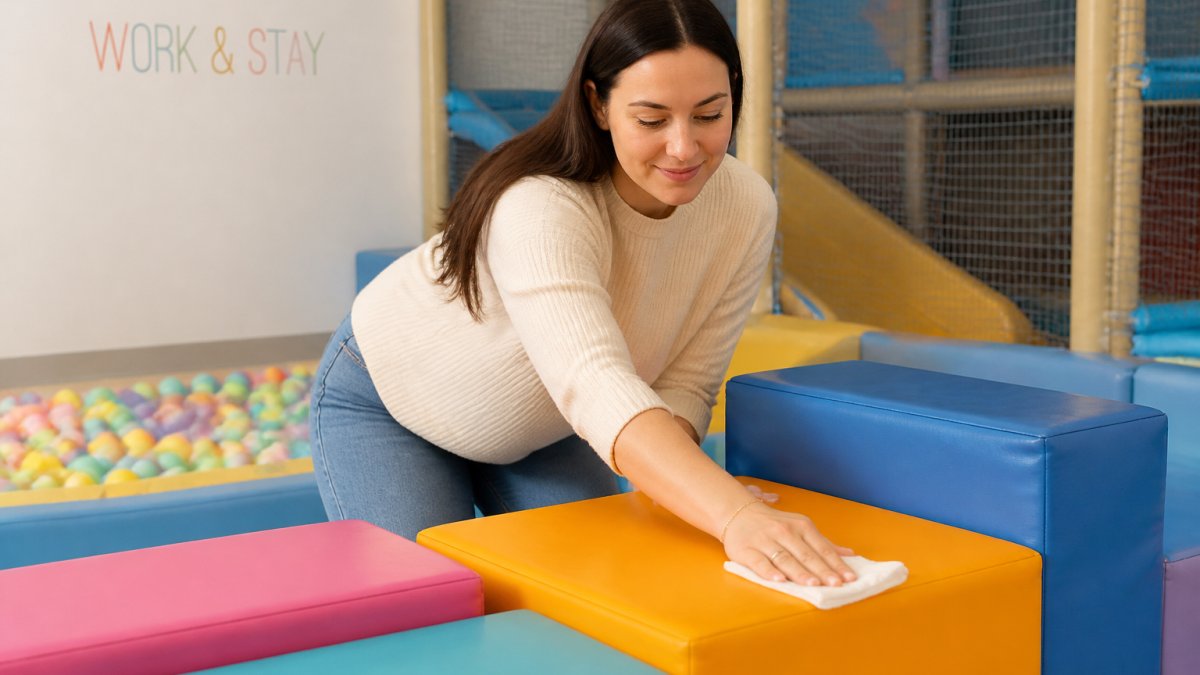
A Five-Stop Inspection Route
Walk the space in this order. It moves from the entry (where staff control is most visible) to the deepest play zones (where cleaning is easiest to skip).
- Entry and check-in. Look at the sign-in surface, the pen or tablet, and the sock or shoe area. Are staff checking children in and noting symptoms? Is there a visible hand-sanitizer station before the play floor? A cluttered, unsupervised entry is a leading indicator.
- Bathrooms and changing area. This is the single most diagnostic stop. Check soap, paper towels, a working faucet, a clean changing table, and a trash can that is not overflowing. If the bathroom is neglected at 10 a.m., it will be worse at 4 p.m.
- Toddler and infant zones. Get low, crawl height. Look at mat seams, the undersides of foam blocks, and the rims of soft structures where hands and mouths go. Run a clean wipe or your finger along one high-touch edge and look at what comes off.
- Main play structure and ball pit. Check for visible debris, torn vinyl, exposed foam, and standing moisture. In a ball pit, look for crushed or discolored balls and debris at the bottom edge.
- Seating and eating area. Check tables, high chairs, and the floor beneath them. Crumbs and sticky residue here tell you how quickly spills are addressed during busy periods.
Pass/Fail Criteria You Can Actually Apply
Vague impressions lead to inconsistent decisions. Use simple thresholds:
- Visible soil: Any sticky residue, crumbs, or dark grime on a high-touch surface is a fail for that zone. One dirty corner is a data point; three is a pattern.
- Odor: A musty or sour smell suggests moisture or inadequate ventilation. A strong chemical smell right at opening can mean disinfectant was applied without adequate dwell time or rinsing.
- Moisture: Damp mats, standing water near a ball pit, or wet foam indicate equipment is not drying between cleanings, a common source of mold and odor.
What to Photograph and Note
Take dated photos of anything that fails and note the time. Specifics get a faster response than "it seemed dirty." Note who you spoke with and what they promised, then follow up, a second visit tells you whether the fix stuck.
Red Flags That Should End the Visit
Some issues are not worth negotiating:
- Visible mold or a strong mildew smell in soft play areas
- Broken equipment with exposed foam, staples, or sharp edges
- No working handwashing access anywhere in the play area
If you see any of these, leave. A clean facility will welcome your questions; a defensive one is telling you something.
Use these simple pass or fail criteria during your inspection walk-through to make consistent decisions across different facilities.
| Inspection Criterion | What to Look For | Fail Condition |
|---|---|---|
| Visible soil | High-touch surfaces like railings and tables | Sticky residue, crumbs, or dark grime present |
| Odor | Air quality in soft play areas | Musty, sour, or overly strong chemical smell |
| Moisture | Mats, foam, and areas near ball pits | Damp surfaces or standing water indicating poor drying |
| Stocked supplies | Soap and paper towel dispensers in bathrooms | Empty dispensers during operating hours |
| Staff presence | Cleaning activity during peak hours | No visible surface wiping or disinfection occurring |
Questions to Ask an Indoor Playground About Safety and Cleanliness
Don't rely on visual inspection alone. Ask the facility directly about their practices:
Cleaning and disinfection:
- How often do you disinfect high-touch surfaces?
- What products do you use to clean equipment?
- Are the cleaning products safe for children?
Illness prevention:
- What is your sick-child policy?
- Do you require proof of vaccinations?
- How do you handle outbreaks of illness?
Equipment maintenance:
- How often do you inspect equipment for damage?
- What is your replacement schedule for worn toys and mats?
- Do you clean toys between uses?
Staffing and training:
- Are staff trained in first aid and CPR?
- How much staff training focuses on hygiene?
- What is your staff-to-child ratio?
A facility confident in its practices will answer directly; vague or evasive responses suggest weak standards.
Indoor Play Spaces for Toddlers: Age-Specific Cleanliness Considerations
Age changes everything about cleanliness. An infant who mouths a foam block, a toddler who crawls and drools, and a 5-year-old who touches every railing have different exposure profiles, and a good facility manages them differently. Ask how the space separates ages, since separation is both a safety measure and a cleaning strategy.
Infants (Under 12 Months): The Mouthing Zone
Infants explore almost entirely by mouth. That makes soft props, fabric, and mat surfaces the highest-risk items in the building.
- Separate infant area: Ask whether there is a dedicated infant zone physically separated from mobile toddlers. A rope or a sign is not separation; a low barrier or a distinct room is.
- Soft prop handling: Ask how fabric toys, pillows, and soft books are cleaned and how often. A common pattern is daily laundering or rotation, with soiled items removed immediately.
- Socks and shoes: Confirm the sock-only or shoe-free rule and whether it is enforced for adults too. Adult shoes track in outdoor debris.
Toddlers (Ages 1-3): The Crawl-and-Grab Zone
Toddlers cover more ground than infants but still mouth toys, fall often, and share everything. Learn how cleanliness standards apply to toddler birthday party venues to help you choose the right setting for your child's celebration.
- Lower equipment and padded surfaces: Look for toddler-height structures with continuous padding and no gaps where small limbs can catch.
- Toy rotation and cleaning: Ask whether toys are rotated so some are always being cleaned, and whether mouthable toys are cleaned between sessions. Toddler rooms that clean only at end of day are a weaker choice for this age.
- Mat seams and corners: These collect crumbs and moisture. Check them at crawl height.
Older Children (Ages 4-6): The High-Touch Zone
Older kids move fast and touch everything, railings, climbing holds, slides, game surfaces, and are more independent about handwashing, so the facility's reminders matter.
- High-touch surfaces: Ask how often railings, climbing holds, and slide edges are wiped during operating hours.
- Handwashing prompts: Look for signs or staff reminders at exits from the play floor and before snack areas.
- Mixed-age play: Ask whether older children are separated from toddlers. Mixed play is fine socially but raises collision and hygiene risk for the smallest kids.
Questions That Reveal Whether Age Separation Is Real
Ask these directly:
- "What physically separates the infant area from the toddler area?"
- "How often are mouthable toys cleaned, and are they removed when soiled?"
- "What is your staff-to-child ratio in each age zone at peak times?"
A facility that answers with concrete practices is managing age-specific risk. One that answers vaguely is likely applying one cleaning standard to every age, exactly the gap you want to avoid.
CDC guidance on preventing illness in childcare settings emphasizes handwashing, disinfection, and illness policies as the three pillars of safety. Look for playgrounds that can describe how they apply those principles differently by age group.
Indoor Playground Safety and Cleanliness: Verifying Policies Before You Go
Policies matter as much as practices. Excellent policies with poor execution won't keep kids safe, and strong daily practices without written policies may be inconsistent.
SIGN UP FOR YOUR MEMBERSHIP TODAY →
Ask to see written policies on:
- Cleaning schedules and disinfection protocols
- Illness policies (when kids should stay home)
- Staff training requirements
Some facilities post these policies online; others keep them behind the desk. Either way, you have the right to review them before visiting.
Sick-Child Policies and Illness Prevention
A strong sick-child policy is your best protection against catching illness at a playground. This policy should specify when kids must stay home.
Common guidelines include:
- Fever above 100.4°F (kids stay home until fever-free for 24 hours without medication)
- Vomiting or diarrhea (stay home until symptoms stop)
- Rashes or skin infections (stay home until treated or cleared by a doctor)
Ask how they enforce these policies: do they screen kids at check-in, do parents self-report, and do staff know the signs of illness?
Also ask what happens if a child gets sick during play, isolation, parent notification, and a quiet space to rest.
Cleaning Schedules and Disinfection Practices
A written cleaning schedule shows commitment to hygiene. Ask to see it. A typical schedule includes:
- Morning deep clean before kids arrive
- Hourly wipe-downs of high-touch surfaces during operating hours
- Spot-cleaning of spills and messes immediately
The facility should use EPA-approved disinfectants or child-safe alternatives. Ask which products they use and why, some use hospital-grade disinfectants, others plant-based options.
Ask how they balance cleaning with keeping the space open, closing areas or cleaning while kids play both work if done properly.
What to Bring and How to Prepare for a Clean Play Visit
Preparation starts at home. A few simple steps reduce germ transmission.
Before you go:
- Make sure your child is healthy (no fever, cough, or other illness symptoms)
- Dress your child in clothes that are easy to move in and wash afterward
- Bring hand sanitizer for your own hands
During the visit:
- Encourage your child to wash hands before eating or drinking
- Remind them not to put dirty hands in their mouth
- Supervise closely to ensure they play safely
After you leave:
- Wash your child's hands and face when you get home
- Change their clothes and wash them separately
- Wash your own hands
Bring a change of clothes in case your child gets wet or dirty.
If your child has allergies or sensitivities to cleaning products, ask about them in advance, some kids react to strong chemicals.
Finding Supervised, Well-Maintained Play Spaces in Scottsdale
Scottsdale families have several indoor play options. When evaluating a playground, use the checklist and questions from this guide.
Look for facilities that prioritize both play and cleanliness, clean indoor playgrounds let kids feel free to explore while parents know the space is safe.
What to prioritize in your search:
- Separate areas for different age groups
- Clear, written cleaning and illness policies
- Friendly, well-trained staff who answer questions
Visit in person before committing to a membership or regular visits.
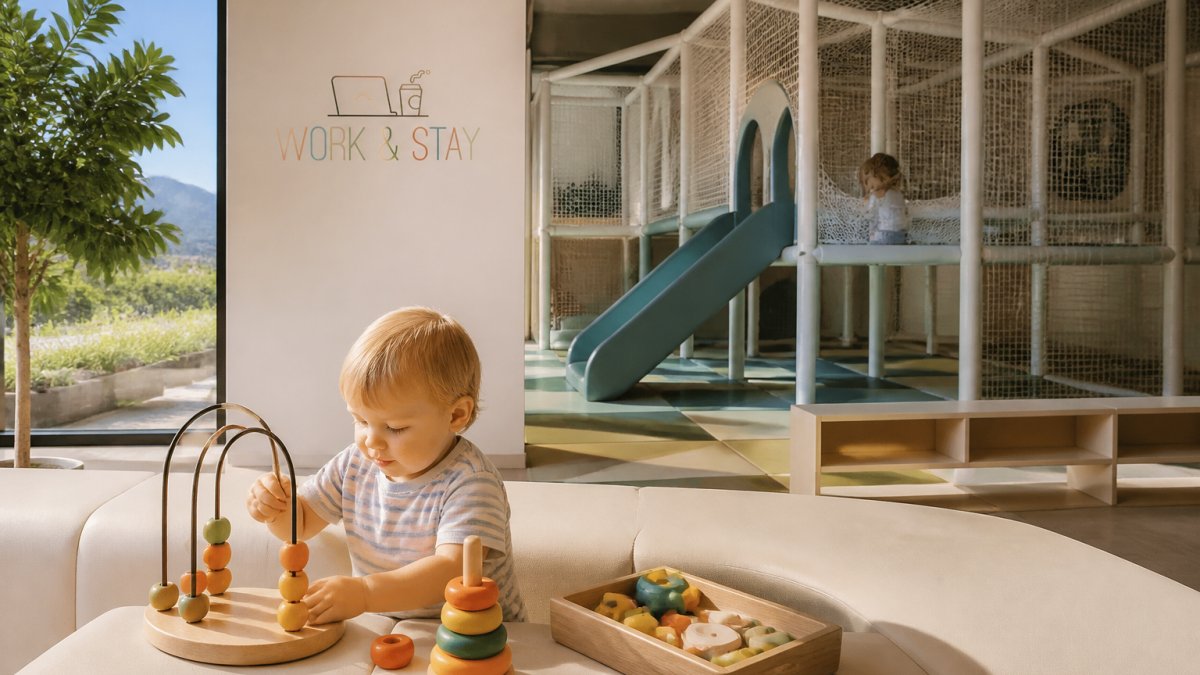
Play & Stay offers supervised open play for children ages 0-6 in a dedicated indoor space.
When you find a playground that meets your standards, you've found a great resource.
Frequently Asked Questions
How can I tell if an indoor playground is clean before I visit?
Visit in person if possible and inspect high-touch surfaces like railings, slides, and soft play structures for visible dirt or stains. Check restrooms for soap, paper towels, and general cleanliness. Ask staff about their cleaning schedule and disinfection practices. Look for organized, clutter-free spaces and well-maintained equipment. If the facility allows, request information about their sick-child policy and sanitizing protocols.
What should I ask an indoor playground about hygiene and safety?
Ask how often equipment is cleaned daily, what disinfectants they use, whether they have a sick-child policy, how staff handle illness exposure, and if changing stations are regularly sanitized. Inquire about staff training in health and safety, whether they check children for signs of illness at entry, and what their protocol is if a child becomes sick during play. Request details on ventilation and air quality management in the facility.
Are indoor play spaces safe for babies and toddlers?
Yes, when properly maintained and supervised. Look for facilities with separate age-appropriate zones for younger children, especially infants and toddlers still in diapers. Verify that changing stations are cleaned between uses, that staff monitor closely, and that soft play equipment is regularly sanitized. Ensure the facility has a clear sick-child policy and that caregivers are trained in infant and toddler supervision. Ask about their approach to preventing cross-contamination between age groups.
What hygiene practices should I look for at an indoor play space?
Look for visible cleaning schedules posted on-site, staff actively sanitizing equipment throughout the day, and accessible hand-washing stations with soap and paper towels. Check that restrooms are clean and well-stocked. Verify that the facility uses EPA-approved disinfectants and that staff understand proper sanitizing procedures. Ask whether they sanitize after each use for high-touch items like railings, or on a set schedule. Observe whether staff practice good hygiene, like hand-washing between interactions with children.
Finding a clean indoor playground takes effort, but it's worth it. Your child's health and safety depend on it. Use this guide to inspect facilities, ask the right questions, and verify policies before you visit. A playground that welcomes your questions and shows its cleanliness standards is one you can trust. Look for a space where kids play freely and parents relax knowing everything is handled with care.