 how-to
Why Choose Indoor Birthday Party Venues for Preschoolers
Table of Contents
- Why Indoor Birthday Party Venues Work for Preschoolers
- Indoor vs. Outdoor Birthday Party for Kids: Key Differences
- Built-In Entertainment and Age-Appropriate Play Activities
- How Long Should a Preschool Birthday Party Last
- Birthday Party Venue Checklist for Parents
- The Real Benefits of Choosing an Indoor Venue
- Potential Drawbacks and How to Plan Around Them
- Frequently Asked Questions
Last Updated: October 20, 2026
Why Indoor Birthday Party Venues Work for Preschoolers
Understanding why choose indoor birthday party venues for preschoolers starts with recognizing the real challenges: young children need space to move and explore safely, and parents need a setup that doesn't mean managing chaos at home. An indoor birthday party venue solves both problems at once. 🎉
Indoor venues offer climate control, built-in activities, and supervised play spaces designed for young children. Drop off supplies, let the kids play, and skip the cleanup, which is why many parents choose indoor venues over outdoor or home celebrations.
Play & Stay, for example, combines a dedicated indoor play space with private party rooms, soft play structures, and guided activities like music and movement. The venue handles the logistics so parents can focus on celebrating with their child.
Indoor vs. Outdoor Birthday Party for Kids: Key Differences
The choice between indoor and outdoor venues shapes the entire party experience. 🌞
Indoor venues give you climate control and weather certainty. Outdoor parties depend on conditions.
Outdoor venues offer open space and fresh air, but demand more parent involvement: decorations, food in the open, supervising a larger area, and cleanup.
Supervision and safety work differently in each setting. Indoor venues have contained spaces with clear boundaries that staff can monitor easily.
Built-In Entertainment and Age-Appropriate Play Activities
Preschoolers learn through play, but how they play changes fast between ages 3 and 5. A venue that works for a 3-year-old may bore a 5-year-old, and a space built for big kids can overwhelm a toddler. The best indoor venues design activities around how preschoolers actually develop. 🎨
Why Developmental Fit Matters More Than Square Footage
Three-year-olds are mastering balance, sharing, and short separations from a caregiver. Four-year-olds test independence. Five-year-olds crave rules, turn-taking games, and small-group pretend play. A venue with layered play, easy entry points for the youngest and a challenge for the oldest, keeps a mixed-age guest list engaged.
Many preschool play spaces zone the room: a padded toddler area for ages 0-2, a soft-climb and slide zone for ages 2-4, and an open movement or pretend-play zone for ages 4-6.
Soft Play Structures and Sensory Spaces
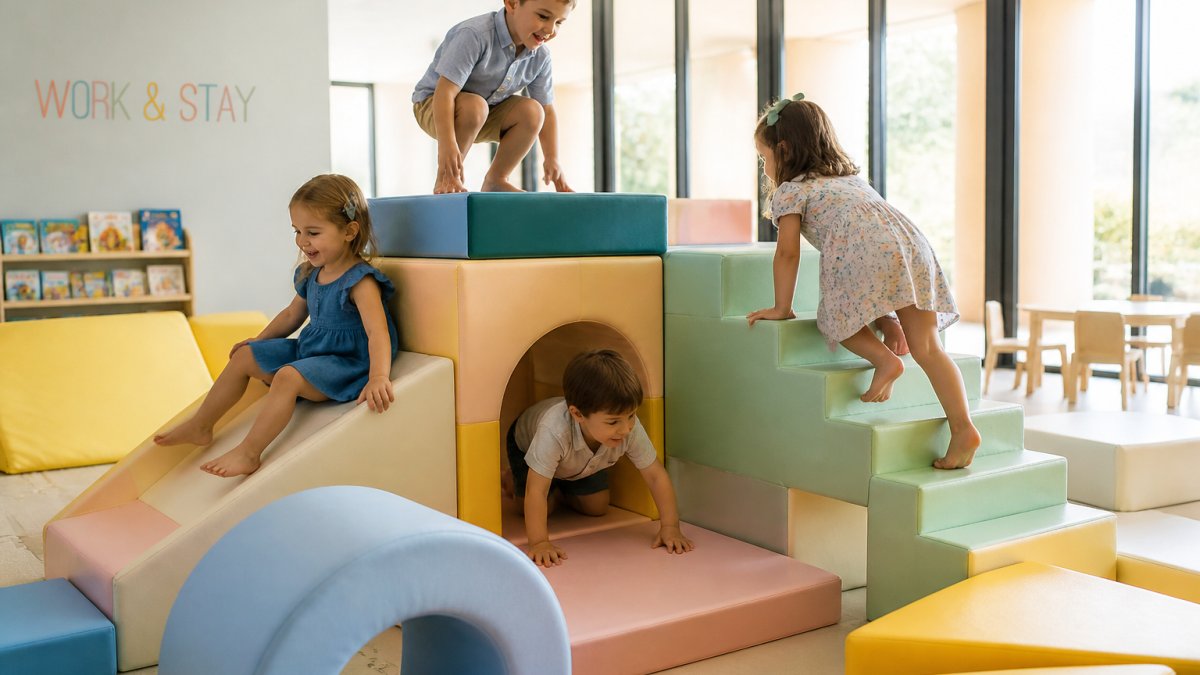
Soft play equipment is built for young bodies.
Sensory design matters just as much. Bright lights, echoing noise, and crowds can tip a preschooler from excited to overwhelmed in minutes. Good venues include:
- A quieter corner or calm-down nook with soft seating, dimmer light, or a tent where an overstimulated child can reset.
- Varied textures and interactive panels that engage developing senses without flooding them.
- Predictable layout so a child can learn the room and move through it confidently.
If your child has sensory sensitivities, ask ahead whether the venue can lower music volume, dim lights, or reserve a quieter time slot for a private party.
Guided Arts, Music, and Movement Activities
Staff-led activities give a preschool party shape. Music and movement sessions, simple art projects, parachute games, and guided freeze-dance or obstacle courses channel energy into a predictable sequence.
Guided activities also solve a practical preschool problem: transitions. Young children move between activities more smoothly when an adult leads the change. A venue that runs a 20-minute guided block, transitions to cake, then returns to free play is pacing the party to prevent meltdowns.
Matching Activities to Attention Spans
A useful rule of thumb: expect roughly 3 to 5 minutes of focused attention per year of age. A 3-year-old may engage for about 10-15 minutes, while a 5-year-old can stretch to 20-25 minutes.
When you compare venues, ask: How many activity stations are there? Can kids move between them freely? Is a staff member leading activities, or is it self-directed play?
How Long Should a Preschool Birthday Party Last
The ideal length for a preschool birthday party is 60 to 90 minutes, which fits preschoolers' attention spans and energy levels. 🕐
SIGN UP FOR YOUR MEMBERSHIP TODAY →
Here's why this window matters:
- First 15-20 minutes: Arrival and free play. Kids settle in, explore the space, and warm up to the environment.
- Next 30-40 minutes: Guided activity or structured play. This keeps momentum going and prevents restlessness.
- Final 15-20 minutes: Cake, snacks, and wind-down. Shorter parties end on a high note before kids get overstimulated.
Parties longer than 90 minutes often see declining behavior as preschoolers get tired, overstimulated, or bored, while parties under 60 minutes may feel rushed once cake and food are included.
Birthday Party Venue Checklist for Parents
A checklist is only useful if you know what a good answer sounds like. Each item below pairs the question to ask with what to look for on a tour and a red flag to watch for. ✓
Safety, Supervision, and Staff Presence
- Is staff present and visible during the party? Ask how many staff members are assigned to your party and whether they stay in the play area or only staff the front desk. Red flag: "Parents supervise" with no staff in the room.
- Are the space boundaries secure? Look for a single entry/exit, a closed door or gate, and staff who check guests in. Red flag: An open floor plan that lets a child slip toward a parking lot or stairwell.
- Is equipment clean, maintained, and age-appropriate? Look for posted age limits on each structure and a visible cleaning routine. Red flag: Worn padding, exposed bolts, or equipment labeled for older kids mixed into the preschool area.
- Are emergency procedures documented and staff trained? Ask directly: "What happens if a child is injured?" and "Are staff CPR and first-aid certified?" Red flag: Vague answers or "we'd call 911" with no on-site plan.
- Does the venue ask about allergies and dietary restrictions? A good venue asks before the party, not at the door. Red flag: No allergy question on the booking form.
- Is first aid accessible? Ask where the kit is kept and who is trained to use it.
Sensory Accessibility and Inclusion
- Is there a quiet space for overstimulated children? Ask whether a calm-down area or separate quiet room is available. Good answer: A designated nook or room a child can step into with a caregiver.
- Can the venue adjust noise and lighting? Ask whether music volume can be lowered and whether lights can be dimmed or strobe effects avoided. Red flag: Fixed loud music with no volume control.
- Is the space accessible for children with mobility needs? Look for ramps, wide doorways, and accessible bathrooms. Ask whether the play equipment can accommodate a child using a walker or wheelchair.
- How are food allergies handled? Ask whether the venue has a nut-free or allergy-aware policy, whether outside food is allowed, and how eating areas are cleaned between parties. Good answer: A written allergy policy and a separate eating area.
- Can the venue accommodate a child who needs extra support? Ask whether a caregiver or aide can attend at no extra charge and whether staff are comfortable with accommodations.
Climate Control and Comfort for Young Children
- Is the temperature comfortable? Aim for roughly 68-72°F. Ask whether the space has its own thermostat or shares one with a larger building.
- Is ventilation adequate? Notice stuffiness or strong odors on your tour, they signal poor air circulation.
- Is lighting bright but not harsh? Look for natural light or soft fixtures rather than fluorescent glare or strobe effects.
- Are noise levels manageable? Listen on a busy day if you can. Echoing rooms overwhelm sensitive ears.
- Are bathrooms clean and child-accessible? Look for step stools, child-height sinks, and a changing table if you have younger siblings attending.
Food, Drinks, and Party-Room Arrangements
- Can you bring outside food, or does the venue provide it? Ask about cake, snacks, and drinks specifically, policies often differ.
- Is there a designated eating area separate from play zones? This keeps crumbs and spills out of the play equipment and reduces allergy cross-contact.
- Are tables and chairs sized for preschoolers? Child-height seating prevents tipping and keeps kids seated through cake.
- What is the cleanup policy? Ask who handles spills, trash, and post-party cleanup, and whether there is a fee for excessive mess.
- Is water available for all children? Ask whether the venue provides water or whether you should bring it.
Questions to Ask on the Tour
Bring these five questions to every venue:
- How many staff will be in the room during my party, and are they first-aid certified?
- What is the capacity, and how do you handle a party that hits it?
- Can you accommodate a child with a food allergy or sensory sensitivity?
- What is included in the package, and what costs extra?
- What is the cancellation and rescheduling policy?
The Real Benefits of Choosing an Indoor Venue
Indoor venues solve specific problems that matter to parents of preschoolers. 💪
Stress-free planning. No weather cancellations, rescheduling, or backup plans.
Built-in entertainment reduces parent burden. You're not managing games from scratch.
Minimal cleanup. The venue handles floors, surfaces, and most of the mess.
Social development happens naturally. Preschoolers interact with other children in a structured, supervised setting, practicing sharing, taking turns, and playing alongside peers. 🌟
Potential Drawbacks and How to Plan Around Them
Indoor venues aren't perfect for every family. Understanding the limitations helps you plan realistically.
Noise levels can be high. Multiple children, echoing walls, and sound systems create noise that sensitive children may struggle with.
Fixed activity schedules may not match your vision. Structured activities on a set schedule can limit flexibility over the party flow.
When you understand why choose indoor birthday party venues for preschoolers, you see how it balances convenience, safety, and your child's developmental needs.
Frequently Asked Questions
What makes indoor birthday party venues better for preschoolers than outdoor spaces?
Indoor birthday party venues offer climate-controlled comfort, weather protection, and built-in entertainment specifically designed for young children. You won't worry about rain, extreme heat, or sun exposure. Staff supervision is constant, and soft play structures are sized for preschoolers' developmental stage. Setup and cleanup are handled by the venue, eliminating stress for parents. Most importantly, the environment is contained and safe, allowing preschoolers to explore freely while you relax knowing they're secure.
How long should a preschool birthday party last?
Most preschool birthday parties work best at 60 to 90 minutes. Younger toddlers (18 months to 2 years) may do better with 45 to 60 minutes before overstimulation sets in. Three- to five-year-olds typically thrive with a full 90-minute experience, which allows time for free play, structured activities, cake, and singing. Shorter durations prevent fatigue and meltdowns, while longer parties risk losing the children's engagement and creating chaos for parents.
What should parents look for in an indoor birthday party venue?
Prioritize venues with trained staff supervision, age-appropriate soft play equipment, and climate-controlled spaces. Check that changing stations and bathrooms are easily accessible, especially for younger preschoolers still in diapers. Confirm the venue handles food and drinks or allows outside catering. Verify that the private party room is separate from open play areas so your group isn't interrupted. Ask about their cleaning and sanitation practices, capacity limits, and what's included in their party packages.
Are indoor birthday party venues worth the cost compared to hosting at home?
Yes, for most families. Indoor venues eliminate the mess, setup, and cleanup burden, you won't spend hours decorating, managing food, or sanitizing afterward. Staff supervision means you can actually enjoy the party instead of managing chaos. The built-in entertainment keeps preschoolers engaged without you scrambling for activities. Weather is never a concern, so you avoid last-minute cancellations or relocations. For many parents, the time saved and stress reduction alone justify the investment.