 how-to
How Long Should a Toddler Birthday Party Last
Table of Contents
- How Long Should a Toddler Birthday Party Last: Quick Answer
- First Birthday Party Duration: What Works for One-Year-Olds
- Birthday Party Activities for 2-Year-Olds and Party Length
- Three-Year-Old Birthday Parties: Extended Time and Attention Span
- Building a Toddler Birthday Party Timeline That Works
- Toddler Birthday Party Checklist: Planning for the Right Duration
- Signs Your Toddler's Birthday Party Is Too Long
- Conclusion
- Frequently Asked Questions
Last Updated: October 15, 2026
How Long Should a Toddler Birthday Party Last: Quick Answer
The ideal toddler birthday party duration depends on your child's age. One-year-olds thrive with 45-60 minute celebrations. Two-year-olds do best with 60-90 minutes. Three-year-olds can handle up to two hours with structured activities and breaks built in. 🎂
Match party length to attention span and energy levels. Toddlers tire quickly, so a shorter celebration where everyone has fun beats a long one that ends in overstimulation and fussiness.
First Birthday Party Duration: What Works for One-Year-Olds
A first birthday party should last 45 to 60 minutes. One-year-olds have short attention spans, tire easily, and are sensitive to overstimulation from noise and crowds.
Schedule the party between naps when your child is well-rested and fed.
One-year-olds won't remember the party, it's really for the family and photos. That takes the pressure off making it elaborate or long.
Birthday Party Activities for 2-Year-Olds and Party Length
Two-year-olds can enjoy a 60 to 90-minute toddler birthday party. They're more aware of what's happening and can engage longer than one-year-olds, but still need breaks and transitions.
Structure the party in short activity blocks: 15 minutes of free play, 10 minutes of a structured activity (like music or dancing), another 15 minutes of play, snack time, and then cake.
Two-year-olds play alongside other children rather than with them. They enjoy sensory activities, music, simple games, and exploring a safe indoor play space.
Three-Year-Old Birthday Parties: Extended Time and Attention Span
Three-year-olds can handle a full two-hour toddler birthday party. Their attention span has grown, they're more social, and they enjoy group activities like games, crafts, and singing.
Include more structured activities: a short craft, a simple game like musical chairs, dancing, singing "Happy Birthday," and cake.
Two hours is still the upper limit for most three-year-olds, and attention spans vary widely.
Building a Toddler Birthday Party Timeline That Works
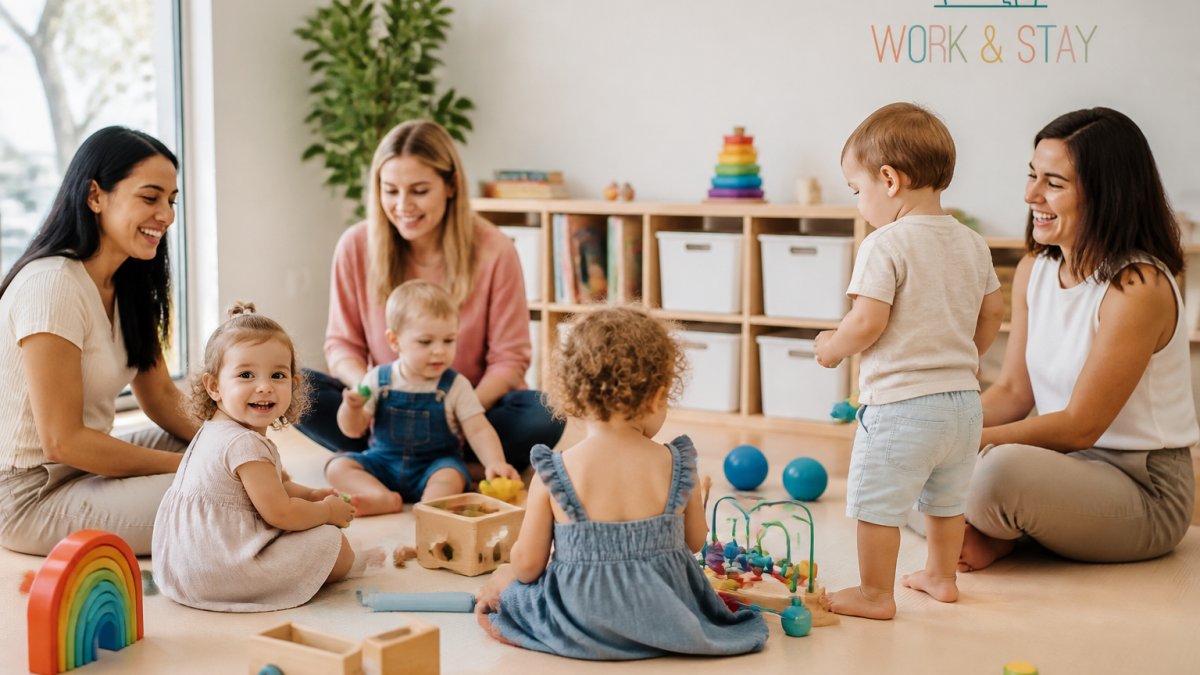
A solid timeline keeps the party moving and prevents dead time. Here are three sample schedules to adapt to your child's age and venue.
Sample One-Hour Schedule
This works best for one-year-olds or very young two-year-olds.
- 0-10 minutes: Arrival and free play. Let kids and parents settle in. Offer water and a small snack.
- 10-25 minutes: Guided activity (music, dancing, or simple play). Keep it short and fun.
- 25-40 minutes: Free play in the space. Let kids explore at their own pace.
Sample 90-Minute Schedule
This works for two-year-olds and younger three-year-olds.
- 0-10 minutes: Arrival and settling in.
- 10-25 minutes: Free play and exploration.
- 25-35 minutes: Guided activity (craft, music, or structured play).
Sample Two-Hour Schedule
This works for most three-year-olds.
- 0-10 minutes: Arrival and free play.
- 10-25 minutes: Guided activity #1 (craft, music, or game).
- 25-40 minutes: Free play.
The key is alternating structured activities with free play. This balances energy and interest, and gives parents a chance to chat while kids play.
Toddler Birthday Party Checklist: Planning for the Right Duration
Most party checklists cover what to buy and who to invite. This one answers a single question: how do you protect the party's length so it ends while everyone is still happy?
SIGN UP FOR YOUR MEMBERSHIP TODAY →
Before You Set the Date
- Map the nap window first, then pick the start time. The party should begin 30-60 minutes after wake-up and end at least 30 minutes before the next nap or bedtime. If your toddler naps 12:30-2:30 PM, a 10:00-11:30 AM party fits; a 1:00 PM party does not.
- Check the meal clock. Toddlers eat every 2-3 hours. If the party overlaps a normal meal, serve real food, not just cake.
- Match duration to the youngest guest, not the birthday child. Mixed-age groups should default to the shorter end of the range.
Building the Run of Show
- Cap each structured activity at 10-15 minutes. Toddlers lose interest fast. A craft that runs 25 minutes will lose half the room by minute 12.
- Alternate structured and free play. Free play lets toddlers reset; structured activities let parents direct energy.
- Place cake 15-20 minutes before the end, not at the very end. Cake is the emotional peak; if it's the last thing before goodbyes, kids melt down during the transition. Give them 15-20 minutes of low-key play afterward to wind down.
Contingency Planning
- Identify a quiet corner. Know where it is before the party starts so you can move an overwhelmed toddler there without disrupting the room.
- Have one backup activity ready. If the planned game flops, you need a swap within 60 seconds. Bubbles, a parachute, or a familiar song work reliably.
- Assign a co-host for logistics. One adult manages the schedule, another manages the room.
- Decide your early-exit signal in advance. Agree with your co-host on a phrase or gesture that means "we're wrapping up now."
Venue Fit
- Choose a space designed for the age group. A dedicated indoor play space for children ages 0-6 (like Play & Stay) removes the need to toddler-proof a home or restaurant, and the layout suits short attention spans.
- Ask whether the venue allows flexible end times. Some venues book in fixed blocks. If yours does, plan the run of show so the last 15 minutes are optional wind-down, not a required activity.
- Confirm parking, stroller access, and drop-off flow. These logistics add 10-15 minutes to arrival time.
Signs Your Toddler's Birthday Party Is Too Long
Most guides list the same symptoms: crying, whining, meltdowns. That's not useful mid-party when you're deciding whether to push through or wrap up. What you need is a graduated response plan, because not every sign means the same thing.
Stage 1: Early Warnings (Adjust the Pace)
These signs mean the party is drifting, not failing. You have time to fix it.
- Wandering away from the group activity. A toddler who leaves the circle is telling you the activity has run its course.
- Asking for a parent or caregiver repeatedly. This is a bid for security, not a crisis. A quick hug and redirect usually resets them.
- Losing interest in toys they loved 10 minutes ago. Novelty wears off fast at this age. Rotate in something new.
What to do: Shorten the current activity. Switch to free play. Offer water. If you're more than halfway through the planned duration, start thinking about moving cake earlier.
Stage 2: Clear Fatigue (Compress the Schedule)
These signs mean the party needs to accelerate toward its ending.
- Yawning, eye-rubbing, or lying down on the floor. This is physical fatigue, not boredom. No activity will fix it.
- Clinging to a parent and refusing to engage. The toddler has decided the party is over in their mind.
- Crying over small things (a dropped cracker, a toy taken by another child). Emotional regulation collapses when energy runs out.
What to do: Move directly to cake if you haven't served it, skip remaining structured activities, and start the goodbye ritual within 10 minutes. Don't add new activities to "perk them up", that backfires.
Stage 3: Shutdown or Escalation (End the Party)
These signs mean the party is over, whether or not the clock agrees.
- Blank staring or withdrawal. Some toddlers don't melt down, they shut down, going quiet and staring at nothing. This is overstimulation, not calm.
- Aggression (hitting, pushing, biting). A toddler who was gentle an hour ago and is now lashing out has hit their limit.
- Inconsolable crying that doesn't respond to comfort. When a parent can't soothe their own child, the environment is the problem.
What to do: End the party. Announce cake and goodbyes together if cake hasn't happened, thank guests, hand out favors, and let people leave. A party that ends 20 minutes early is a success; one that ends in three simultaneous meltdowns is the story people remember.
The Real-Time Decision Rule
When you're unsure whether to push through or wrap up, ask one question: Is the birthday child still engaged? If yes, you have a few more minutes. If no, you're hosting for the guests, not the child. That's the signal to end.
Why This Matters More Than the Clock
The recommended durations (45-60 minutes for one-year-olds, 60-90 for two-year-olds, up to two hours for three-year-olds) are starting points, not finish lines. A three-year-old who skipped a nap may hit their limit at 75 minutes; a well-rested two-year-old may sail through 100. The clock tells you when to plan the end; the child tells you when to actually end it.
Venue Flexibility Matters
If you're hosting at a venue with a fixed time block, ask ahead whether you can end early without penalty. A space built for toddler parties (like Play & Stay) understands that the schedule serves the child, and staff can help you transition to goodbyes smoothly if you need to wrap up early.
Conclusion
The right toddler birthday party length matches your child's age, energy level, and attention span. One-year-olds need 45-60 minutes, two-year-olds thrive with 60-90, and three-year-olds can enjoy up to two hours, but these are guidelines, not rules.
The real measure of success isn't how long the party lasts, but whether your child has fun and leaves with good memories. A short, well-paced celebration beats a long, chaotic one every time.
Frequently Asked Questions
Is two hours enough for a toddler birthday party?
Two hours works well for two- and three-year-olds, especially when the schedule balances free play, structured activities, food, and singing. For one-year-olds, one to 90 minutes is usually ideal. Two hours can feel too long if your toddler is tired, hungry, or overstimulated. Watch your child's energy level and adjust based on the guest count and activity type.
What should I include in a toddler birthday party checklist?
Plan your party duration first, then work backward: arrival time, free playtime (15-20 minutes), structured activity or games (15-20 minutes), snack or meal (10-15 minutes), singing happy birthday and cake (10 minutes), gift opening or free play (remaining time). Include setup and cleanup time before and after guests arrive. Choose age-appropriate activities that keep transitions smooth and avoid overstimulation.
How do you keep toddlers entertained at a party without making it too long?
Short, varied activities work best. Rotate between free play, guided music or dance, simple crafts, and food breaks every 15-20 minutes. Avoid back-to-back structured activities, which tire toddlers quickly. Keep the guest list manageable, too many children creates chaos and overstimulation. A venue like Play & Stay with built-in activities and a dedicated party space handles setup and transitions, reducing stress for both you and the birthday child.
How long should a birthday party last for a two-year-old?
Ninety minutes to two hours is ideal for a two-year-old's birthday party. Two-year-olds have growing attention spans and can handle a mix of playtime, activities, food, and celebration. Watch for signs of fatigue or overstimulation, fussiness, clinginess, or loss of interest in activities. If your child seems tired or the party feels chaotic, wrapping up early is better than pushing through and ending on a difficult note.
Ready to host a toddler birthday party that feels effortless? Play & Stay offers a bright, safe indoor play space designed specifically for young children, with separate party rooms and built-in activities that keep toddlers engaged without overwhelming them. Learn more about hosting your child's special day at Play & Stay's birthday party offerings.