 how-to
How to Find Affordable Birthday Party Places for 6-Year-Olds
Table of Contents
- Where to Find Affordable Birthday Party Places for 6-Year-Olds
- Understanding Total Costs: Beyond the Hourly Rate 📊
- Questions to Ask a Birthday Party Venue Before Booking ❓
- Create a Kids Birthday Party Venue Checklist 📋
- Plan Your Birthday Party Schedule for 6-Year-Olds ⏰
- Low-Cost Alternatives to Commercial Venues 💡
- How to Compare and Book Your Venue
- Frequently Asked Questions
Last Updated: October 17, 2026
Where to Find Affordable Birthday Party Places for 6-Year-Olds
Finding an affordable birthday party place for a 6-year-old doesn't have to mean compromising on fun or quality.
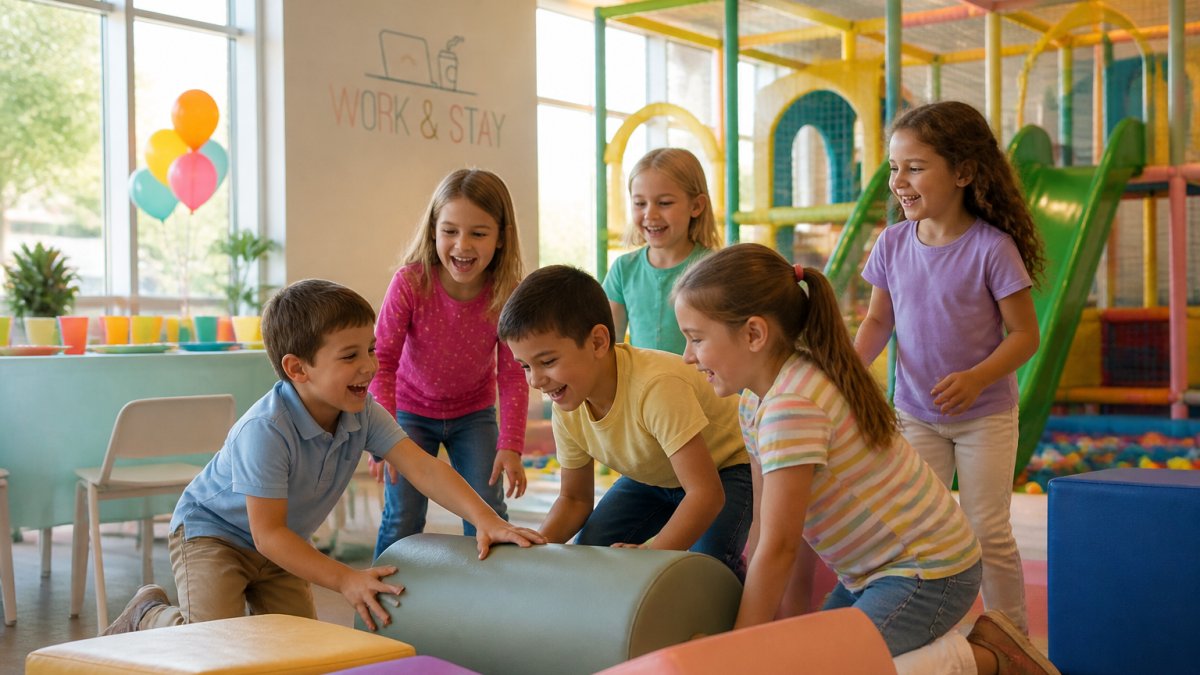
The first step is knowing where to look, and how each category actually prices a party. Two venues can quote the same headline rate and land hundreds of dollars apart once minimums, per-child fees, food rules, and cleanup charges are added.
Indoor Playground Birthday Party Options
Indoor playgrounds are a natural fit for 6-year-old birthday parties: kids this age love climbing, sliding, and active play, and the equipment does most of the entertaining while packages handle setup, cleanup, and supervision.
What makes indoor playgrounds appealing for this age group:
- Built-in entertainment keeps kids engaged without added entertainment costs
- Staff handle most logistics, so parents aren't renting tables and chairs
- Parents can relax while kids burn energy
- Climate-controlled year-round, which removes the weather-risk rescheduling problem
How the pricing usually works: most indoor playgrounds sell a package built around a set number of children (often 8-12) for a set window (commonly 90 minutes to 2 hours), with a per-child charge above the included count.
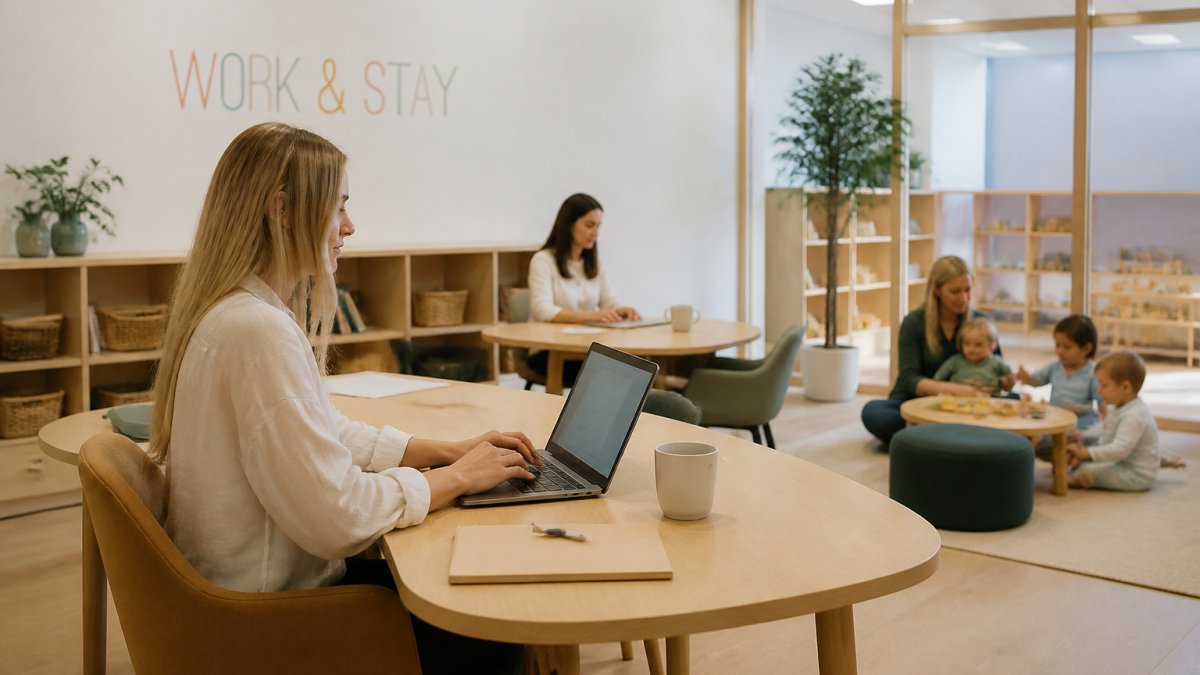
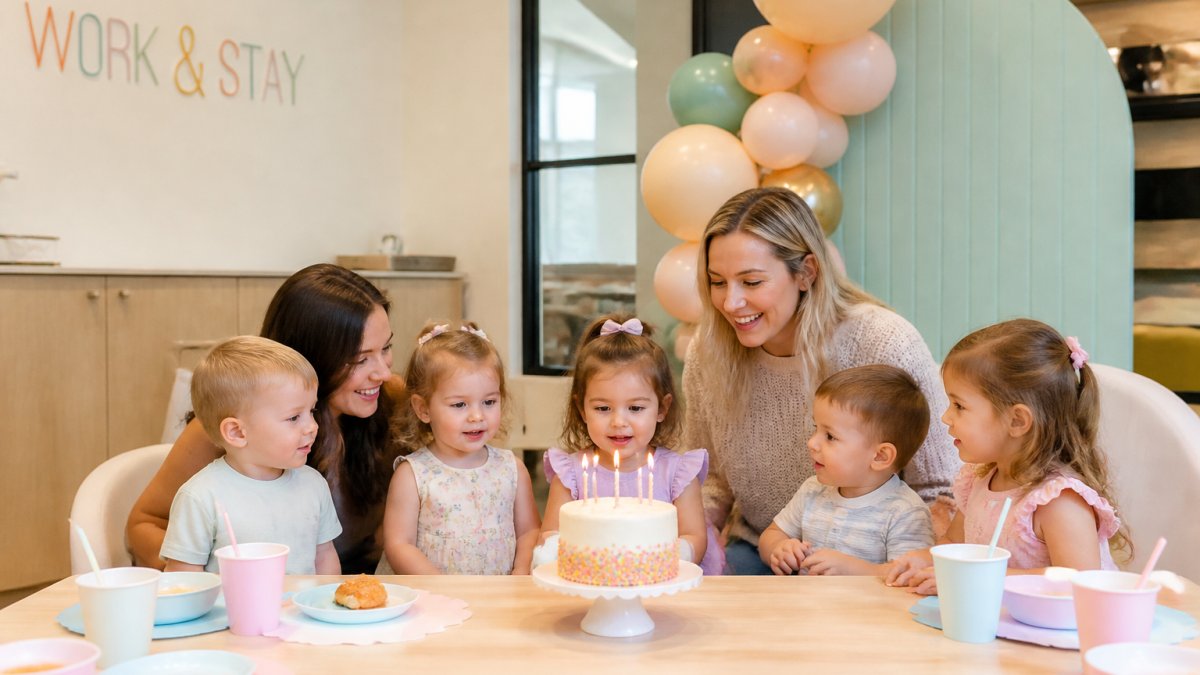
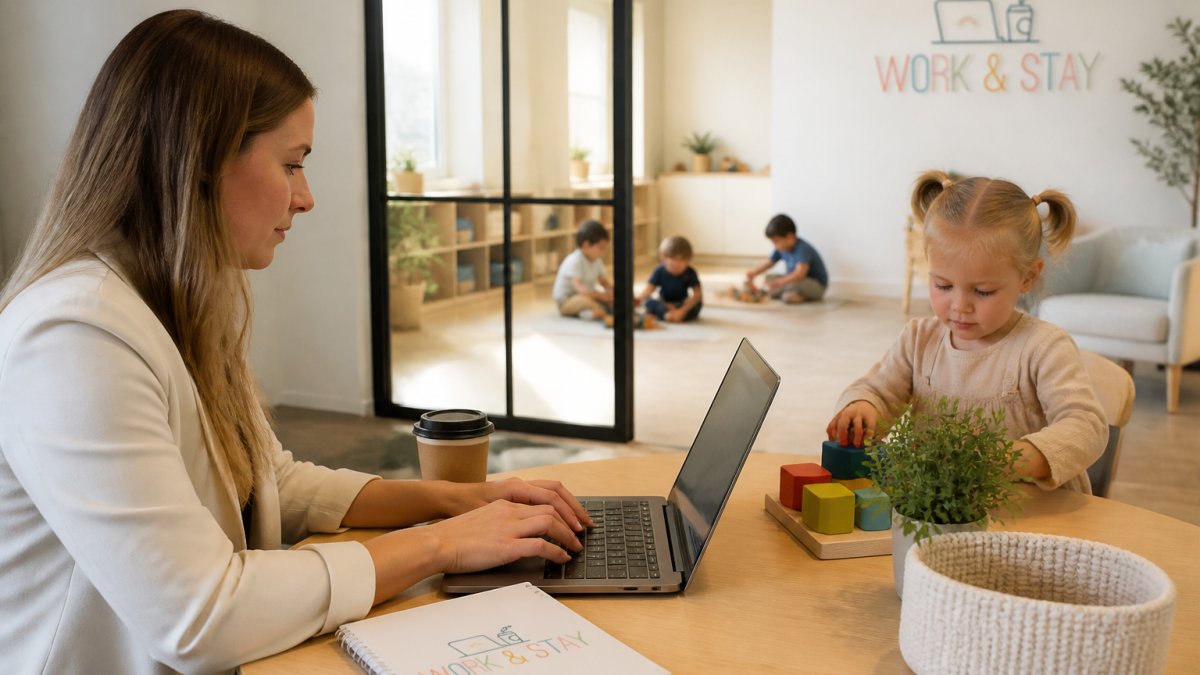
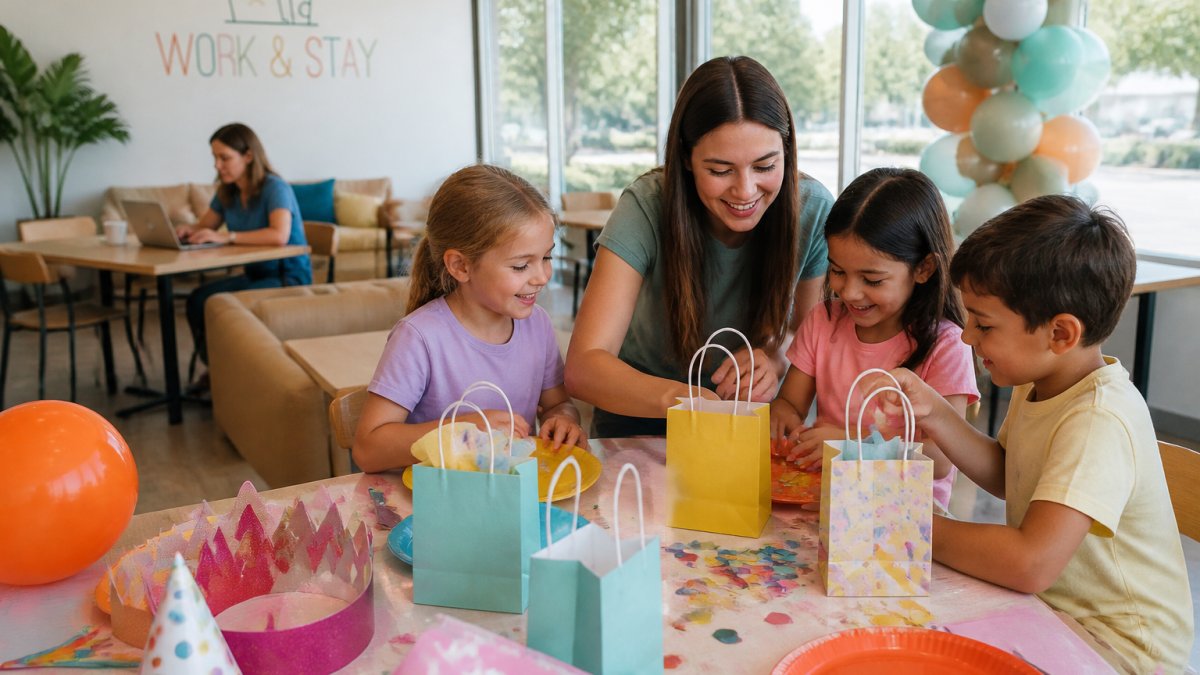
Play & Stay offers private party room rentals with access to indoor play equipment designed for young children. The space accommodates groups of any size. Learn more about birthday party options at https://playandstayaz.com/.
When evaluating an indoor playground, ask about party duration, the included child count, the per-child overage rate, and exactly what the base package covers.
Community Centers and Recreation Facilities
Community centers are often overlooked, yet they frequently offer some of the most budget-conscious birthday party options available.
Community centers typically offer:
- Lower hourly rental rates than commercial venues
- Access to gymnasiums or outdoor fields
- Flexible setup options
- Minimal restrictions on outside food and drinks, a major cost lever, since outside food and cake are often the largest add-on at commercial venues
The trade-off is labor: community center rentals usually come as a room, not a party. Parents supply decorations, food, activities, and cleanup, a good trade for a family with time and a helper or two, a poor one for a parent who wants to arrive with a cake and leave without sweeping.
Call your local parks and recreation department to learn what's available; many facilities have birthday party coordinators who can walk through options and pricing. Ask about the rental window, whether a refundable damage deposit is required, whether a staff member must be present at added cost, and whether alcohol or bounce houses are prohibited.
Creative and Arts-Focused Venues
Art studios, music studios, and craft workshops appeal to 6-year-olds who enjoy hands-on creative activities, and work especially well for smaller groups.
Creative party options include:
- Pottery painting or clay work
- Canvas painting classes
- Dance or music lessons
- Craft workshops with take-home projects
How the pricing usually works: creative venues most often charge per child, with a minimum headcount, and the price includes instruction, materials, and the take-home project, which often doubles as the favor. The catch is capacity: studios cap groups lower than play spaces, and a six-year-old's attention span for a seated craft is short, so a 60-90 minute format fits better than a longer block.
Ask whether the per-child price includes materials and the take-home piece, whether siblings not participating are charged, and whether the studio handles cake and paper goods or expects the parent to bring them.
Arcades, Games, and Sports Venues
Two more categories round out the affordable end of the market.
Arcades and game venues typically sell a package bundling game credits or a play card per child, a reserved table, and pizza or snacks. Compare the card value per child, a package with a generous card often costs less overall than a cheaper package plus out-of-pocket game spending.
Sports and active-play venues, gymnastics centers, climbing gyms, and recreation leagues, usually charge a flat party fee for a set number of kids plus a coach who runs structured games, which keeps six-year-olds moving.
Across every category, the same rule applies: compare the all-in price for your exact headcount, not the advertised starting rate.
Understanding Total Costs: Beyond the Hourly Rate 📊
Comparing venues on hourly rate alone leads to sticker shock at checkout. Calculate total costs before booking.
What's Included in the Base Price
The base price is just the starting point. Understand exactly what it covers:
- Room rental time
- Access to equipment or activity materials
- Staff supervision
- Setup and cleanup services
- Decorations or table setup
- Plates, cups, napkins, utensils
- Birthday cake or snack service
A venue quoting a low hourly rate might charge separately for each item; a higher base price might bundle everything. Ask for a complete price breakdown and a total cost estimate for your exact group size and duration.
Hidden Fees to Watch For
Venues often add charges that aren't obvious upfront, including:
- Deposit or cancellation fees (often non-refundable)
- Per-child charges for activities or food
- Overage charges if the party runs past the scheduled time
- Damage deposits
- Parking fees
- Gratuity or service charges
- Charges for outside food or beverages
Ask directly: "What fees might apply beyond the quoted rate?" Get written confirmation of all costs before signing.
Questions to Ask a Birthday Party Venue Before Booking ❓
Asking the right questions prevents surprises. Use these as a kids birthday party venue checklist starting point:
About the Space:
- What's the total capacity for our group size?
- Is the party room climate-controlled?
- Are bathrooms easily accessible?
- Can we bring outside decorations?
- Is parking available and free?
About Activities and Entertainment:
- What activities or equipment are included?
- Are staff available to supervise activities?
- Can we bring our own entertainment or games?
- What happens if a child gets injured?
About Food and Beverages:
SIGN UP FOR YOUR MEMBERSHIP TODAY →
- Can we bring outside food or cake?
- What food options does the venue provide?
- Are there restrictions for dietary needs or allergies?
- Is there a refrigerator or warming equipment available?
- Who cleans up food and dishes?
About Logistics:
- How long is the party room available?
- When can we arrive for setup?
- What's the cancellation or rescheduling policy?
- Is there a rain date option for outdoor activities?
- What's included in the total cost, and what costs extra?
Create a Kids Birthday Party Venue Checklist 📋
Use this checklist to compare venues, rating each factor by importance to the family.
| Evaluation Factor | Why It Matters | Questions to Ask |
|---|---|---|
| Total cost for group size | Stays within budget | What's the all-in price including all fees? |
| Activities and entertainment | Keeps 6-year-olds engaged | What's included? Can we add more? |
| Space and capacity | Comfortable fit for the group | Is there enough room to move around? |
| Food policy | Dietary needs and preferences | Can we bring outside food or cake? |
| Supervision and safety | Peace of mind for parents | How many staff supervise? What's the safety protocol? |
| Location and parking | Convenience for guests | Is it easy to find and park? |
| Flexibility and cancellation | Protects against changes | What's the cancellation policy? |
Print this checklist and bring it to venue visits, then compare scores on the factors that matter most.
Plan Your Birthday Party Schedule for 6-Year-Olds ⏰
A well-planned schedule keeps energy high and prevents chaos. Six-year-olds have short attention spans and need variety.
Timing and Duration Recommendations
A typical 6-year-old birthday party runs 1.5 to 2 hours, enough time for fun without wearing out kids or parents.
Suggested party timeline:
- First 15 minutes: Arrival, settling in, free play
- Next 30-45 minutes: Structured activity or main entertainment
- Next 15-20 minutes: Snack or food break
- Final 20-30 minutes: Cake, singing, goodbyes
Most venues offer 1-hour, 1.5-hour, or 2-hour packages. For a group of 8-12 kids, 1.5 hours typically works well. Larger groups benefit from the full 2 hours.
Activity Flow and Pacing
Six-year-olds need a mix of high-energy and calmer activities. A good birthday party schedule for 6 year olds follows this rhythm:
- Start with active play to burn initial energy
- Move to a structured activity (craft, game, or lesson) when energy peaks
- Transition to food and cake as a natural wind-down
- End with lower-key activity or free play as kids are picked up
Avoid back-to-back high-energy activities; mix in quieter moments so kids don't become overstimulated.
Low-Cost Alternatives to Commercial Venues 💡
Commercial venues aren't the only option.
Home or backyard party: The venue cost is zero, which makes this the most budget-friendly option available. The trade-off is planning labor and capacity.
Public parks: Many parks rent picnic pavilions and shelters by the block, and the reservation is what guarantees your spot, an unreserved pavilion can be taken by another family mid-party.
Library or community room: Some libraries rent meeting rooms for minimal cost, and some are free for cardholders.
School or religious facility: Some schools, churches, and temples rent space for community events at budget-friendly rates, often with tables and chairs included.
Shared or hosted play spaces: A growing middle option is a hosted play space that rents its room and equipment for private parties without the full commercial package.
These alternatives require more hands-on planning from the parent. They work best when the parent has time to organize activities and manage logistics, and they are the strongest lever a family has for cutting the venue line item without cutting the fun.
How to Compare and Book Your Venue
Once venues are narrowed down, the comparison and booking process should be straightforward.
Step 1: Create a shortlist. Research 3-5 venues that fit the budget, location, and activity preferences.
Step 2: Contact venues directly. Call or email with the party date, group size, and any specific needs.
Step 3: Compare total costs. Don't compare hourly rates alone.
Step 4: Ask the checklist questions. Use the venue checklist to evaluate each option.
Step 5: Visit the space if possible. Seeing the venue in person helps confirm it's a good fit.
Step 6: Book early. Popular venues book up quickly, especially for weekend parties.
Planning an affordable birthday party place for a 6-year-old requires comparing options, understanding total costs, and asking the right questions upfront.
Frequently Asked Questions
How can I compare birthday party venues for kids to find the best value?
Create a spreadsheet listing each venue's hourly rate, what's included (tables, chairs, decorations, entertainment), guest capacity, and any additional fees (setup, cleanup, food surcharges). Calculate the total cost for your expected guest count and party length. This reveals which venues offer the best value, not just the lowest hourly rate. Many affordable birthday party places bundle activities and seating, which saves money compared to venues charging separately for each element.
What should I ask before booking a kids' birthday party venue?
Ask about the guest capacity for your group size, whether decorations and tables are included, what food and drink options are available, if outside food is allowed, cancellation policies, how staff supervise children, what activities or entertainment are provided, and whether the space is climate-controlled. Also confirm if there are any add-on costs and what happens if your party runs over time. These questions help you avoid surprise charges and ensure the venue fits your needs.
How long should a birthday party for a 6-year-old last?
A typical birthday party schedule for 6-year-olds runs 1.5 to 2 hours. This allows 45-60 minutes for active play or activities, 20-30 minutes for food and cake, and time for cleanup or transition. Shorter parties (1 hour) work for smaller groups or limited budgets, while longer parties give more time for multiple activities. Check your venue's rental increments, some charge by the hour, so knowing your ideal length helps you book the right package without paying for unused time.
What are good low-cost alternatives to commercial birthday party venues?
Parks with picnic areas, community center rooms, school gymnasiums, libraries with meeting spaces, and churches often rent affordable spaces for private events. You can bring your own activities, games, and food to keep costs down. An indoor playground birthday party at a facility like Play & Stay offers supervised open play and private party room rentals.