 how-to
How Coworking With Childcare Works: A Parent's Guide
Table of Contents
- What Is Coworking With Childcare?
- How a Coworking Space With Childcare Operates
- Flexible Childcare for Working Parents: Memberships and Day Passes
- Coworking With Childcare for Toddlers: Age-Appropriate Care
- How to Book and Visit: Step-by-Step Process
- Benefits for Working Parents and Child Development
- Common Questions Before You Start
- Frequently Asked Questions
Last Updated: October 16, 2026
What Is Coworking With Childcare?
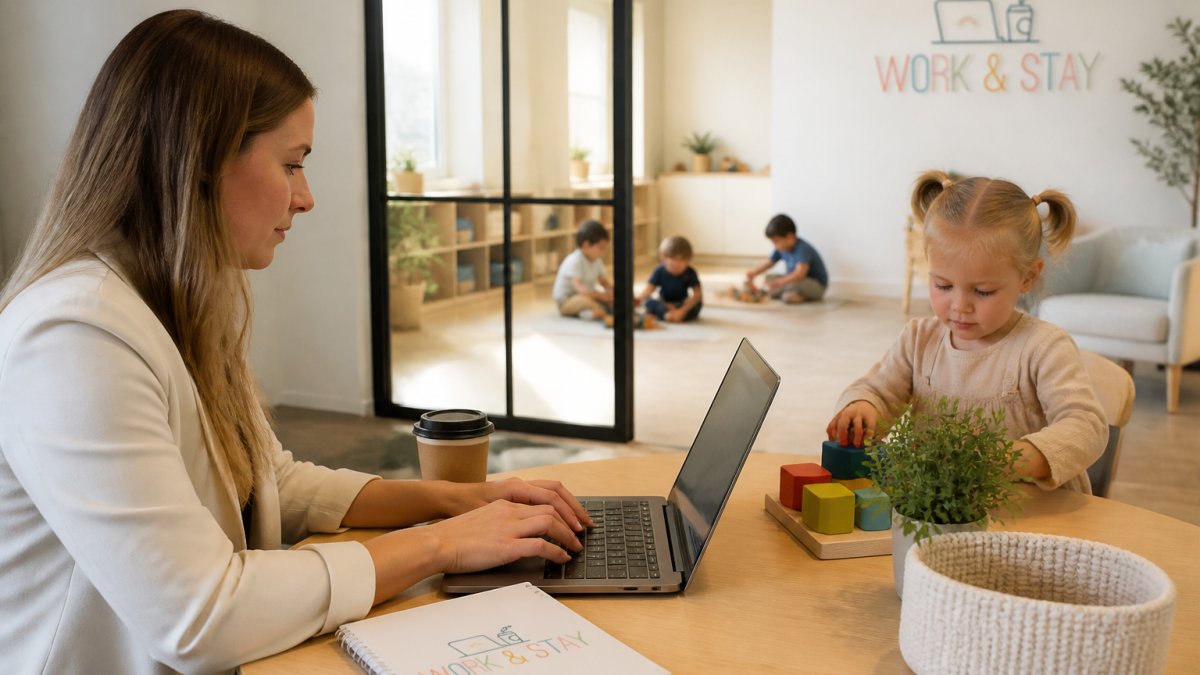
Coworking with childcare combines two essential needs for working parents: a productive workspace and supervised care for young children in the same location.
The model eliminates the constant mental load of managing childcare logistics. A parent can focus on work knowing their child is safe, engaged, and supervised by trained staff.
Work & Stay operates this concept with a clear separation between the workspace and childcare areas.
This model works because it addresses a real problem: most working parents either hire full-time childcare they don't always need, or they try to work from home while managing kids, a setup that satisfies neither goal well.
How a Coworking Space With Childcare Operates
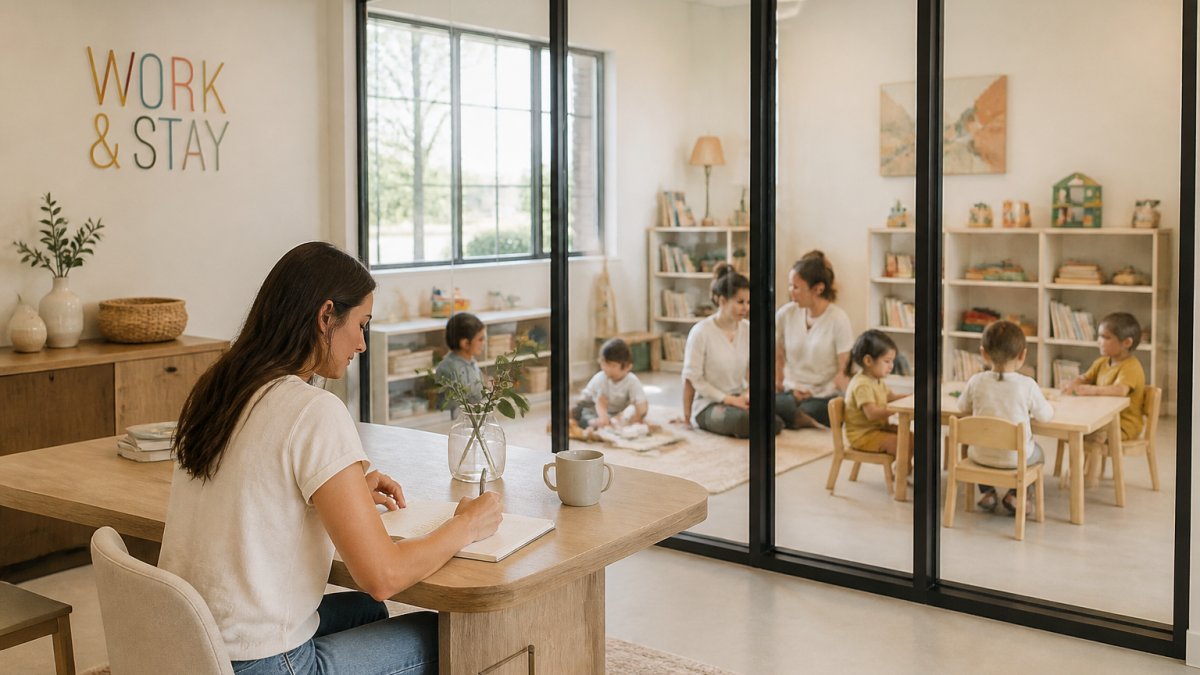
A coworking space with childcare functions as two connected but separate environments under one roof. The design is intentional: parents get a professional workspace free from the noise and chaos of young children, while kids benefit from structured activities led by trained caregivers. 👨💼
Separate Workspace and Childcare Areas
The physical layout keeps work and play distinct. Parents occupy a professional coworking area with desks, internet, quiet zones, and meeting rooms. Children stay in a separate, age-appropriate play and learning space with toys, educational materials, and activity stations.
This separation is critical. It prevents parents from being distracted by children during important calls or focus work. Sound barriers and dedicated spaces ensure the workspace remains productive. Parents can still check in on their kids, but the environment supports real work, not just babysitting.
Many parents worry about noise carrying between spaces. Quality coworking with childcare facilities address this through thoughtful design: solid walls, separate HVAC systems, and strategic placement of play areas away from quiet work zones.
Supervised, Curriculum-Based Activities
Children don't just play freely, they participate in structured, curriculum-based activities led by trained staff. This might include music, arts and crafts, movement activities, storytelling, and guided learning appropriate for each age group. 🎨
The curriculum approach means children develop skills while parents work. Activities are designed to build coordination, social skills, creativity, and early learning concepts. This isn't passive supervision; it's active engagement with developmental intent.
Staff members follow a planned schedule of activities throughout the day. Parents receive updates on what their child did, what they learned, and any observations about behavior or development. This creates a bridge between work time and home time.
On-Site Supervision and Safety
Trained caregivers maintain constant supervision of children. Background checks, training certifications, and safety protocols are standard.
Parents should ask about staff qualifications, supervision protocols, and safety measures before choosing a facility. A reputable coworking with childcare space will be transparent about how they maintain a safe environment and handle emergencies.
Flexible Childcare for Working Parents: Memberships and Day Passes
The defining feature of flexible childcare for working parents is the absence of long-term contracts. Parents can access care on their own schedule, whether that's daily, weekly, or occasional, without being locked into months of commitment. 📅
Work & Stay offers memberships and day passes designed for parents who need flexibility. Some parents use the space daily; others come once or twice a week. Some drop in occasionally for specific work projects or personal errands. The access model supports all these patterns.
No Long-Term Contracts
Traditional childcare often requires signing a contract for months or even a year. You pay whether you use it or not. Coworking with childcare flips this model: pay for what you actually use.
This flexibility is transformative for parents whose schedules vary. A freelancer with unpredictable project deadlines can book extra hours when needed. A parent returning to work part-time can scale up gradually. Someone managing a home business can access care during crunch periods without ongoing overhead.
No contracts also mean no penalty for changing needs. When a parent's situation shifts, a job change, a new schedule, a partner's availability, they can adjust immediately.
Drop-In Flexibility
Drop-in access means parents aren't locked into specific days or times. Need childcare for three hours on Thursday? Book it. Want to bring your child tomorrow afternoon? Call and confirm availability.
This flexibility supports real parenting life. Unexpected meetings come up. Projects need focused time. Personal appointments require uninterrupted attention. Drop-in options let parents handle these moments without rearranging their entire childcare setup.
Some parents use drop-in access as backup childcare when their regular arrangements fall through. Others use it as occasional respite, a few hours to run errands, exercise, or simply work without managing children.
Coworking With Childcare for Toddlers: Age-Appropriate Care
Parents of very young children often worry that coworking with childcare won't work for their age group. Toddlers need different care than preschoolers. Coworking with childcare for toddlers requires facilities designed specifically for ages 0-6, with staff trained in infant and toddler development. 👶
Designed for Ages 0-6
The 0-6 age range encompasses dramatic developmental changes. A 6-month-old has completely different needs than a 4-year-old. Quality facilities segment children by age or developmental stage, ensuring activities and supervision match each child's needs.
Younger toddlers benefit from sensory play, movement, music, and one-on-one interaction. Older toddlers and preschoolers engage in more complex play, basic learning activities, and social interaction with peers. Separate areas or time blocks allow staff to tailor experiences to each group.
Work & Stay serves all ages within the 0-6 range. Parents of infants and toddlers can access the same workspace and flexibility as parents of older children.
Diaper Changes, Feeding, and Infant Support
Parents of infants worry about basic care: Will staff change diapers? Can I bring formula or breast milk? What happens if my baby gets hungry or fussy?
A facility designed for young children answers these questions clearly. They provide changing stations, handle diaper changes as part of routine care, and support feeding, whether that's formula, expressed breast milk, or solid foods. Staff communicate about feeding times, sleep, and any concerns.
Parents should confirm these details before their first visit. Ask about diaper changing procedures, how feeding is handled, whether parents can nurse on-site if needed, and how staff manage infant sleep routines. A good facility welcomes these questions and has clear policies.
SIGN UP FOR YOUR MEMBERSHIP TODAY →
How to Book and Visit: Step-by-Step Process
Getting started with coworking with childcare is straightforward. Here's what the process typically looks like. 📋
Getting Started
First, contact the facility to learn about available options. Ask about membership plans, hours of operation, and current availability. Many facilities offer a tour or trial visit so parents can see the space and meet staff.
Bring your questions. Ask about staff qualifications, safety protocols, what your child will do during the day, how you'll receive updates, and what happens in emergencies. A reputable facility will answer thoroughly and help you feel confident.
Once you've decided to proceed, you'll complete intake paperwork. This includes your contact information, emergency contacts, your child's health history, any allergies or dietary needs, and authorization for pickup by trusted adults.
What to Bring
On your first visit, bring essentials your child might need:
- Diapers, wipes, and diaper cream (if your child uses them)
- Formula, breast milk, or snacks (in labeled containers)
- A change of clothes or two
- Any comfort items like a favorite toy or blanket
- Medications or medical supplies if needed
- A positive attitude and realistic expectations
Label everything with your child's name. Staff will use these items throughout the day and return what's left.
Your First Visit
Your first day sets the tone. Arrive with time to spare, not rushing. Let your child explore the space while you meet the caregivers.
Keep the goodbye brief and positive. Kids pick up on parental anxiety. A quick, confident goodbye ("I'll pick you up after snack time. Have fun!") works better than prolonged farewells or sneaking out.
Expect some adjustment. Many children cry or cling on the first visit. This is normal. Staff are experienced with transitions and will comfort your child. Most kids settle within 10-15 minutes once a parent leaves.
Check in with staff before you start working. Ask when snack time is, when your child will nap, and when you can expect an update. Then focus on your work.
Benefits for Working Parents and Child Development
Coworking with childcare delivers real benefits for both parents and children. 💪
Productivity and Peace of Mind
Parents who work in the same location as their child's care report higher focus and less anxiety. You're not wondering if your child is okay, you know they're supervised and engaged. You're not managing two separate locations and schedules.
This matters for work quality. Focused, uninterrupted work time produces better results. A parent who can concentrate for three hours straight accomplishes more than one constantly checking a phone for updates or worrying about pickup times.
The peace of mind is equally valuable. Many parents feel guilty about working while their child is elsewhere. Being in the same building, knowing exactly what their child is doing and that they're safe, eases that guilt.
Social Interaction and Learning
Children benefit from structured activities and peer interaction. They engage with trained caregivers, participate in curriculum-based learning, and play with other children their age. These interactions build social skills, confidence, and early learning foundations.
A child who spends time in a coworking with childcare environment gets exposure to music, art, movement, storytelling, and guided play. They learn to interact with adults other than their parents and to engage with peers. These experiences support healthy development.
Parents also benefit from community. Many coworking spaces with childcare create informal networks of other working parents. You might chat with another parent at pickup, share resources, or simply feel less alone in the challenge of balancing work and parenting.
Common Questions Before You Start
Is this the same as daycare? No. Traditional daycare is typically full-time, requires long-term commitment, and focuses on childcare as the primary service.
What if my child has separation anxiety? Many children experience separation anxiety, especially early on. Staff are trained to help children through transitions.
Can I nurse or bottle-feed my baby there? Most facilities welcome parents to nurse on-site if needed.
What happens if my child gets sick? Ask about illness policies before you start.
How do I know the facility is safe? Ask about background checks for all staff, safety protocols, emergency procedures, and how incidents are handled.
Balancing work and parenting requires support systems that actually work.
Work & Stay brings this model to working parents with flexible memberships and day passes, curriculum-based activities for ages 0-6, and a workspace designed for real productivity. Learn more about memberships and day passes at playandstayaz.com and discover how coworking with childcare can simplify your work-life balance.
Frequently Asked Questions
What is the difference between coworking with childcare and traditional daycare?
Coworking with childcare is designed for parents who need to work while their children are cared for nearby. Unlike traditional daycare, it combines a professional workspace for parents with supervised, curriculum-based activities for children in separate areas. Parents can focus on work in a quiet environment while knowing their children are safe, engaged in learning activities, and just steps away if needed. It's a hybrid model built specifically for working parents, not a drop-off childcare center.
Are children supervised while parents work in a coworking space with childcare?
Yes, children are always supervised by trained staff members. The childcare area operates independently from the workspace, with qualified caregivers overseeing play, learning activities, and daily needs like diaper changes and meals. Parents can work with confidence knowing their children are in a safe, supervised environment.
Can I use coworking with childcare for just a few hours?
Yes. Coworking with childcare facilities offer flexible day passes in addition to memberships, so you're not locked into long-term contracts. Whether you need a few hours for focused work, a doctor's appointment, or a full workday, you can choose the schedule that fits your life. This flexibility makes it easy for parents to access childcare and workspace exactly when they need it.
Is coworking with childcare suitable for babies and toddlers?
Yes, facilities like Work & Stay are designed specifically for children ages 0-6, including babies and toddlers. Spaces include diaper-changing stations, safe play areas scaled for younger children, feeding support, and staff trained in infant and toddler care. Separate areas for the youngest guests ensure they receive age-appropriate activities and supervision while older toddlers and preschoolers enjoy their own space.