 ultimate-guide
What to Look for in Indoor Playgrounds
Table of Contents
- Safety Features and Equipment Standards
- Indoor Playground Safety Checklist for Parents
- Indoor Playgrounds for Toddlers: Age-Appropriate Design
- Indoor Playground Cleanliness and Hygiene Practices
- Supervision and Staff Policies
- Indoor Playground Visit Tips: Planning Your Experience
- Secure Entry and Exit Procedures
- Equipment Maintenance and Inspection Standards
- Frequently Asked Questions
Last Updated: October 6, 2026
Safety Features and Equipment Standards
When parents evaluate an indoor playground, safety is the first filter. The best facilities don't just meet minimum standards, they exceed them through deliberate design choices that prevent injuries before they happen. 🎯
Padded Flooring and Soft Play Surfaces
Padded flooring is the foundation of injury prevention in any quality indoor play space.
Look for flooring that covers the entire play area, not just isolated zones under equipment. Gaps in coverage create hazard zones where children can fall onto hard surfaces.
Check whether the facility regularly inspects flooring for compression (areas where padding has lost density from heavy use). Compressed padding loses its shock-absorption properties and needs replacement.
Rounded Edges and Secure Equipment
All equipment edges should be rounded or beveled to eliminate sharp corners that cause lacerations and bruises.
Secure equipment means structures are bolted to the floor or wall, with no wobbling or movement when children climb. Test this by gently pushing on equipment yourself.
Look for equipment designed with child-sized proportions. Handholds should be appropriately spaced for small hands, and climbing heights should match the age group using them. Equipment designed for older children creates fall hazards for toddlers.
Indoor Playground Safety Checklist for Parents
Before committing to regular visits, conduct a systematic evaluation using this checklist. A thorough inspection takes 15-20 minutes and reveals whether a facility prioritizes safety or cuts corners. 🔍
Before Your First Visit
Research and Documentation:
- Verify the facility has liability insurance and ask to see proof
- Ask whether the facility undergoes third-party safety inspections (look for ASTM F1487 compliance, the standard for playground safety)
- Request information about staff training in CPR, first aid, and incident response
- Ask how long the facility has been operating and whether they have a safety incident history available
Facility Overview:
- Tour the entire play area, including storage areas and equipment zones
- Identify emergency exits and confirm they're clearly marked and accessible
- Note the location of first aid stations and AED devices
- Check whether bathrooms and changing stations are clean and well-stocked
During Your Visit
Equipment Inspection:
- Examine all play structures for visible damage, cracks, or rust
- Test handholds and railings for stability, they should not move or wobble
- Check padding beneath and around equipment for compression, gaps, or deterioration
- Verify that all equipment edges are rounded and free of sharp points
- Look for pinch points where fingers or hair could get caught
Cleanliness and Hygiene:
- Observe staff cleaning and sanitizing high-touch surfaces (railings, handholds, soft play blocks)
- Check bathrooms for soap, paper towels, and functioning hand dryers
- Look for visible dirt, debris, or stains on flooring or equipment
- Note whether toys and soft play items appear regularly washed
Supervision and Staff:
- Count staff members relative to the number of children present
- Observe whether staff actively watch play areas or are distracted
- Ask staff how they handle injuries and whether they document incidents
- Confirm that staff can identify your child and understand any special needs or allergies
Indoor Playgrounds for Toddlers: Age-Appropriate Design
Toddlers (ages 12-36 months) have different safety needs than older children. They lack coordination, tire quickly, and need constant supervision. Facilities designed specifically for this age group reduce injury risk through intentional layout and equipment selection. 👶
Separate Play Zones by Age
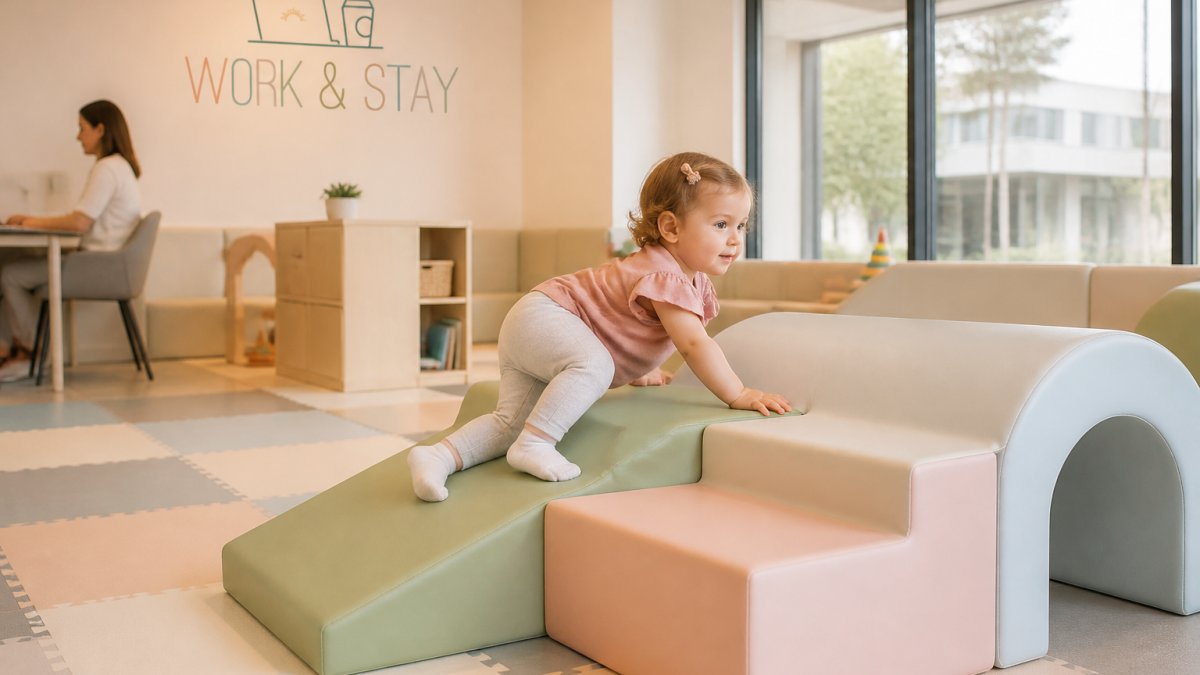
The best indoor playgrounds divide space by age group, keeping toddlers away from older children's faster, more aggressive play. Toddler zones should feature:
- Lower climbing heights (18-36 inches maximum) that reduce fall impact
- Wider spacing between equipment to prevent collisions
- Soft play blocks and padded structures instead of hard plastic or metal
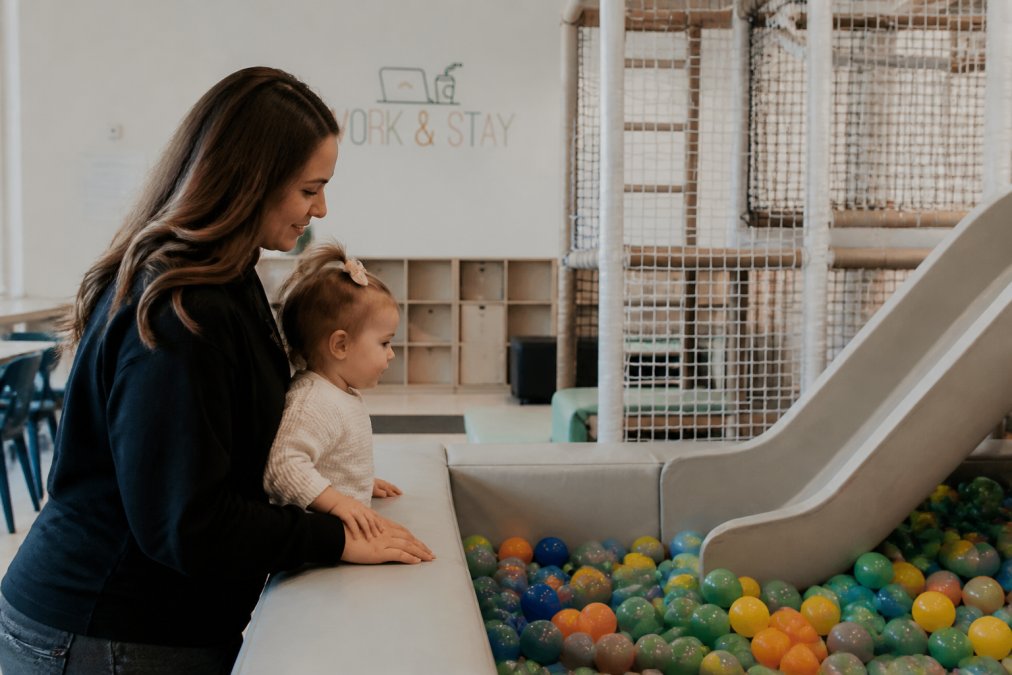
- Slower-paced activities like sensory panels, soft slides, and ball pits
Separation also reduces disease transmission. Toddlers put hands in their mouths constantly, so isolating them from older children (who shed more germs) matters for health. Ask whether the facility sanitizes toddler zones more frequently than mixed-age areas.
Toddler-Specific Safety Features
Equipment designed for toddlers includes:
- Soft blocks and padded structures instead of hard climbing frames
- Slides with high side walls to prevent rolling off
- Ball pits with regular cleaning protocols (bacteria and mold hide in balls)
- Sensory panels that engage without requiring coordination
- Soft play tunnels and obstacles that encourage crawling and exploration
Ask staff about their changing station setup. Quality facilities have dedicated, sanitized changing areas with soap, wipes, and diaper disposal. If a facility lacks proper changing infrastructure, parents end up managing diaper changes in bathrooms or vehicles, a red flag for overall hygiene standards.
Indoor Playground Cleanliness and Hygiene Practices
Cleanliness directly impacts health. Indoor playgrounds concentrate children in a small space, amplifying disease transmission. Facilities that maintain rigorous cleaning protocols reduce illness outbreaks. 🧼
Sanitizing Protocols and Frequency
Ask the facility about their specific sanitizing schedule:
- High-touch surfaces (railings, handholds, door handles): Should be sanitized hourly during operating hours
- Soft play equipment (blocks, ball pit balls, tunnels): Should be cleaned daily, with ball pits emptied and sanitized weekly
- Flooring: Should be swept hourly and mopped daily with appropriate disinfectant
- Bathrooms and changing stations: Should be cleaned and sanitized every 2 hours
Request documentation showing when cleaning occurred. Responsible facilities maintain a visible log showing times and staff initials. If staff can't produce this documentation, cleaning likely isn't happening on schedule.
Ask what sanitizing products they use. Facilities should use EPA-approved disinfectants effective against common viruses and bacteria. Avoid facilities using only water or basic soap, these don't eliminate pathogens.
Illness Prevention and Health Standards
Quality facilities implement illness-prevention policies:
- Health screening: Staff should ask about obvious symptoms (cough, fever, rash) at check-in
- Sick-child policy: Facilities should refuse entry to visibly ill children
- Hand hygiene stations: Soap and sanitizer should be readily accessible throughout the play area
- Staff illness protocol: Staff showing symptoms should not be in the facility
Ask whether the facility has experienced recent outbreaks and how they responded. A facility that transparently reports and addresses illness shows they take health seriously.
Supervision and Staff Policies
Supervision is the most important safety factor. Equipment and flooring matter, but attentive staff prevent injuries by intervening before incidents occur. 👀
SIGN UP FOR YOUR MEMBERSHIP TODAY →
Quality facilities maintain staff-to-child ratios appropriate to the age group.
Observe staff behavior during your visit. Are they actively watching play, or sitting on their phones?
Ask about staff training. Staff should have current CPR and first aid certification, plus training in recognizing signs of injury or illness.
Incident reporting matters. Ask how the facility documents injuries, near-misses, and safety concerns.
Indoor Playground Visit Tips: Planning Your Experience
Smart planning makes visits safer and more enjoyable for both parent and child. 📋
Timing, Capacity, and Peak Hours
Visit during off-peak hours when possible. Fewer children mean better supervision, less disease transmission, and more space for your child to play safely.
Ask the facility about their typical capacity and peak times. Overcrowding creates supervision challenges, staff can't watch everyone effectively when the space is packed. It also increases collision risk and disease transmission.
If you must visit during peak times, arrive early and leave before the rush intensifies. A 30-minute visit during a busy period is safer than trying to stay longer.
What to Bring and Facility Amenities
Bring hand sanitizer and wipes for your own use. While facilities should maintain cleanliness, you control your child's hygiene by wiping hands before eating and after touching high-touch surfaces.
Confirm whether the facility provides:
- Drinking water stations
- Bathrooms with functioning hand dryers or towels
- Changing tables and diaper disposal
- Seating areas for parents
- Climate control (temperature and air quality)
Some facilities offer amenities like snacks, birthday party rooms, or structured programming. Understand what's included in your visit and what costs extra. Play & Stay offers memberships and day passes with transparent pricing for families seeking flexible, regular access.
Secure Entry and Exit Procedures
How children enter and exit the facility affects safety. Secure procedures prevent unauthorized access and ensure staff know who's in the space at any time.
Ask whether the facility requires:
- Sign-in/sign-out logs showing who entered, when, and who picked up the child
- ID verification for anyone picking up a child
- Emergency contact confirmation at check-in
- Restricted access to the play area (locked doors, controlled entry)
Observe entry and exit during your visit. Are staff checking IDs? Are doors secured? Can unauthorized people wander into the play area? Loose procedures create risk.
Ask about their policy if an unauthorized person attempts to pick up a child. Staff should refuse release and contact the parent or police immediately. Request a copy of this policy in writing.
Equipment Maintenance and Inspection Standards
Well-maintained equipment prevents failures that cause injuries. Ask the facility about their maintenance program.
Regular inspections should include:
- Daily visual inspections before opening (staff check for obvious damage, debris, or hazards)
- Weekly detailed inspections (staff test equipment stability, check for rust or cracks, verify padding integrity)
- Monthly professional inspections (a qualified technician evaluates structural integrity and compliance with safety standards)
- Annual third-party safety audits (an independent inspector verifies ASTM F1487 compliance)
Request documentation of this maintenance. Responsible facilities provide inspection logs, maintenance records, and audit reports. If staff can't produce these documents, maintenance likely isn't happening.
Ask about their equipment replacement timeline. Play equipment has a lifespan, padding compresses, plastic becomes brittle, metal rusts. Quality facilities replace equipment before it fails.
Choosing the right indoor playground means evaluating safety systematically rather than relying on first impressions.
Frequently Asked Questions
How can you tell if an indoor playground is safe?
Check for padded, non-slip flooring, rounded equipment edges, and secure structures with no pinch points. Observe staff supervision ratios, ask about equipment maintenance schedules, and request information on their safety inspection protocols. Ask to see their most recent inspection records and inquire about staff training in first aid and CPR. A reputable indoor playground should be transparent about safety practices and welcome your questions.
What should parents look for in an indoor playground for toddlers?
Look for separate play zones designed specifically for younger children, with lower climbing structures, softer play equipment, and age-appropriate activities. Ensure there are changing stations and staff trained in infant and toddler care. Check that the facility uses non-toxic, washable materials and ask about their cleaning frequency. Verify that supervision is attentive and that the environment is climate-controlled and free from hazards like stairs or hard edges accessible to crawlers.
How often should indoor playground equipment be cleaned?
High-touch surfaces like ball pits, railings, and play structures should be sanitized daily, with deep cleaning performed regularly. Many facilities clean between sessions or at the end of each day. Ask about their specific sanitizing protocols, including which disinfectants they use and whether they're non-toxic. During illness seasons, more frequent cleaning is essential. Reputable facilities should be able to provide detailed information about their cleaning schedules and methods.
What age is best for an indoor playground?
Most indoor playgrounds welcome children from infancy through preschool age (0-6 years), though some have separate zones for different developmental stages. Infants and non-mobile toddlers may enjoy sensory play areas and soft play structures, while mobile toddlers and preschoolers benefit from climbing structures, slides, and ball pits. Look for facilities that offer age-appropriate programming and activities tailored to different developmental levels to ensure your child gets the most from their visit.
What should you bring to an indoor playground?
Bring water bottles to keep children hydrated, snacks if permitted, wipes for hand cleaning, and a change of clothes for younger children. Check the facility's policy on outside food and beverages beforehand. Consider bringing socks or checking if the facility requires them for safety on padded surfaces. For toddlers in diapers, bring extra diapers and wipes unless the facility provides changing stations. Dress children in comfortable, weather-appropriate clothing that allows free movement.
Are indoor playgrounds worth it for busy parents?
Indoor playgrounds offer value by providing a safe, climate-controlled environment where children can burn energy and develop motor skills while parents can supervise or relax nearby. They're especially valuable during extreme weather when outdoor play isn't feasible. Many facilities offer flexible memberships and day passes, making them accessible without long-term commitments. Consider whether the facility's amenities, supervision quality, and location align with your family's needs and schedule.