 how-to
How to Find Safe Indoor Play Spaces: A Parent's Checklist
Table of Contents
- Why Safety Matters in Indoor Play Spaces
- Inspect Safety Certifications and Equipment Standards
- Evaluate Hygiene Protocols and Facility Cleanliness
- Review Supervision Policies at Supervised Indoor Play Areas
- Assess Age-Appropriate Play Zones and Inclusive Design
- Use an Indoor Play Space Safety Checklist
- Consider Coworking Spaces with Childcare for Working Parents
- Ask the Right Questions Before Your First Visit
- Frequently Asked Questions
Last Updated: October 2, 2026
Why Safety Matters in Indoor Play Spaces
A child's safety is the foundation of any good play experience. Finding truly safe indoor play spaces means checking certifications, hygiene standards, and staff training. This guide walks you through exactly what to evaluate so you can feel confident your child is in good hands.
Inspect Safety Certifications and Equipment Standards
Indoor play equipment must meet strict safety rules. The best facilities display their certifications and welcome parent questions about them. Start by asking what standards the facility follows and request to see documentation.
Check for ASTM F24 Compliance
ASTM F24 standards set safety rules for playground equipment and surfaces, covering railing heights and landing surface softness. Facilities that follow ASTM F24 have tested their equipment against these benchmarks.
Ask the facility directly: "Does your equipment meet ASTM F24 standards?" A confident yes with proof is what you're looking for. Reputable facilities keep this documentation accessible.
Verify Routine Equipment Inspections
Safe facilities conduct daily visual checks, weekly detailed reviews, and annual professional inspections. This is how injuries get prevented.
Ask these specific questions:
- How often do staff inspect equipment?
- Who performs annual inspections (internal staff or outside company)?
- What happens when they find damage?
- Can you see the inspection log?
Equipment with cracks, rust, loose bolts, or worn padding is a hazard. Facilities that catch and fix these issues quickly protect children.
A quality facility will have a maintenance schedule posted and show you how they document repairs.
Evaluate Hygiene Protocols and Facility Cleanliness
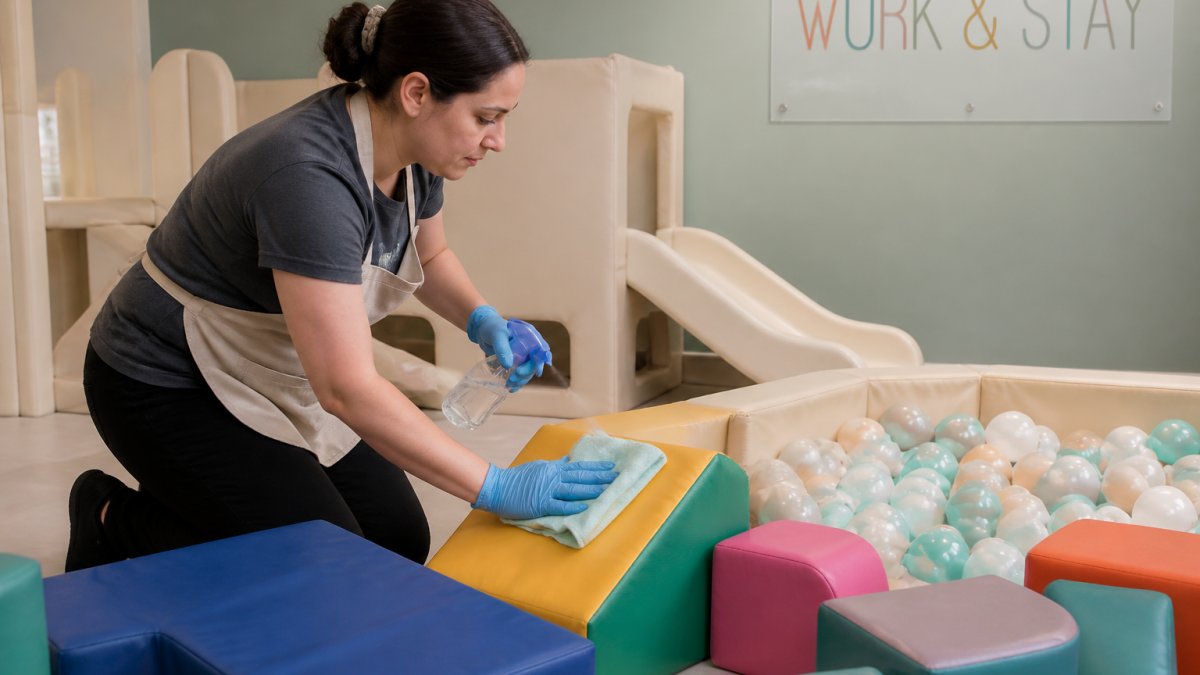
Cleanliness directly impacts child health. Soft play surfaces, ball pits, and shared toys require clear sanitization protocols followed consistently.
Walk through and observe:
- Are surfaces visibly clean?
- Do staff clean toys between uses?
- How often is the ball pit emptied and sanitized?
- What cleaning products do they use?
- Are bathrooms stocked and clean?
Ask about their specific sanitization schedule. Current best practice includes sanitizing high-touch surfaces multiple times daily and deep-cleaning soft play areas regularly.
Request their cleaning logs. Facilities that track sanitization show accountability.
Review Supervision Policies at Supervised Indoor Play Areas
The right ratio of staff to children prevents injuries and enables quick response when accidents happen.
Staff-to-Child Ratios and Training
Look for clear policies on staff-to-child ratios. A common standard is one adult per 8-10 young children, though facilities serving infants should have lower ratios.
During your visit, verify the staff-to-child ratio matches their claims. Staff should be actively watching play areas, not distracted.
Ask about staff training: CPR and first aid certification, safety training frequency, and hiring processes. Staff certifications should be current and verifiable.
Emergency Procedures and Staff Preparedness
Every facility should have a written emergency plan covering injuries, medical incidents, and evacuations. Key elements: parent contact procedures, first aid supply location, serious injury protocol, evacuation routes, and staff training frequency.
Observe whether staff know where first aid kits are located. Well-trained staff can retrieve supplies and respond immediately.
Ask about incident documentation. Facilities should report injuries to parents and keep records.
Verify CPR and First Aid Certifications
Ask these specific questions:
- What certifications do all staff hold? Look for CPR certification (American Heart Association or American Red Cross are the recognized standards) and pediatric first aid. Staff should have both, not just one.
- How current are certifications? CPR and first aid certifications expire. Ask when each staff member's certification renews. A facility that can't answer this quickly hasn't tracked it properly.
- What's the renewal process? Do they require staff to recertify before expiration, or do they let certifications lapse? Facilities that proactively schedule recertification take this seriously.
- Who is certified for what? Not all staff need identical certifications, but at least one person on-site during all operating hours should have current CPR and pediatric first aid. Ask which staff members hold which certifications.
- Can you see proof? Request to view actual certification cards or a facility roster showing certification status. Legitimate facilities keep these records organized and accessible.
Ask about emergency drills: evacuation practice frequency and mock injury scenarios. Facilities that conduct regular drills demonstrate that emergency preparedness is practiced and refined.
Assess Age-Appropriate Play Zones and Inclusive Design
Children develop at different rates. Safe facilities separate play areas by age or developmental stage. A toddler exploring a ball pit needs different supervision than a preschooler on a climbing structure.
Look for:
- Separate zones for infants/toddlers and older children
- Age-appropriate equipment heights and challenge levels
- Soft surfaces under climbing equipment
- Barriers preventing younger children from accessing advanced structures
Inclusive design means children of all abilities can play. Ask whether the facility accommodates:
- Children with mobility challenges
- Sensory sensitivities (quiet areas, adjustable lighting)
- Allergies and dietary needs
- Developmental delays
Facilities committed to inclusion train staff on accommodations and adapt their space accordingly. They welcome questions about how they support different children's needs.
SIGN UP FOR YOUR MEMBERSHIP TODAY →
Managing Allergies and Dietary Safety
If your facility serves snacks or allows outside food, allergy management becomes critical. Cross-contamination in shared play spaces, especially ball pits, sensory bins, and soft play areas, can trigger reactions in children with food allergies.
Ask these specific questions:
About snack policies:
- What snacks does the facility provide, and are ingredient lists available?
- Do they have a written allergy policy that staff follow?
- Can parents bring allergen-free snacks for their child?
- How do they prevent other children from sharing food with allergic children?
About cross-contamination prevention:
- Do staff wash hands after eating before handling play equipment or other children?
- Are there separate areas where snacks are consumed, away from play zones?
- How often are high-touch surfaces (railings, balls, toys) cleaned, especially after snack time?
- Do they clean shared sensory materials (kinetic sand, play dough) between uses, or replace them regularly?
About staff awareness:
- Are staff trained to recognize signs of allergic reactions (swelling, difficulty breathing, hives, vomiting)?
- Does the facility keep a list of children with known allergies and their symptoms?
- Do staff know where epinephrine auto-injectors (EpiPens) are stored and how to use them if needed?
- Is there a protocol for calling 911 and notifying parents immediately?
About documentation:
- Do they require parents to disclose allergies in writing at enrollment?
- Do they keep allergy information accessible to all staff during play sessions?
- Will they accommodate a parent's request to stay on-site if their child has severe allergies?
Facilities that take allergies seriously will have clear, written policies and staff who can explain them confidently. They understand that for families managing food allergies, a safe play space means one where staff actively prevent exposure and respond quickly if an incident occurs.
Use an Indoor Play Space Safety Checklist
Use this checklist during your visit to evaluate safe indoor play spaces:
| Safety Area | What to Check | Red Flags |
|---|---|---|
| Certifications | ASTM F24 compliance, current inspection reports | No documentation, vague answers |
| Equipment | No visible damage, proper padding, secure railings | Cracks, rust, loose bolts, worn surfaces |
| Cleanliness | Fresh smell, visible cleaning, sanitized toys | Odors, dirty surfaces, no cleaning logs |
| Staff | CPR/first aid certified, active supervision, appropriate ratios | Untrained staff, distracted supervision, too few adults |
| Emergencies | Written plan, staff training, first aid access | No procedures, staff unsure, no supplies |
| Age Zones | Separate areas by age, appropriate equipment | Mixed ages, equipment too advanced/basic |
| Inclusivity | Accommodations available, trained staff | No accessibility, staff unfamiliar with needs |
Print this checklist and bring it on your facility visit. Rate each area honestly. Facilities that score well across all categories are genuinely investing in safety.
Consider Coworking Spaces with Childcare for Working Parents
For parents who work from home or need flexible workspace, combining work and childcare solves a real problem.
This model works when:
- Childcare and workspace are physically separated so parents can focus
- Staff in the childcare area are trained and supervised
- Parents can check in on children during breaks
- Facility maintains safe indoor play spaces standards
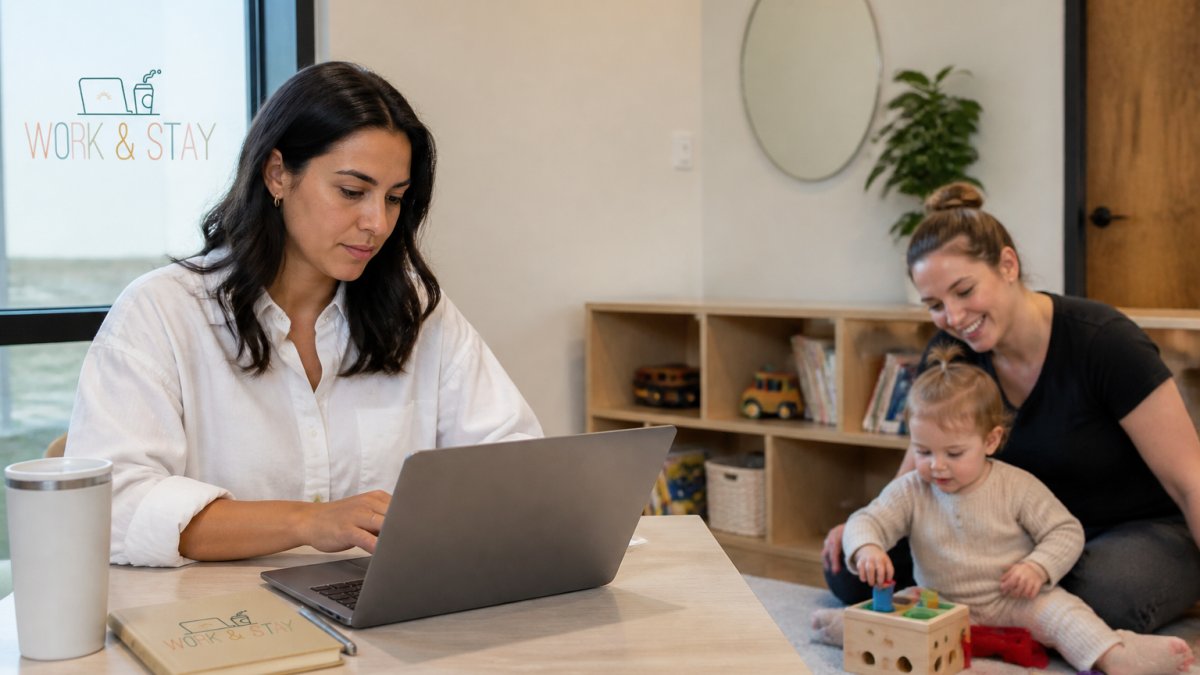
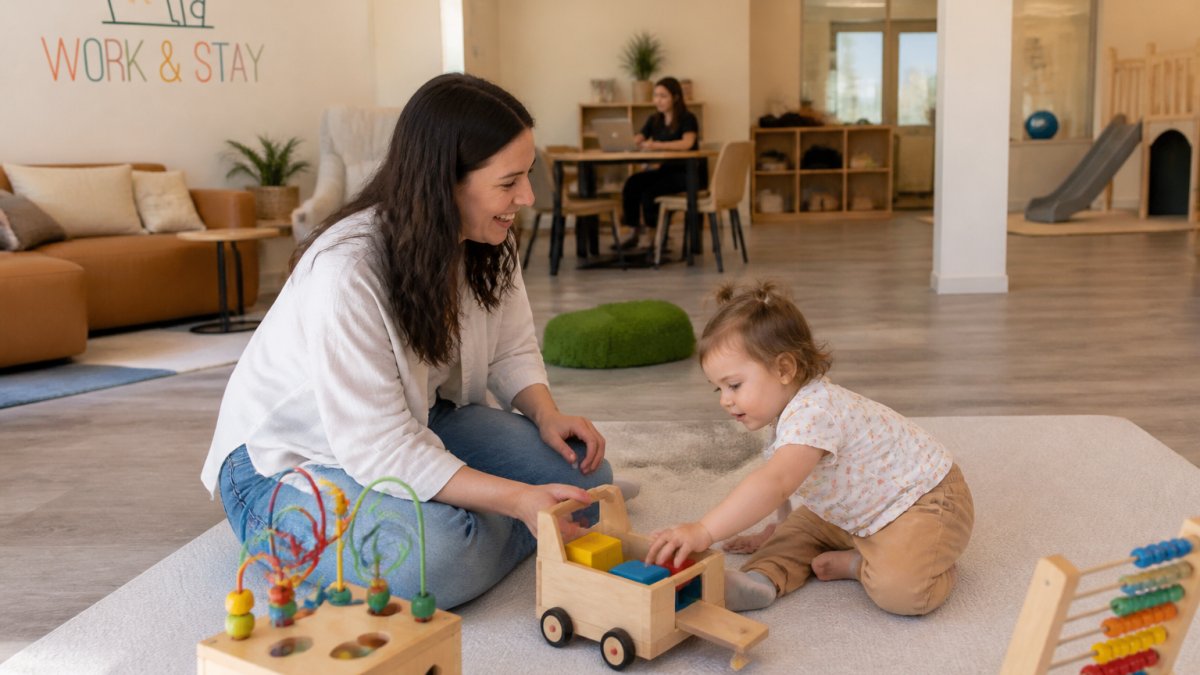
Work & Stay combines flexible workspace for parents with supervised, curriculum-based childcare for ages 0-6 just steps away. This approach lets you be nearby if needed while still getting focused work time.
For working parents, this eliminates the mental load of coordinating separate childcare and workspace.
Ask the Right Questions Before Your First Visit
Preparation makes your visit more productive. Call ahead or email with these questions:
About Safety & Certification:
- What safety standards do you follow?
- Can you share your most recent inspection report?
- How often do you inspect equipment?
About Hygiene:
- What's your daily sanitization schedule?
- How often do you deep-clean soft play areas like ball pits?
- What cleaning products do you use?
About Staff:
- What's your staff-to-child ratio?
- Are all staff CPR and first aid certified?
- How do you train staff on safety?
About Your Child:
- Do you have separate areas for different ages?
- How do you handle children with allergies or sensitivities?
- What's your diaper-changing and bathroom protocol?
- Can I stay nearby while my child plays?
About Emergencies:
- What happens if my child gets injured?
- How do you contact parents in emergencies?
- Can you describe your evacuation procedures?
Listen to how they answer. Confident, detailed responses indicate a facility that knows its safety protocols. Vague or defensive answers suggest they haven't thought things through.
Finding safe indoor play spaces takes effort, but it's worth it. Parents who evaluate certifications, hygiene, supervision, and design catch problems before they harm children. Use the checklist provided here to assess any facility objectively.
Frequently Asked Questions
What safety standards should indoor play spaces meet?
Indoor play spaces should comply with ASTM F24 standards for playground equipment and follow local health department guidelines for cleanliness and capacity limits. Staff should be trained in CPR and first aid, and facilities should have documented emergency procedures. Ask about routine equipment inspections, sanitization logs, and whether the facility undergoes third-party safety audits. A reputable facility will provide documentation of these standards upon request.
How can I verify the safety protocols of a local indoor play facility?
Request to see the facility's safety certifications, equipment inspection reports, and staff training documentation. Ask about their supervision policy, staff-to-child ratios, and emergency response procedures. Visit during operating hours to observe how staff interact with children and monitor the space. Check online reviews for parent feedback about safety and cleanliness. Don't hesitate to ask the manager directly about their hazard mitigation practices and allergy protocols.
Are there indoor play spaces that offer childcare for working parents?
Yes. Some facilities combine supervised indoor play with workspace for parents. These coworking spaces with childcare, like Work & Stay, allow you to work productively while your child plays in a safe, supervised environment nearby. They offer flexible memberships or day passes with no long-term contract, making them ideal for parents who need occasional childcare support. Look for facilities that provide curriculum-based, teacher-led classroom time, separate age-appropriate zones, and direct supervision by trained staff.
What should I look for in a supervised play environment?
Prioritize age-segregated zones so toddlers aren't overwhelmed by older children. Verify that staff maintain appropriate child-to-staff ratios (typically 1 adult per 6-8 young children). Observe whether staff actively engage children in imaginative play and social interaction, not just passive supervision. Confirm that the facility has clear visitor screening, capacity limits, and documented emergency procedures. Ask about their approach to handling injuries, allergies, and behavioral issues.