 blog
blog
Kids Activities in Scottsdale: 2026 Family Guide
Table of Contents
- Why Scottsdale Is a Top Destination for Kids Activities
- Indoor Play Areas and Toddler-Friendly Fun
- Coworking Space with Childcare: A Game-Changer for Working Parents
- Outdoor Adventures: Parks, Splash Pads, and Nature Trails
- Interactive Museums and Educational Experiences
- Seasonal Events and Family-Friendly Festivals
- Budget-Friendly Itineraries and Transportation Tips
- Accessibility and Inclusion: Making Activities Work for Every Child
- Frequently Asked Questions
Last Updated: September 14, 2026
Why Scottsdale Is a Top Destination for Kids Activities
Scottsdale packs a lot of family-friendly fun into one desert city, from splash pads and nature trails to interactive museums and indoor playgrounds built for toddlers. This guide from Play & Stay breaks down the best kids activities Scottsdale families actually use, organized by age, budget, and accessibility.
The city's advantage is variety within short drives: outdoor recreation in cooler months, air-conditioned indoor play when summer heat peaks, and a steady calendar of seasonal events.
Below, we cover indoor play areas, outdoor adventures, museums, seasonal festivals, and practical logistics, plus how a coworking space with childcare fits into a busy parent's week.
Indoor Play Areas and Toddler-Friendly Fun
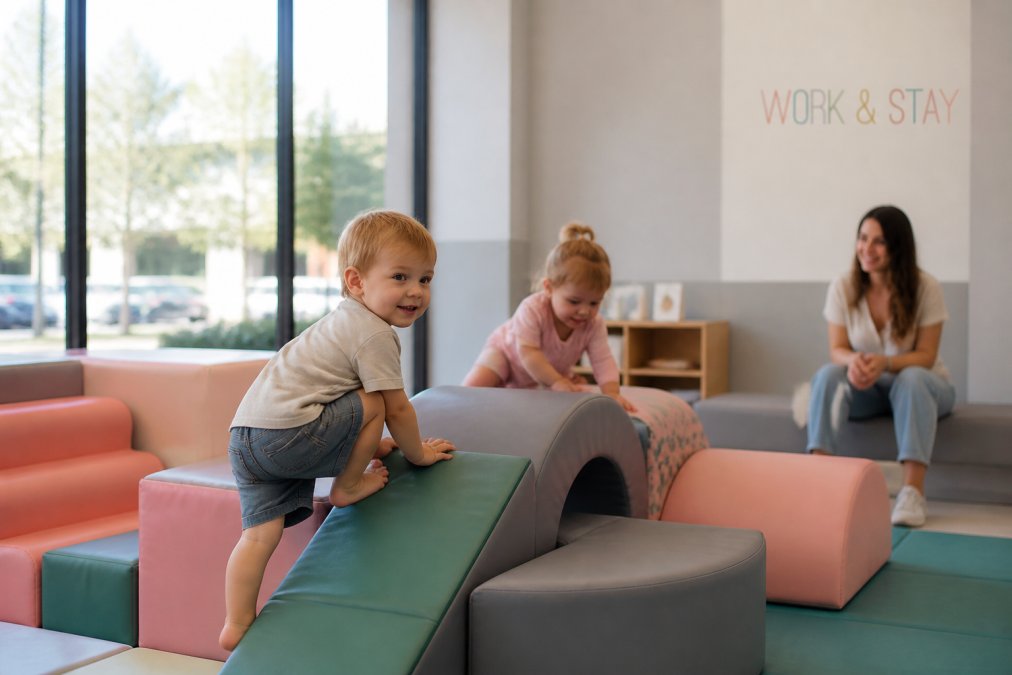
An indoor playground for toddlers is a climate-controlled play space with soft climbing structures, sensory zones, and separate areas for the youngest guests, designed so children ages 0-6 can explore safely while parents stay close. In Scottsdale, these spaces solve the summer problem: when it's too hot for the park, kids still need to move.
What Makes a Great Indoor Playground for Toddlers
The best indoor playgrounds for toddlers share a few traits:
- Separate zones for crawlers and walkers, so an 18-month-old isn't bowled over by a five-year-old
- Soft, padded surfaces and rounded edges on every structure
- Visible sightlines from seating areas, so parents can watch without hovering
- Clean restrooms with changing stations
- Staff who supervise and engage, not just monitor the door
A common mistake is choosing a space built for older kids and hoping a toddler keeps up. Age-segmented play areas are worth prioritizing.
At Play & Stay, the indoor play space is built specifically for ages 0-6, with guided arts, music, and dance programming alongside open play. Day passes and memberships carry no long-term contract, which suits families who visit seasonally.
Coworking Space with Childcare: A Game-Changer for Working Parents
A coworking space with childcare combines a quiet workspace for parents with supervised, on-site care for young children in a separate environment. For remote-working parents, it removes the impossible choice between focusing on a call and keeping a toddler entertained.
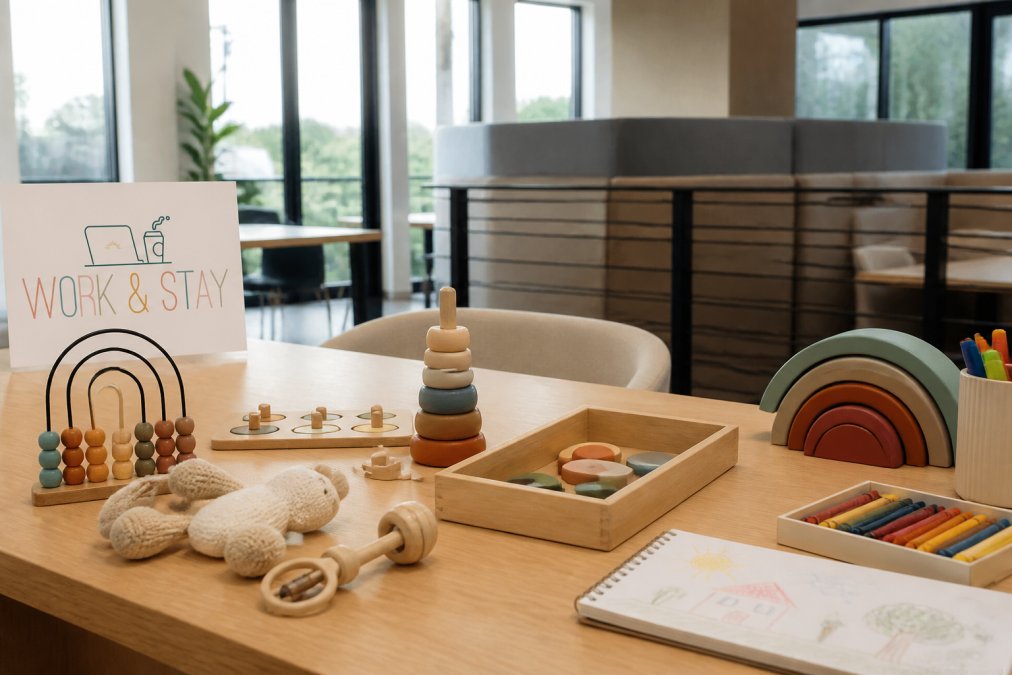
Work & Stay, the workspace side of the same Scottsdale location, pairs a coworking lounge and private workspaces with curriculum-based, teacher-led childcare for ages 0-6 just steps away. Because the childcare area is separate from the work area, parents get actual quiet for calls and email.
Flexibility is the point. Memberships and day passes carry no long-term commitment, which works for families who are only in town part of the year.
Outdoor Adventures: Parks, Splash Pads, and Nature Trails
Scottsdale's outdoor recreation shines from fall through spring, when mornings are cool and trails are comfortable for small legs. The trick is timing: start early, carry plenty of water, and plan a shaded or indoor backup for midday.
Splash Pads and Water Play
Splash pads are the low-effort win for toddlers: no swimming skill required, no deep water. Many local parks run them seasonally, so check days and hours before loading up the car. Bring water shoes, a change of clothes, and sunscreen.
Hiking and Nature Preserves for Little Legs
For hiking trails, choose short, flat, stroller-accessible paths over anything with elevation gain. Nature preserves and desert greenbelts often have interpretive signs that turn a walk into hands-on learning. Early mornings bring the best chance of spotting rabbits, lizards, and desert birds.
Interactive Museums and Educational Experiences
Interactive museums turn a hot afternoon into hands-on learning, with exhibits built for touching, climbing, and experimenting rather than looking. But 'museum' isn't one category: a children's museum, a science center, and a cultural venue serve very different ages, and picking the wrong one is the most common reason a museum day flops.
Match the Museum to Your Child's Age
Ages 0-2 (crawlers and early walkers). You want a dedicated early-childhood room with soft flooring, low mirrors, textured blocks, and a gate you can close. Full-size exhibits are overstimulating at this age. Look for venues that publish a 'tot spot' or 'early learners' area on their map.
Ages 3-5 (preschoolers). This is the sweet spot for children's museums. Look for pretend-play areas, grocery stores, kitchens, doctor's offices, plus water tables, building zones, and a scheduled story time or craft. Preschoolers do best with a defined loop they can complete in 60-90 minutes.
Ages 6+ (early elementary). Science centers win here. Hands-on physics exhibits, weather and electricity demos, and live animal presentations hold attention that a pretend-play kitchen no longer will. For mixed-age groups, a science center with a younger-kids wing beats a children's museum with nothing for the older child.
What to Look For Before You Book
- Dedicated early-childhood area. Scaled furniture, soft surfaces, and a gate matter more than exhibit count.
- Sensory-friendly hours. Many museums run low-sensory mornings with reduced lighting, lower volume, and capped attendance, often the best window for any child who struggles with crowds.
- Quiet rooms. A designated calm-down space is the single most useful amenity for families with sensory-sensitive kids.
- Stroller policy. Confirm whether strollers are allowed on the exhibit floor or must be parked.
- Re-entry. Ask whether you can leave for lunch and come back on the same ticket. With toddlers, a mid-visit break is often the difference between a good day and a meltdown.
- Reduced-admission windows. Many venues run discounted or free admission on select days or evenings. Check the calendar before you buy.
A Realistic Museum Day, Hour by Hour
A pattern that works for most families with young children:
- Arrive at opening. The first 30 minutes are the calmest the museum will be all day.
- Hit the busiest exhibit first. Whatever draws the biggest crowd, usually the water table or the climbing structure, do it before the lines form.
- Break for a snack at the 75-minute mark. Blood sugar and patience are linked.
- Do one more short loop, then leave. Two hours total is a full museum day for a toddler.
- Save the gift shop for last, or skip it entirely. It's the most reliable meltdown trigger in the building.
Why Guided Play Beats Free Play in a Museum Setting
The payoff of a museum visit goes beyond entertainment. Guided play, where an adult or instructor frames the activity, builds coordination, social skills, and early problem-solving more reliably than unstructured wandering. That's why a museum with scheduled story times or drop-in workshops is worth more to a preschooler than one with a bigger floor and no programming.
The same principle applies outside the museum. Play & Stay's indoor play space for ages 0-6 pairs open play with guided arts, music, and dance programming, so a rainy day or a too-hot afternoon still includes structured learning. Day passes and memberships carry no long-term commitment, which suits families who visit seasonally. You can learn more at Play & Stay memberships and day passes.
For parents who need to work while their child is engaged, Work & Stay at the same location pairs a coworking lounge and private workspaces with supervised, teacher-led childcare for ages 0-6 in a separate childcare environment. It's not a traditional daycare or an unrestricted drop-off service, it's a workspace with onsite care, so a parent can take a call while their child is in programming a few steps away. Memberships and day passes are flexible, and you can read more at Work & Stay coworking with childcare.
SIGN UP FOR YOUR MEMBERSHIP TODAY →
Seasonal Events and Family-Friendly Festivals
Seasonal events give families a reason to return to favorite spots throughout the year. Here's how the family calendar breaks down across the metro area.
Winter (December-February): Lights, Parades, and Cool-Weather Outings
This is prime outdoor season. Daytime highs often sit in the 60s and 70s, so you can plan a full morning outside without heat risk. Look for:
- Holiday light displays and drive-through or walk-through events, usually running from late November through early January
- Holiday parades and tree-lighting ceremonies in Old Town and surrounding downtowns
- Desert botanical garden events, which often pair lights with stroller-friendly paved paths
- Outdoor movies and stargazing nights, which work best after dark when temperatures drop
Winter is also the best window for longer nature walks and trail outings. Book those now and save indoor play for the hot months.
Spring (March-May): Festivals, Gardens, and Wildflower Season
Spring is the busiest family-event season. Expect:
- Art walks, food festivals, and cultural celebrations, many of which set up kid zones with crafts and games
- Garden and wildflower events at desert botanical venues, timed to the bloom
- Spring training games, which are a surprisingly good toddler outing if you sit in the outfield lawn and bring a blanket
- Easter egg hunts and spring carnivals at parks and community centers
Spring heat arrives in May, so front-load outdoor plans into March and April and shift to morning-only outings by late spring.
Summer (June-August): Indoor Programming and Evening Events
Daytime outdoor events are largely off the table for young children. What works:
- Indoor museum programming, library summer reading events, and indoor play space camps
- Evening festivals and outdoor concerts that start after sunset
- Splash pad and pool time, ideally before 10 a.m.
- Indoor mall events and movie theater kids' series, which many chains run on weekday mornings
A practical summer rule: anything outdoors happens before 9 a.m. or after 7 p.m.
Fall (September-November): Harvest Events and the Return of Outdoor Play
Fall is the second great outdoor window. The calendar fills with:
- Harvest festivals and pumpkin patches, many of which add petting zoos, hayrides, and corn mazes
- Halloween events, including trunk-or-treats at parks and community centers
- Fall art festivals and outdoor markets
- Return of comfortable hiking and nature-preserve weather
How to Pick an Anchor Event Each Month
Rather than attending everything, pick one anchor event per month and build the rest of the month around routine. A few time-saving filters:
- Stroller accessibility. Ask whether paths are paved or dirt. Dirt plus a stroller plus a toddler is a bad combination.
- Shade and seating. Events with shaded seating areas let you stretch a two-hour visit into three without a meltdown.
- Start time. Arrive at opening. Crowds peak 60-90 minutes in, and that's when lines, noise, and heat all get worse.
- Exit plan. Treat the outing as a two-hour window, not a full day. Leaving while everyone is still happy beats leaving after a meltdown.
If a month's anchor event falls through, weather, illness, sold-out tickets, an indoor play space is the reliable backup. Play & Stay runs open play for ages 0-6 with guided arts, music, and dance programming, and day passes and memberships carry no long-term commitment, so a rained-out festival doesn't have to become a wasted Saturday. You can see current hours and pass options at Play & Stay open play and day passes.
Budget-Friendly Itineraries and Transportation Tips
Keeping costs down comes down to mixing free and paid activities across a single day. A sample structure that works for most families with young children:
| Time | Activity | Cost Approach |
|---|---|---|
| Morning | Nature preserve walk or park play | Free |
| Midday | Indoor playground or museum | Day pass or membership |
| Afternoon | Splash pad or home rest | Free |
| Evening | Seasonal festival or outdoor movie | Varies, often free |
Transportation logistics matter as much as the itinerary. Cluster activities within one area to cut driving time, park once and walk where possible, and keep a stroller in the car for unexpected distances. For parents who need to work, a day pass at a workspace with childcare can replace a fragmented day with a few genuinely productive hours.
Accessibility and Inclusion: Making Activities Work for Every Child
Accessibility and inclusion deserve a place in every family itinerary. Children with sensory sensitivities, mobility needs, or developmental differences often do best with sensory-friendly hours, quiet rooms, and predictable routines.
Before booking, ask three questions:
- Are the play structures and paths stroller-accessible and wheelchair-friendly?
- Does the venue offer sensory-friendly sessions with reduced noise and lighting?
- Is there a quiet space to reset if a child becomes overwhelmed?
Many indoor play centers and museums publish accessibility details on their websites, and staff can usually describe what a typical visit looks like. Planning around a child's specific needs is the difference between a good outing and a meltdown.
Scottsdale offers no shortage of things to do with young children, but the real challenge is matching the activity to your child's age, your budget, and the day's weather. That's where Play & Stay and Work & Stay come in: an indoor play space for ages 0-6 with guided arts, music, and dance, plus a coworking lounge with supervised, curriculum-based childcare just steps away, all available through flexible memberships and day passes with no long-term contract. Learn about memberships and day passes, and build a weekly routine that works for your whole family.
Frequently Asked Questions
What are the best indoor play areas for toddlers in Scottsdale?
Scottsdale has several indoor play areas designed for young children. Look for spaces with separate zones for different age groups, soft play equipment, and clean facilities. Play & Stay offers a dedicated indoor playground for toddlers ages 0-6 with supervised open play, guided arts and music, and a safe, climate-controlled environment. It's ideal for hot days when outdoor play isn't comfortable.
Are there flexible coworking spaces with childcare in Scottsdale?
Yes. Work & Stay in Scottsdale combines a coworking lounge and private workspaces with supervised, curriculum-based childcare for children ages 0-6. Parents can work while their kids are in a separate, teacher-led classroom just steps away. Memberships and day passes are available with no long-term contracts, making it a flexible option for remote-working parents.
What free or low-cost kids activities are available in Scottsdale?
Scottsdale offers many free and low-cost options for families. Public parks and recreational greenbelts have playgrounds and picnic areas at no cost. Splash pads operate seasonally, often free or for a small fee. Many museums offer discounted or free admission days. Check local community calendars for seasonal events and festivals that are budget-friendly.
How can parents balance remote work and childcare in Scottsdale?
Balancing work and childcare is easier with the right setup. Work & Stay provides a coworking space with on-site childcare, so parents can focus on work while their children are supervised and engaged in curriculum-based activities. This eliminates the need for separate daycare and workspace commutes. Day passes and memberships offer flexibility for different schedules.