 blog
11 Essential Gear Items for Working Parents Traveling With Kids
Last Updated: October 27, 2026
Quick Summary
Pack travel gear for working parents traveling with children as three linked kits: a child kit, a work kit, and a shared kit. Label each packing cube by category and restock nightly so the morning rush never starts with a search.
- An umbrella stroller folds flat, weighs little, and fits in an overhead bin or rental car trunk.
- Pack two outfits per day plus one extra for toddlers, who spill often.
- Build the work kit around power, connectivity, audio, and organization rather than four separate gadgets.
- Run a five-minute test video call from your hotel-room setup before any trip with a scheduled call.
- Cut sleep gear first and entertainment second on short trips, keeping the work and shared kits intact.
Table of Contents
- Start With a Family Travel Packing List Built for Two Jobs
- 1. Strollers and Mobility Gear That Fold Small
- 2. Car Seats and Booster Seats You Can Carry Without a Fight
- Kids' Travel Carry-On Essentials: What Goes in Their Bag
- 3. Diaper Bags, Wipes, and Feeding Supplies That Stay Organized
- 4. Sleep Gear and Comfort Items for Unfamiliar Rooms
- Traveling With a Toddler Checklist: Clothing, Shoes, and Entertainment
- Remote Work While Traveling With Kids: Connectivity and Focus Gear
- Frequently Asked Questions
Start With a Family Travel Packing List Built for Two Jobs
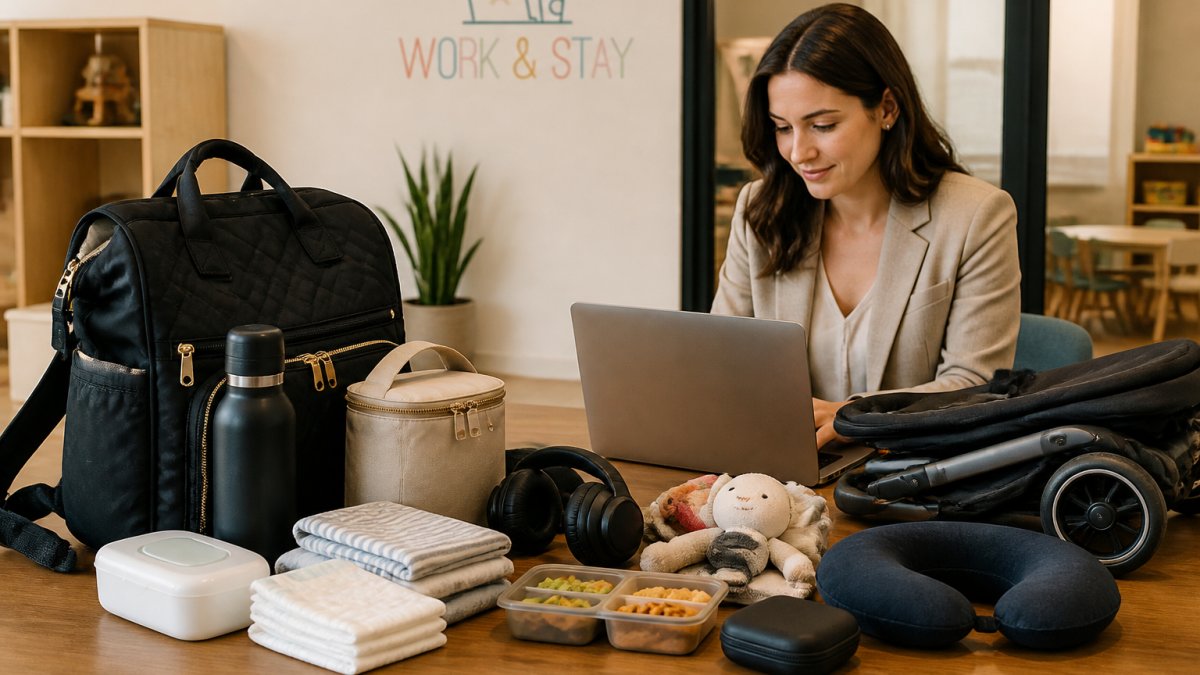
Most travel packing lists assume one job: get the family there. Working parents have two. The bag has to keep a child fed, rested, and entertained while also protecting a laptop, a call schedule, and a few hours of real focus. That double duty is what makes travel gear for working parents traveling with children so different from a standard vacation checklist. The trick is to stop packing one giant bag and start packing two linked kits.
- The child kit: diapers, food, sleep items, clothing, entertainment
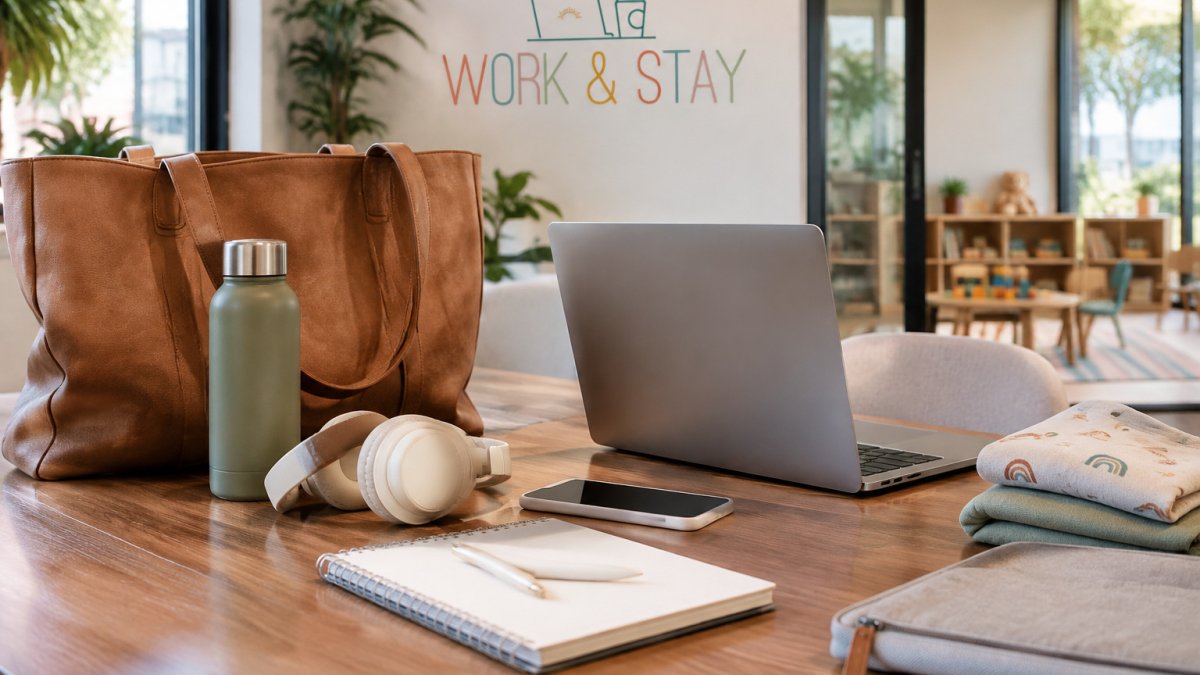
- The work kit: laptop, charger, headphones, hotspot, backup battery
- The shared kit: snacks, wipes, a change of clothes, first aid
Build the list around those three piles and packing stops being a guessing game. Below is the travel gear that earns its space, plus a system for keeping it organized.
| Kit | What Goes In | Why It Matters |
|---|---|---|
| Child kit | Diapers, wipes, bottles, sleep sack, comfort toy | Keeps the child calm and on routine |
| Work kit | Laptop, charger, headphones, hotspot | Protects focus time and calls |
| Shared kit | Snacks, spare clothes, first aid, garbage bags | Handles spills, delays, and meltdowns |
A Packing System That Survives a Real Travel Day
A list is only useful if it maps to how the day actually unfolds. Pack in three layers instead of one bag:
- The under-seat layer: the work pouch and a small child activity pouch, so a call or a meltdown can be handled without opening an overhead bin.
- The overhead layer: the main child kit and shared kit, packed in cubes by category so you can pull one cube without unpacking the rest.
- The checked or trunk layer: bulk diapers, backup outfits, and sleep gear for the destination.
Label each cube by category, diapers, feeding, sleep, clothes, work, and restock nightly so the morning rush never starts with a search.
Adjust the Kit to the Trip, Not the Other Way Around
Gear advice gets more useful when it changes with the trip. Use these adjustments as a starting point:
- Flights: prioritize carry-on-friendly, one-hand-fold gear and keep all batteries and medication in the cabin with you. Confirm current rules for car seats and strollers with the airline and with the Transportation Security Administration before you fly.
- Road trips: you have trunk space, so bring the full-size stroller and a travel crib, but pack a small go-bag for rest stops so you are not unloading the car at every exit.
- Multi-day stays: pack two days of child clothing in the carry-on and the rest in checked luggage, so a delayed bag does not strand you without a change of clothes.
- Short trips: cut the sleep gear first and the entertainment second; keep the work kit and the shared kit intact every time.
1. Strollers and Mobility Gear That Fold Small
An umbrella stroller is the single best mobility pick for travel. It folds flat, weighs little, and fits in an overhead bin or a rental car trunk without a fight. Full-size strollers are comfortable but bulky, and most airlines treat them as gate-check items you have to haul through the terminal.
For working parents, the deciding factor is speed. A stroller that opens one-handed lets you hold a coffee and a phone while managing a toddler. Look for:
- A one-hand fold mechanism
- A compact footprint when collapsed
- A storage basket big enough for a diaper bag
- A canopy for sun and bright airport lights
A common mistake is buying a stroller for the trip you hope to take. Buy for the tightest space you will face, whether that is a hotel room, a rideshare trunk, or a crowded boarding line.
2. Car Seats and Booster Seats You Can Carry Without a Fight
Travel car seats should be light, narrow, and easy to install in a rental car. A convertible seat that works from infancy through the toddler years saves you from buying twice, but it is heavier to carry. A dedicated travel seat trades some padding for portability. Booster seats suit older preschoolers and are far easier to move between vehicles.
Check the label for the current federal safety standard before you buy, and confirm the seat fits the child's weight and height. The National Highway Traffic Safety Administration car seat guidance explains how to match a seat to a child and how to install it correctly.
Kids' Travel Carry-On Essentials: What Goes in Their Bag
Give each child a small backpack with their own kids' travel carry-on essentials. Ownership cuts down on "where is my stuff" panic and keeps little hands busy. Pack it the night before and let them choose one toy.
- A comfort item or small stuffed animal
- Two or three small toys or a sticker book
- Kid-sized headphones
- A refillable water bottle
- A few easy snacks
- A spare set of clothes in a zip bag
Keep this bag light enough for the child to carry. The point is independence, not packing a second suitcase.
3. Diaper Bags, Wipes, and Feeding Supplies That Stay Organized
A diaper bag works best when it is treated as a mobile station, not a junk drawer. Use packing cubes or labeled pouches so you can find a diaper, a wipe, and a bottle without unpacking the whole bag in a bathroom line.
SIGN UP FOR YOUR MEMBERSHIP TODAY →
Diapers and wipes go in one pouch, feeding supplies in another. Pack more wipes than you think you need; they clean hands, tables, and spills. For feeding, bring bottles, formula or breastmilk storage, and a bib in a separate washable pouch. A wet bag for soiled clothes keeps the rest of the bag clean.
- One pouch for diapers and wipes
- One pouch for bottles and feeding gear
- One wet bag for messy clothes
- One small pouch for medicine and first aid
Restock the bag every night so it is ready before the morning rush.
4. Sleep Gear and Comfort Items for Unfamiliar Rooms
Sleep is the gear category parents underestimate most. Bring the sleep cues from home: a familiar sleep sack, a small lovey, a sound machine, and a nightlight.
Keep the routine identical to home. Same order, same songs, same blanket. The unfamiliar room matters less when the cues are familiar. A travel crib that packs flat is worth the space if your child still uses one.
Pack a small comfort kit for the room: a favorite book, a soft blanket, and a nightlight. These items do more for a smooth trip than almost anything else in the bag.
Traveling With a Toddler Checklist: Clothing, Shoes, and Entertainment
The traveling with a toddler checklist for clothing is simple: pack layers, pack spares, and pack for messes. Toddlers spill, so two outfits per day is not excessive on a long trip.
- Two outfits per day, plus one extra
- A light jacket or fleece for cool cabins
- Comfortable closed-toe shoes
- Water shoes for pools or splash pads
- Socks and a hat
For entertainment, rotate toys so something feels new each day. Crayons, stickers, a small puzzle, and a tablet loaded with shows and games cover most delays. Add headphones and a charging cable for the tablet.
Remote Work While Traveling With Kids: Connectivity and Focus Gear
The work kit is where most packing lists stop short, and it is the piece that decides whether the trip is productive. A parent working from a hotel room needs reliable connectivity and a way to signal focus time.
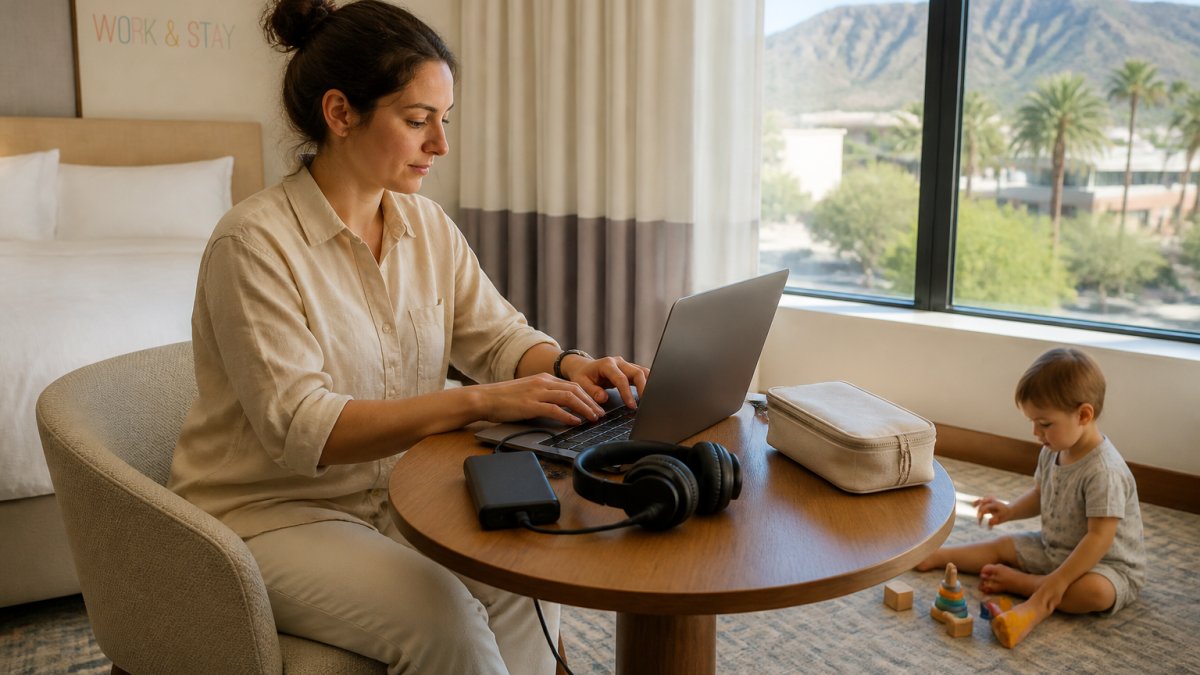
Build this kit around four jobs, not four gadgets:
- Power: a USB-C laptop charger plus a high-capacity power bank that can recharge a laptop, not just a phone. Check the bank's watt-hour rating against airline carry-on battery limits before you fly, and keep it in your carry-on, never a checked bag.
- Connectivity: a mobile hotspot on a separate carrier from your phone, so a dead zone on one network does not kill a call. Test the hotspot at home before the trip and confirm your plan's data allowance covers video calls.
- Audio: over-ear noise-canceling headphones for calls, plus a wired backup or a splitter so a child can share a tablet without borrowing your headset mid-meeting.
- Organization: one pouch for cables, adapters, and a small surge protector or power strip, because hotel rooms rarely have enough outlets near a desk.
A practical focus kit fits in one pouch: headphones, a hotspot, a charging cable, and a battery. Set a simple rule with older toddlers, such as a visual timer that marks work time and play time.
For deeper strategies on staying productive with young children nearby, this guide on how to manage remote work with infants covers routines and setup in detail. Parents who want a structured option can read about the Work & Stay parents guide, which explains how supervised, curriculum-based childcare sits steps from a coworking lounge. And when interruptions are the problem, these tips on setting boundaries while working with children help protect call time.
For families who want the work-and-childcare setup without hauling gear across the country, the Work & Stay membership and day pass options offer a flexible alternative.
Frequently Asked Questions
What travel gear is essential when traveling with children?
Cover the basics first: a compact stroller, an age-appropriate car seat or booster, a diaper bag with wipes and changing supplies, sleep gear like a travel crib or blanket, snacks and drinks, and a small first aid kit. Working parents should add a laptop with a charging cable, noise-canceling headphones, and a portable hotspot. Pack each item where you will actually reach for it, and keep the carry-on bag light enough to lift with one hand while holding a child.
How do you keep children entertained during a long journey?
Rotate a small set of toys and activities instead of bringing everything at once. Pack a few new or rarely used items, kid-sized headphones, a charged tablet for downloaded shows, and a comfort object for rest breaks. Snacks double as entertainment, so portion them into small bags you can hand back one at a time. On road trips, plan stops where kids can move before they get restless, and save the most engaging activity for the final stretch of the trip.
How can parents work remotely while traveling with children?
Treat work gear as its own packing category: laptop, charger, charging cable, headphones with a microphone, and a hotspot in case Wi-Fi is unreliable. Book lodging with a separate room or a workspace so calls do not compete with playtime. Schedule focused work for naps or early mornings, and build in childcare coverage for meetings that cannot move. At home, Work & Stay combines a coworking space with supervised childcare for ages 0-6. Learn about [memberships or day passes](https://playandstayaz.com/work-stay/).
How do you organize family travel gear without overpacking?
Build a family travel packing list around the trip itself: length, transport, and whether you will have laundry access. Pack one outfit per day plus two spare sets for young kids, and choose multipurpose items like a stroller that folds into a carry-on or a diaper bag that doubles as a daypack. Use packing cubes to separate each child's items, keep must-have items in the carry-on, and leave duplicate gear at home. Weigh the bags before you leave and cut anything you did not use on the last trip.