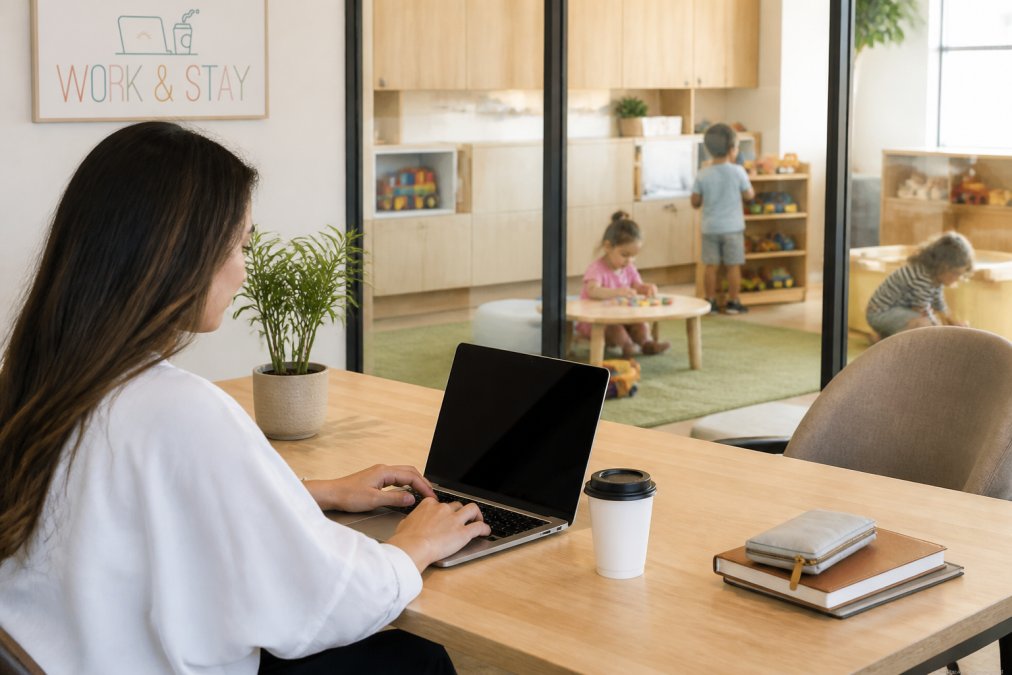
 how-to
Can I Work While Kids Play? A Parent's Guide
Table of Contents
- Can You Actually Work While Kids Play?
- Coworking Spaces with Childcare: Your Focused Workspace Solution
- How to Work from Home with Toddlers Without Constant Interruptions
- Flexible Childcare for Remote Workers: Finding the Right Fit
- Productivity Tips for Working Parents
- Safety, Supervision, and Peace of Mind
- Making the Transition: Your Action Plan
- Frequently Asked Questions
Last Updated: August 20, 2026
Can You Actually Work While Kids Play?
Yes, you can work while kids play, but it requires the right environment, clear boundaries, and realistic expectations. Remote-working parents face genuine tension: kids need supervision and engagement, but focused work demands uninterrupted attention. Most attempts fail because parents try to manage everything alone at home. The breakthrough comes when you separate the two spaces, set predictable routines, and choose childcare that genuinely frees your focus.
This guide covers practical strategies for working while kids play, from setting up your home workspace to choosing professional childcare solutions that actually work.
Coworking Spaces with Childcare: Your Focused Workspace Solution
A coworking space with childcare removes the primary obstacle to productivity: the constant decision of what your child needs next. When supervised play happens steps away in a separate, age-appropriate environment, you can focus on work without guilt or distraction.
Work & Stay combines a professional coworking lounge and private workspaces with supervised, curriculum-based childcare for ages 0-6 in a separate facility on-site. This model solves the core problem most remote-working parents face: you're not choosing between work and your child's wellbeing, both happen simultaneously in spaces designed for each purpose.
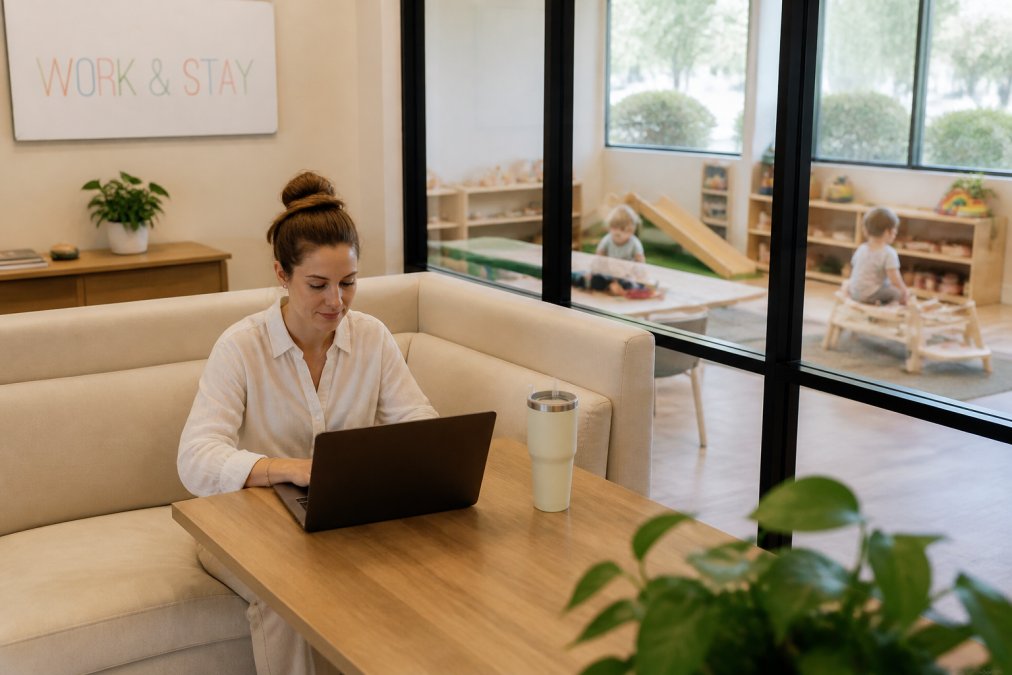
The key difference is environmental separation. When your child is in a different room with trained supervision and structured activities, your brain can shift into work mode. You're not listening for cries, monitoring snack time, or managing toy cleanup. The childcare environment handles all of that while you handle your work.
For parents who need to take client calls, attend video meetings, or complete focused tasks, this setup eliminates interruptions that make home-based work nearly impossible with young children present. You can schedule demanding work during your child's structured play time, knowing supervision and age-appropriate activities are happening without your involvement.
Work & Stay designed separate areas for different age groups (infants and toddlers in one space, preschoolers in another), so your child experiences activities matched to their developmental stage. Membership or day-pass options mean you're not locked into long-term contracts. Use the space when you need focused work time and adjust your schedule as your needs change.
How to Work from Home with Toddlers Without Constant Interruptions
Working from home with toddlers is possible when you establish clear structure, realistic work windows, and activities that hold attention. The mistake most parents make is expecting toddlers to entertain themselves while you work eight uninterrupted hours. Instead, build your work schedule around your toddler's natural rhythms and energy patterns.
Set Clear Boundaries and Routines
Toddlers thrive on predictability. When they know "work time" happens at 9 a.m. and they'll play with specific toys during that window, they settle faster and stay engaged longer. Create a visual schedule your toddler can understand: a picture of you working, a picture of playtime, a picture of snack time. This removes negotiation and surprise.
Set a specific duration for work blocks, 45 minutes is often realistic with toddlers, rather than trying to work until a task is done. When your toddler knows work time ends at 10 a.m., they can wait that long much more easily than waiting for an undefined endpoint.
Create a Dedicated Work Zone
Your workspace signals to your child that work is happening here. A specific desk, a closed door when possible, or even a visual barrier like a room divider establishes the boundary. The physical separation matters more than size.
Keep your workspace stocked with everything you need before work time starts. Getting up repeatedly breaks your focus and signals to your child that you're available. Have water, coffee, and any documents or tools within arm's reach.
Use Structured Activity Time
Independent play isn't random; it's activities selected to hold attention during your work window. Rotate through a limited set of high-engagement options so novelty maintains focus.
Effective structured activities for toddlers include: building with blocks, sensory play with dried rice or kinetic sand in a contained tray, coloring at a small table near your workspace, or simple puzzles matched to their skill level. Choose activities that don't require your input or help.
Introduce a new or rotated activity 10 minutes before your work time starts. When you end work time, transition to a different activity together so your child experiences the shift clearly.
Flexible Childcare for Remote Workers: Finding the Right Fit
Flexible childcare for remote workers means availability that matches your actual work schedule, not a fixed 9-to-5 arrangement. You might need childcare three days a week, specific blocks around client meetings, or backup coverage when your usual arrangement falls through.
In-facility childcare (like Play & Stay's supervised open play or Work & Stay's curriculum-based childcare) offers consistency, trained supervision, and structured activities. Your child interacts with other children and trained staff, supporting social development. You can drop in or use memberships with flexible scheduling.
In-home childcare (nanny, family member, or family childcare provider) offers flexibility and one-on-one attention. This works if you need irregular hours or if your child does better with consistent one-person care. Montessori playroom design.
Hybrid models combine different childcare types based on your weekly needs. For example: two days at a facility for structured play and peer interaction, one day with a family member, and two days working from home with your child.
When evaluating childcare options, ask about your child's day: What activities happen? How much time is unstructured play versus guided activities? How do staff handle separation anxiety? What communication happens between childcare and parent during the day?
For remote workers, ask whether the childcare environment is equipped to handle the reality that you're working nearby. Some parents need childcare far away to truly disconnect; others work better knowing they're minutes away if needed.
Productivity Tips for Working Parents
Working parents have less total time, so every work hour must count. The productivity challenge isn't working harder, it's working strategically within real constraints.
SIGN UP FOR YOUR MEMBERSHIP TODAY →

Batch Your Tasks During Peak Focus Hours
Identify your peak focus hours, usually early morning or during your child's most engaged play time. Protect these hours for work requiring the most concentration: writing, analysis, problem-solving, client calls. Handle email, admin tasks, and lower-focus work during other windows when interruptions are less costly.
Batching also means answering all email in one focused block rather than responding throughout the day, and scheduling all meetings on specific days rather than spreading them across the week.
Manage Noise and Distractions
Noise is the invisible killer of remote work focus. Noise-canceling headphones or white noise aren't luxuries, they're productivity tools. If you're in a home office, white noise from a fan masks the sound of play happening elsewhere. If you're in a coworking space with childcare on-site, good sound insulation between work and play areas makes a measurable difference.
For video calls and client meetings, plan around your child's quietest hours. If your toddler is typically louder mid-afternoon, schedule calls for morning or early evening.
Build in Buffer Time Between Work and Parenting
The transition from focused work mode to active parenting requires a mental shift. Schedule 10-15 minutes between ending work time and taking over full parenting duties. Use this time to wrap up work tasks, close your laptop, and reset your mental focus.
Safety, Supervision, and Peace of Mind
Effective childcare requires genuine supervision, clear safety protocols, and transparent communication about what happens during your child's time away from you.
When evaluating any childcare arrangement, ask about specific safety measures: How are children accounted for? What's the staff-to-child ratio? How are emergencies handled? What's the facility's policy on illness, injury, or behavioral incidents?
For facility-based childcare like Play & Stay, ask about staff training in first aid and CPR, facility cleanliness standards, and how the environment is designed for safety. Reputable facilities openly share this information.
Communication during your child's time in care matters. You should receive regular updates about your child's day: what they played, how they ate, and any notable moments. This keeps you connected and alerts you to concerns early.
If your child has separation anxiety, ask how the facility handles transitions and whether parents can stay during initial visits. Some facilities allow parents to remain nearby while their child adjusts, which reduces anxiety and helps your child build confidence.
Making the Transition: Your Action Plan
Shifting from managing everything alone to using external childcare or structured work-from-home routines takes planning.
Week 1-2: Assess and plan. Track your actual work patterns for two weeks. When do you focus best? How long are realistic work blocks with your child present? What interruptions happen most?
Week 3: Set boundaries and routines. Introduce your work schedule and structured activity time at home. Start with short work blocks (30 minutes) and gradually extend as your child adjusts.
Week 4-6: Evaluate what's working. Are home-based work blocks sustainable? Is your child engaging with structured activities? Are you actually getting focused work done? If not, consider whether external childcare would help.
Week 6+: Explore childcare options if needed. If home-based work isn't delivering the focus you need, visit facilities like Work & Stay. Observe how children transition, how staff interact with them, and whether the environment feels right for your child.
Ongoing: Adjust as your child grows. What works with an 18-month-old won't work with a 3-year-old. Revisit your strategy every few months and adapt as your child's needs change.
Working while kids play is achievable, but it requires honest assessment of what "works" means for your family. For some parents, that's focused work blocks at home with structured play. For others, it's regular time in a professional workspace with supervised childcare nearby. For many, it's a combination that shifts based on weekly needs.
The common thread is intentionality: you're designing conditions that make it work. Work & Stay was built specifically for this reality, parents who need focused workspace and children who benefit from supervised, curriculum-based play in a separate, age-appropriate environment. Learn more about memberships and day passes at https://playandstayaz.com/work-stay/ to see if this model fits your family's needs.
Frequently Asked Questions
Is it actually possible to work while kids play nearby?
Yes, but it requires the right environment and structure. The key is separating your work space from the play space, either physically or with clear boundaries, so children can play independently while you focus on work. Supervised play environments where trained staff engage children in activities allow you to work productively without constant interruptions. Success depends on your child's age, the type of work you do, and having a distraction-free area for focused tasks.
What's the best way to work from home with toddlers?
Create a structured routine that combines independent play time with your work blocks. Offer age-appropriate activities like puzzles, building toys, or guided play that hold their attention. Use noise-canceling headphones for calls, batch similar tasks together, and schedule your most demanding work during peak focus hours when toddlers are most content. Consider using a coworking space with childcare during your most critical work periods, then handle lighter tasks at home.
How much does flexible childcare for remote workers cost?
Pricing for flexible childcare varies widely depending on your location and the type of care you choose. Options range from hourly drop-in care at play facilities to membership-based coworking spaces with on-site childcare. Rather than estimate costs, contact local providers directly to compare day passes, hourly rates, and membership options. Many facilities offer flexible arrangements with no long-term contracts, so you can adjust as your work schedule changes.
How do I know a supervised play space is safe for my child?
Look for facilities that employ trained, background-checked staff and maintain clear safety protocols. Ask about their supervision ratios, incident reporting procedures, and cleanliness standards. Reputable providers should be transparent about their operations and welcome facility tours. Check for positive reviews from other parents and ask about their approach to child development, quality facilities offer structured, curriculum-based activities alongside free play, not just supervision.
This article was written using GrandRanker