 blog
blog
Activities for 0 to 6 Year Olds: Age-by-Age Play Guide
Table of Contents
- Developmental Milestones for 0-6 Year Olds: What Each Stage Needs
- Activities for 0 to 6 Year Olds: Age-by-Age Ideas That Work
- Indoor Play Ideas for Toddlers: Low-Prep Activities for Small Spaces
- Coworking With Childcare: How Work & Stay Supports Play and Productivity
- Activities for Neurodivergent Children: Adapting Play for Different Needs
- Budget-Friendly DIY Toy Construction and Outdoor vs. Indoor Play
- Parental Mental Health During Play: Why You Need Breaks Too
- Frequently Asked Questions
Last Updated: September 10, 2026
Developmental Milestones for 0-6 Year Olds: What Each Stage Needs
Understanding developmental milestones for 0-6 year olds helps parents choose play that actually matches what a child's brain and body are ready to do. The CDC's developmental milestones resource breaks early childhood into distinct stages, each with its own priorities. Play that fits the stage works with a child's natural momentum instead of fighting it.
Newborn to 6 Months: Sensory Foundations
Babies this age learn through their senses. High-contrast images, gentle voices, and tummy time strengthen the neck and shoulder muscles that later support crawling and fine motor skills.
6 to 12 Months: Movement and Object Exploration
Crawling, sitting, and grasping take center stage. Babies learn cause and effect by shaking a rattle, and object permanence emerges, making peekaboo thrilling.
1 to 3 Years: Language, Motor Skills, and Cause and Effect
Toddlers test everything. Stacking, dumping, and transferring build hand-eye coordination, while simple songs and storytelling feed language acquisition.
3 to 6 Years: Problem-Solving, Early Literacy, and Social-Emotional Learning
Preschoolers move from parallel play to real interaction. Puzzles, pretend play, and early literacy activities build problem-solving and social-emotional learning.
Activities for 0 to 6 Year Olds: Age-by-Age Ideas That Work
The best activities for 0 to 6 year olds match the child's current stage rather than rushing ahead. Each stage below covers what the activity does, how to set it up, and how to adapt it when interest fades.
Activities for Newborns (0-6 Months)
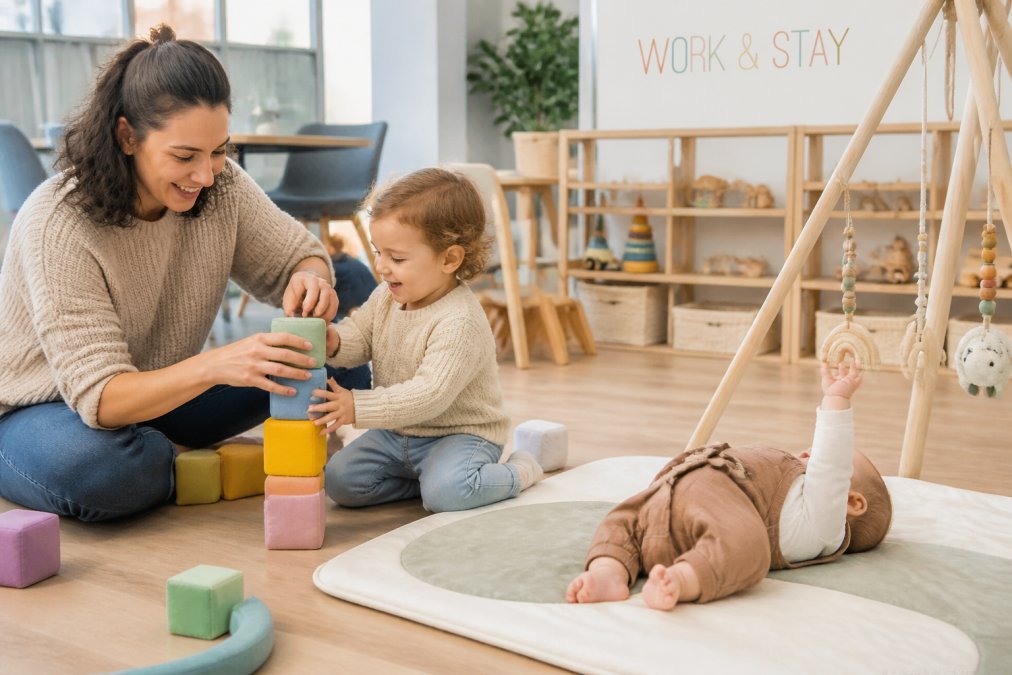
Newborns are building sensory pathways and neck control. Sessions should be short, frequent, and end before fussiness starts.
- Tummy time on a textured mat. Start with 1-2 minutes, several times a day, and work up as tolerance grows. Place a high-contrast card or unbreakable mirror just beyond reach to encourage head lifting; if a baby protests, try tummy-to-tummy on a parent's chest.
- High-contrast card tracking. Move a black-and-white card slowly side to side about 8-12 inches from the face. This builds visual tracking, the same skill later used for reading left to right.
- Face-to-face lullabies. Singing with eye contact supports bonding and early sound discrimination; repetition matters more than variety now.
- Soft rattle shaking. Shake a rattle to one side and let the baby turn toward the sound, an early cause-and-effect and localization exercise.
- Gentle bicycle legs and hand massage. Slow limb movement and pressure input help babies discover where their bodies end and the world begins.
Activities for Babies (6-12 Months)
This stage is about movement, grasping, and realizing objects exist even when out of sight.
- Peekaboo with a cloth. Hide a toy under a scarf and let the baby pull it off to exercise object permanence.
- Container play. Offer a low bin and a few large blocks. Dumping is as valuable as filling; both build grasping, releasing, and hand-eye coordination.
- Texture exploration. Rotate safe fabrics, silicone teethers, and crinkle paper to build sensory discrimination without overstimulating.
- Supported standing and cruising. Line up sturdy furniture or a play couch so a baby can pull up and side-step, building the hip and core strength that precedes walking.
- Cause-and-effect toys. A pop-up toy, light-up button, or simple drum teaches that an action produces a result, a foundational cognitive skill.
Activities for Toddlers (1-3 Years)
Toddlers learn by testing, dumping, and repeating. Language explodes now, so narrating play matters as much as the play itself.
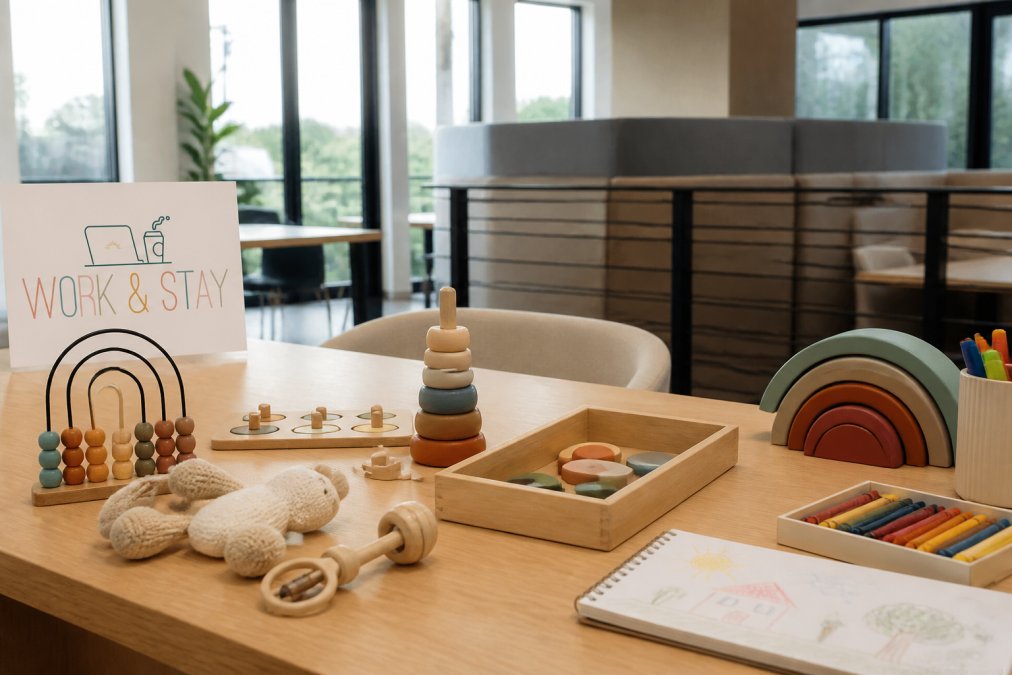
- Stacking cups and simple puzzles. Start with 3-4 piece puzzles and nesting cups to build fine motor control and early size sequencing.
- Sing-along storytelling. Songs with hand motions, like itsy-bitsy spider, pair language with motor planning and make words easier to retain.
- Water or sand sensory bins. A shallow bin with scoops, cups, and a towel underneath covers texture exploration with almost no setup. Supervise closely and empty it right after.
- Push-and-pull toys. A small wagon or push cart encourages walking, balance, and heavy-work input that helps with regulation.
- Simple matching games. Pair two identical animal cards and ask the toddler to find the match, building attention, memory, and early categorization.
Activities for Preschoolers (3-6 Years)
Preschoolers shift from parallel play to real interaction, and their questions get harder. Activities should invite negotiation, planning, and storytelling.
- Pretend play kitchens or shops. Assign roles and let children negotiate who is the customer and who is the cook, building social-emotional learning, turn-taking, and vocabulary.
- Letter hunts around the room. Hide a few letter cards and have the child find and name them, building early literacy and letter recognition without worksheets.
- Simple obstacle courses. Use pillows, tape lines, and a couch cushion to create a path with a jump, a crawl, and a balance step, combining gross motor skills with sequencing and problem-solving.
- Story retelling with puppets. Read a short book, then have the child retell it with puppets. This strengthens narrative memory, sequencing, and expressive language.
- Cooperative building challenges. Give two children one set of blocks and a goal, like building the tallest tower. This builds teamwork, frustration tolerance, and planning.
| Age | Best Activity Type | Key Skill Built | Time Needed |
|---|---|---|---|
| 0-6 months | Sensory and tummy time | Core strength, tracking | 5-10 min |
| 6-12 months | Object exploration | Grasping, object permanence | 10-15 min |
| 1-3 years | Stacking and songs | Fine motor, language | 15-20 min |
| 3-6 years | Pretend and puzzles | Problem-solving, literacy | 20-30 min |
Indoor Play Ideas for Toddlers: Low-Prep Activities for Small Spaces
Indoor play ideas for toddlers don't require a dedicated playroom or expensive equipment, just a clear surface, a defined boundary, and a plan for the mess. The ideas below are grouped by space and setup, so you can pick what fits your home today.
No-Setup Ideas (Under 5 Minutes)
- Pillow obstacle courses. Line up couch cushions for climbing, jumping, and crawling to build gross motor skills and heavy-work input that helps with regulation.
- Tape lines on the floor. A strip of painter's tape becomes a balance beam, a road for toy cars, or a starting line for jumping games. It peels off most flooring without residue.
- Kitchen band with pots and spoons. A wooden spoon and plastic bowl introduce rhythm, volume control, and cause and effect. Keep it brief if noise is a concern.
- Sock sorting by color. A basket of clean socks becomes a matching and categorization game that also builds fine motor pincer grasp.
Small-Space Ideas (Apartment or One-Room Friendly)
- Laundry basket ball toss. Crumple paper into balls and toss them into a laundry basket; adjust the distance to change difficulty.
- Sticker rescue. Place stickers on a window or plastic tray and have the toddler peel them off, a quiet, seated activity that builds finger strength.
- Muffin tin sorting. Use a muffin tin and a bowl of large pom-poms or blocks. Sorting by color or size builds cognitive development and matching skills.
- Book nook reset. Rotate three or four books onto a low shelf and let the toddler choose. A small, defined reading corner supports focused attention better than a full bookshelf.
Big-Energy Ideas (When You Have a Hallway or a Larger Room)
- Indoor snowball fight. Roll socks into balls and let toddlers throw them at a target or a parent, a safe way to release energy indoors.
- Animal walks. Call out an animal and have the toddler move like it: bear crawl, frog jump, crab walk. This builds coordination and strength.
- Balloon volleyball. Keep a balloon in the air without letting it touch the floor. This builds tracking, timing, and hand-eye coordination. Always supervise balloons around children under three.
Indoor vs. Outdoor: How to Choose
Indoor play wins during extreme heat, rain, or poor air quality, and supports focused, low-distraction activities like puzzles and sorting. Outdoor play covers different ground: running, climbing, and digging build gross motor skills and offer natural sensory input indoor spaces can't replicate. A practical routine uses both, with indoor play as the reliable default and outdoor play as the bonus when weather allows.
SIGN UP FOR YOUR MEMBERSHIP TODAY →
Coworking With Childcare: How Work & Stay Supports Play and Productivity
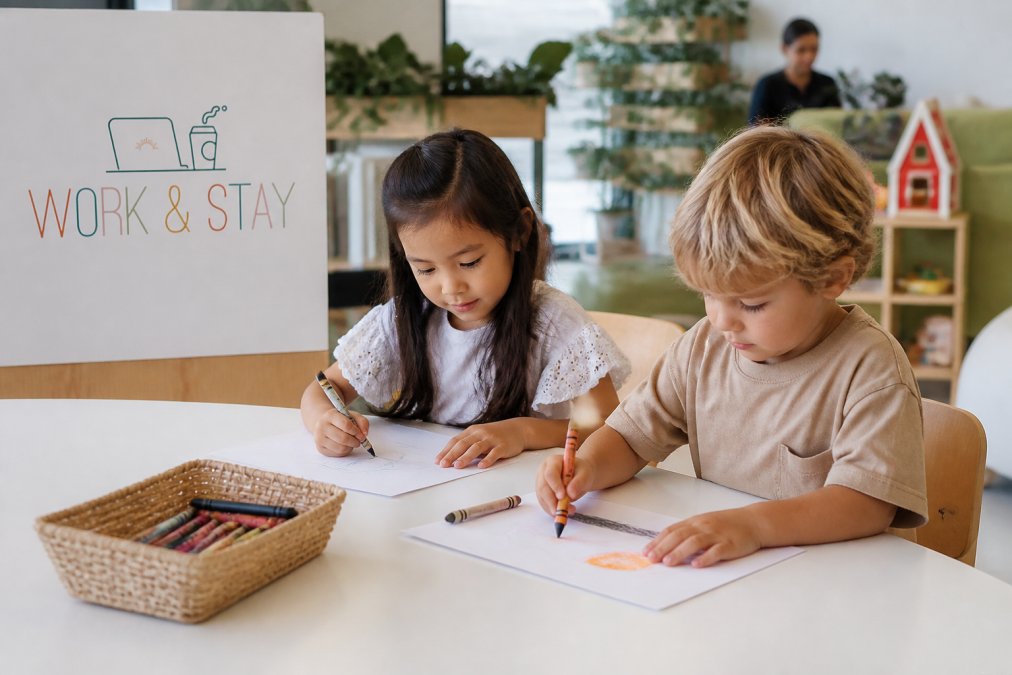
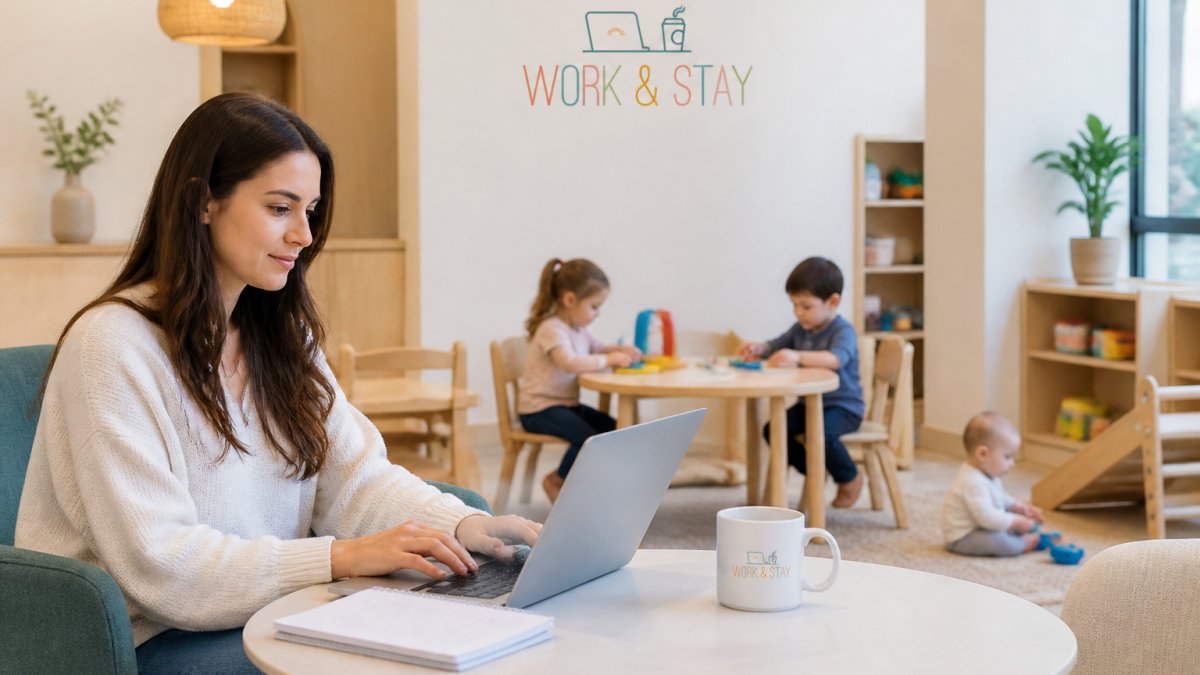
Coworking with childcare solves a specific problem: parents need focused work time and their children need real play time, at the same time. At Work & Stay, the coworking lounge and private workspaces sit steps away from supervised, curriculum-based childcare for ages 0-6. Memberships and day passes come with no long-term contract, so families can use the space when they need it.
The setup matters for parents who work from home but can't focus through background noise. Children stay in a separate, staffed environment designed for their age group, while parents work in a space built for calls and deep focus. It's not a traditional daycare and not unrestricted drop-off; it's a workspace and a play space under one roof.
Activities for Neurodivergent Children: Adapting Play for Different Needs
Neurodivergent children often thrive when play is adapted rather than abandoned. Sensory sensitivities, attention differences, and communication styles all shape what works.
- Reduce visual clutter during focused play to lower overstimulation.
- Use visual schedules so transitions feel predictable.
- Follow the child's lead during interactive play instead of directing it.
- Build in movement breaks between seated activities to support regulation.
What most guides miss is that the same activity can work for every child with small adjustments. A texture bin becomes manageable when a child can choose which textures to touch. A group song works when a child can participate from the edge of the circle.
Budget-Friendly DIY Toy Construction and Outdoor vs. Indoor Play
DIY toys often outperform store-bought ones because they invite customization. A cardboard box becomes a car, a house, or a drum depending on the day.
- Cardboard box tunnels for crawling and imaginative play.
- Sock puppets for storytelling and language practice.
- Homemade sensory bottles with water, beads, and food coloring.
- Stacking rings from paper rolls for fine motor practice.
Outdoor play covers different ground: running, climbing, and digging build gross motor skills and offer natural sensory input indoor spaces can't replicate. Indoor play wins during extreme heat or bad weather and supports focused, low-distraction activities. The best routine includes both.
Parental Mental Health During Play: Why You Need Breaks Too
Parental mental health during play is not a side issue. Constant hands-on play leads to burnout, and burned-out parents engage less. Short, scheduled breaks protect both parent and child.
A practical approach: alternate 20 minutes of focused play with 10 minutes of independent or supervised play elsewhere. Children build tolerance for solo exploration, and parents get breathing room. Structured environments like a supervised play space or a coworking setup with onsite childcare make this rotation possible without guilt.
Frequently Asked Questions
What are good activities for 6 year olds?
Six-year-olds thrive with activities that combine problem-solving and creativity, such as building with blocks, simple board games, storytelling, and early literacy games. Gross motor skills develop through obstacle courses and dancing. Social-emotional learning happens during cooperative play and role-playing. At this age, children enjoy activities that let them follow rules, take turns, and express ideas through art and music. Aim for a mix of structured and free play that keeps curiosity and engagement high.
What are some creative activities for babies between 0 and 12 months old?
For newborns to 6 months, focus on tummy time, sensory play with soft textures, and parent-child bonding through lullabies and face-to-face interaction. From 6 to 12 months, introduce object manipulation and grasping activities like transferring objects between containers, cause and effect toys, and simple peek-a-boo games that build object permanence. Reading board books and narrating daily routines supports language acquisition. These activities are low-prep and can be done at home or in a supervised indoor play space.
How can I keep a toddler engaged with simple home activities?
Toddlers stay engaged when activities match their developmental milestones and allow hands-on exploration. Try sensory bins with safe household items, stacking and sorting games, and simple cause and effect toys. Rotate toys weekly to keep curiosity high. Indoor play ideas for toddlers like pillow obstacle courses, dance parties, and water play in a bin work well in small spaces. Keep sessions short, 10 to 15 minutes, and follow your child's lead. Low-prep activities that you can set up quickly often hold attention longest.
What are the benefits of supervised indoor play for young children?
Supervised indoor play offers a safe, climate-controlled environment where children ages 0-6 can explore, build social skills, and stay physically active regardless of weather. It supports gross motor skills through climbing and running, fine motor skills through guided arts and crafts, and social-emotional learning through group interaction. For parents, coworking with childcare at Work & Stay means you can focus on work while your child participates in curriculum-based, teacher-led classroom time just steps away. Learn more about memberships and day passes at https://playandstayaz.com/work-stay/.