 ultimate-guide
Play and Stay Scottsdale: Indoor Play & Coworking
Table of Contents
- What Is Play and Stay Scottsdale?
- Indoor Playgrounds for Toddlers and Young Children
- Coworking with Childcare: How It Works
- Drop-In Childcare Options and Flexibility
- Remote Work Productivity Tips in a Hybrid Environment
- Membership and Day Pass Options
- Safety, Supervision, and Staff Qualifications
- Birthday Parties and Private Events
- Getting Started with Play & Stay
- Frequently Asked Questions
Last Updated: August 27, 2026
What Is Play and Stay Scottsdale?
Play and Stay Scottsdale is a hybrid facility combining an indoor play space for young children with a coworking environment designed specifically for working parents. The concept addresses a real problem: parents need a safe place for their children while they work, but traditional childcare doesn't always fit flexible schedules, and home offices become chaotic with toddlers around.
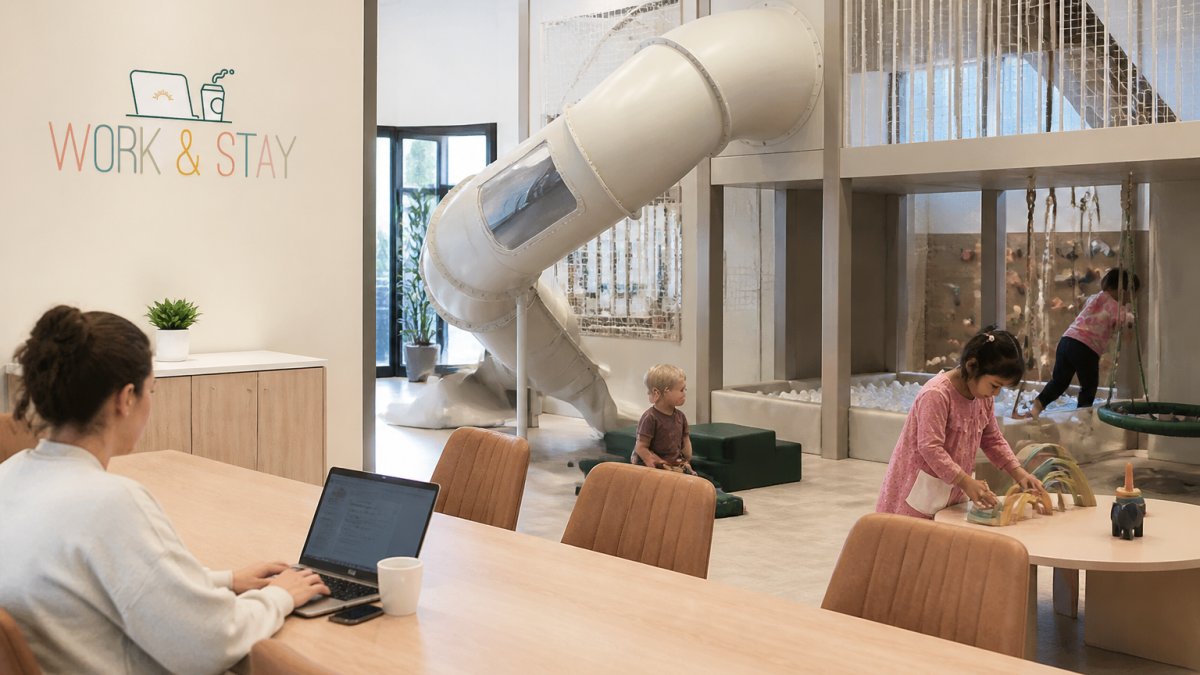
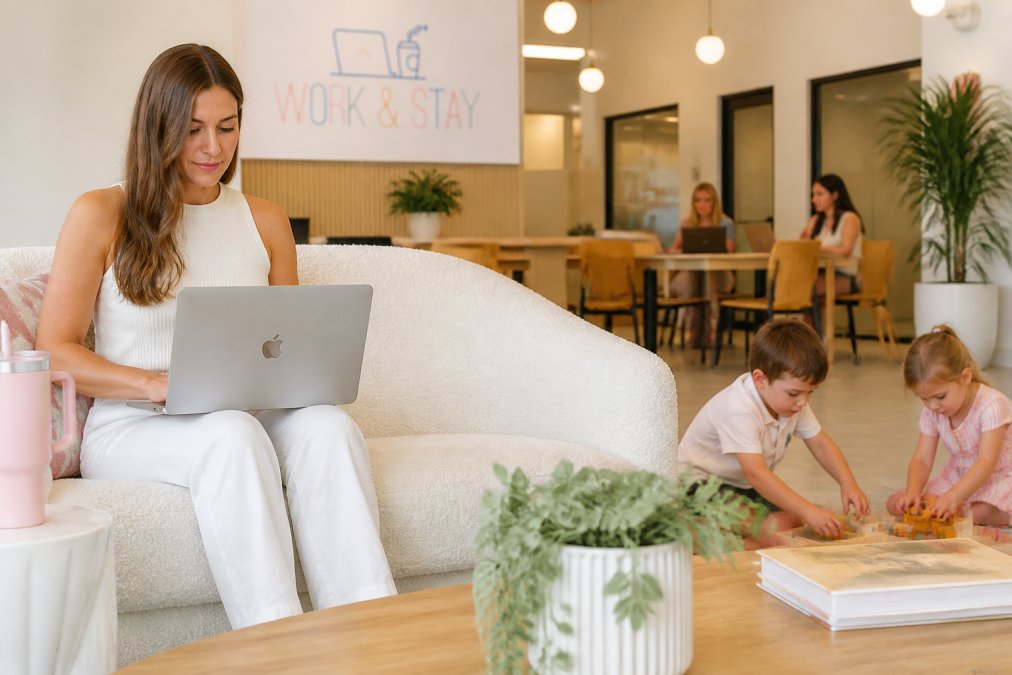
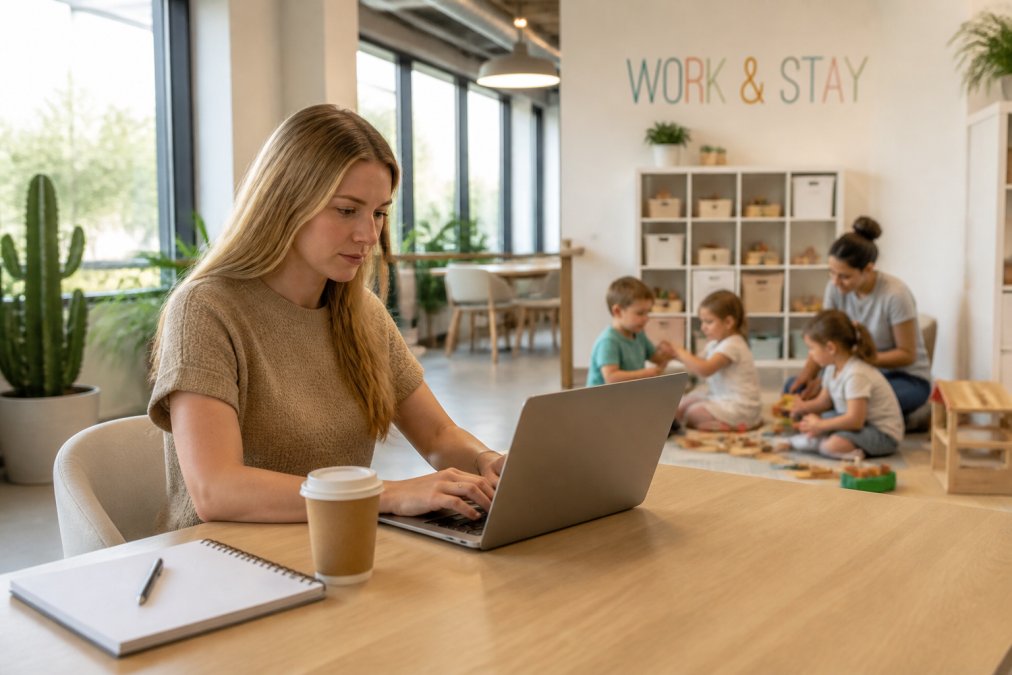
Play & Stay operates two connected spaces under one roof. The Play & Stay indoor playground serves children ages 0-6 with supervised open play, guided activities, and structured programming. Just steps away, Work & Stay provides a professional coworking environment with high-speed internet, quiet workspaces, and private offices, all while supervised childcare happens in a separate, dedicated area. Parents can work without interruption while their children engage in curriculum-based learning and play-based activities led by trained staff.
This model works because it recognizes what other childcare providers miss: working parents need productivity, not just supervision. A parent can't focus on client calls if they're worried about their child or hearing chaos in the background. Play and Stay Scottsdale solves this with physical separation, professional workspace design, and the flexibility that remote work demands.
The facility also offers drop-in options, monthly memberships with no long-term contracts, private birthday parties, and special events. For families who only need childcare occasionally or aren't ready to commit to full-time care, this flexibility removes a major barrier to accessing quality supervision and child development programming.
Indoor Playgrounds for Toddlers and Young Children
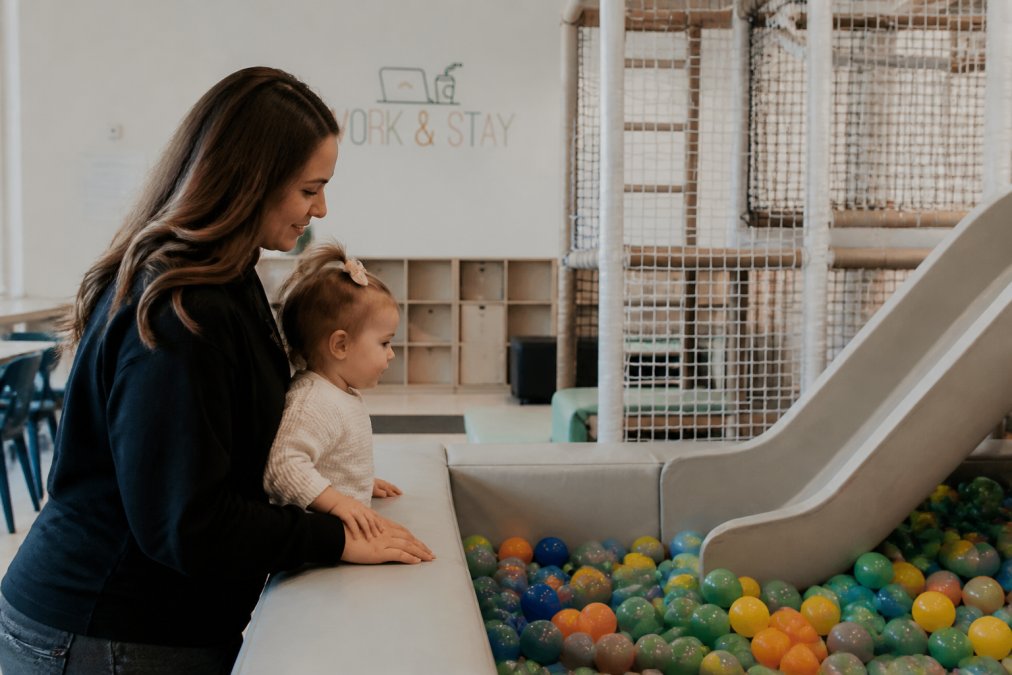
Indoor playgrounds designed for the youngest children require thoughtful layout, equipment selection, and safety considerations. Play & Stay's indoor play space recognizes that toddlers and preschoolers (ages 0-6) have vastly different developmental needs than older children.
Age-Appropriate Play Areas
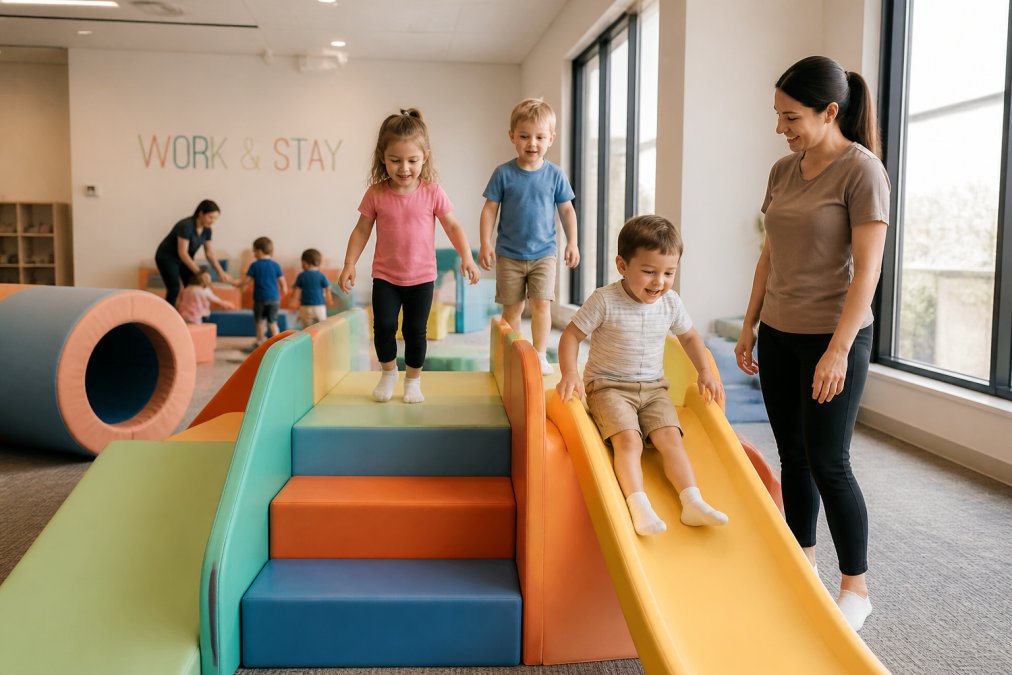
The best indoor playgrounds divide spaces by developmental stage. Infants and younger toddlers (0-2 years) need soft play areas with minimal climbing height, secure railings, and padded surfaces. Older toddlers and preschoolers (3-6 years) thrive with more challenging climbing structures, slides, and obstacle courses that build coordination and confidence.
Play & Stay structures its indoor play space with separate areas for different age groups. This prevents younger children from being overwhelmed by older, more mobile kids and ensures equipment matches each child's physical abilities. Equipment should meet ASTM International standards for playground surfaces and structures designed for young children (astm.org). Staff should be trained in first aid and CPR, with background checks completed (the CDC).
Climate control is another practical advantage of indoor playgrounds. In hot climates, outdoor play becomes limited during peak summer months. An indoor facility keeps children active and engaged year-round without heat exposure concerns.
Guided Activities and Programming
The difference between supervised play and structured learning matters for child development. Play & Stay offers both. Open play allows children to direct their own exploration, essential for creativity and self-directed learning. Guided activities like arts and crafts, music, and dance add intentional developmental benefits, building fine motor skills, color recognition, focus, and social interaction.
Research consistently shows that early childhood experiences shape neural development and social-emotional skills (peer-reviewed research). Children who participate in guided activities alongside open play develop stronger communication skills, better emotional regulation, and more confidence in group settings.
Coworking with Childcare: How It Works
The coworking-plus-childcare model addresses a specific pain point: remote work with young children at home creates constant interruptions. Emails pile up during naptime. Deep work becomes impossible. A facility that separates parent workspace from childcare space solves this completely.
Separate Workspace and Childcare Environments
Work & Stay maintains physical separation between the coworking lounge and the childcare environment. This separation is critical, parents can't focus if they hear their child crying through thin walls. Children need to feel secure with their caregivers, not distracted by a parent visible nearby.
The workspace includes high-speed internet, comfortable workstations, private offices for confidential calls, and a professional environment that signals this is a place for serious work. The childcare area is completely separate, designed specifically for young children with age-appropriate equipment, activities, and safety features. Staff manage the environment, supervise play, and lead programming. This clear physical and psychological separation helps both parent and child transition effectively.
Curriculum-Based Learning While You Work
Not all childcare is created equal. Play & Stay offers curriculum-based learning, structured programming led by trained staff that supports early childhood development across language, motor skills, social-emotional growth, and cognitive development.
For ages 0-6, curriculum-based means intentional activities designed around developmental milestones. A music and movement class builds listening skills, coordination, and body awareness. A guided art activity develops fine motor control and creative expression. Parents benefit because their children develop specific skills while supervised, and they don't have to feel guilty about missing playtime.
Drop-In Childcare Options and Flexibility
Traditional childcare often requires long-term contracts and fixed schedules. A parent who works from home three days a week but needs backup childcare two days doesn't fit neatly into most daycare models. Drop-in options and flexible memberships solve this.
Work & Stay offers drop-in admission without requiring advance notice or long-term commitment. A parent can book a day pass when they need it. This flexibility works for several situations: working parents who need occasional backup childcare, stay-at-home parents who want respite, visiting relatives seeking a safe, supervised environment, or families new to the area exploring options before committing to a membership.
Drop-in flexibility also serves parents with unpredictable schedules. Freelancers, gig workers, and contract employees don't always know their schedule a week in advance. For parents considering membership, drop-in options let them experience the facility, meet staff, and assess whether it's the right fit before committing to a monthly plan.
Remote Work Productivity Tips in a Hybrid Environment
Working from a coworking space with childcare nearby is different from working from home alone. The environment is professional, but proximity to children requires intentional strategies to maintain focus and productivity.
Set clear time blocks. Designate specific hours for deep work tasks that require uninterrupted focus. Schedule routine tasks (email, admin work) during times when you're more likely to be interrupted. This matches task difficulty to your actual availability for focus.
Use the workspace design strategically. Private offices work best for calls and confidential work. The lounge works for collaborative tasks or work that allows some ambient noise. Use the environment that matches the task.
Create a transition ritual. The physical separation between work and childcare spaces is powerful, but a personal ritual makes it more effective. Before moving into the workspace, review your priorities. When picking up your child, take a moment to mentally shift modes.
Batch similar tasks. Group similar work together rather than switching between email, calls, and deep work throughout the day. This reduces context-switching fatigue and helps you maintain focus during allocated work blocks.
SIGN UP FOR YOUR MEMBERSHIP TODAY →
Build in buffer time. Don't schedule back-to-back calls or meetings. Include 10-15 minutes between commitments to handle unexpected issues, transition between spaces, or reset focus.
Communicate with your team. Set clear expectations about your hours, meeting availability, and response times to prevent misunderstandings and reduce stress.
Membership and Day Pass Options
Work & Stay offers multiple ways to access the facility, recognizing that families have different needs. Some parents need full-time childcare five days a week. Others need backup childcare two days a month. Some want to try the facility before committing.
| Option | Best For | Flexibility | Commitment |
|---|---|---|---|
| Day Pass | Occasional drop-in needs, trying the facility | Book as needed | None |
| Part-Time Membership | 2-3 days per week | Scheduled days | Monthly |
| Full-Time Membership | 5 days per week | Full access | Monthly |
| Play & Stay Open Play | Occasional indoor play without childcare | Drop-in access | None |
Day passes work for parents who need childcare occasionally, maybe once or twice a month for personal errands, medical appointments, or a date night. This option removes the barrier of committing to a membership when you don't need regular childcare.
Part-time memberships suit remote workers with flexible schedules. A parent who works from home some days but needs childcare two days per week can maintain professional productivity on those days without paying for five days of care they don't use.
Full-time memberships are for parents who need consistent, reliable childcare and workspace. The no-long-term-contract structure matters, parents can try a membership for one month, then adjust or cancel if it doesn't work.
For families interested in Play & Stay's indoor play space without the coworking component, open play day passes provide drop-in access to the playground, guided activities, and programming. This option works for stay-at-home parents seeking social time and structured activities for their children, or visiting families wanting a climate-controlled activity space.
Safety, Supervision, and Staff Qualifications
Parents ask this question directly: how do you know this place is actually safe and clean? The answer requires transparency about staff qualifications, background checks, facility certifications, health and safety protocols, and incident procedures.
Staff qualifications matter most. Childcare providers should have training in early childhood development, first aid, and CPR. Play & Stay employs trained staff with background checks completed, a non-negotiable standard for any facility caring for young children.
Facility cleanliness and health protocols are visible and verifiable. A clean environment prevents illness transmission. Hand-washing stations, toy sanitation procedures, and clear illness policies protect all children in the facility. Safety certifications for playground equipment confirm that equipment meets recognized standards, including proper fall surfacing under climbing structures and age-appropriate design.
Incident protocols matter too. Clear, written procedures demonstrate that the facility has thought through emergencies and prepared staff to respond appropriately. Parent access and communication build additional confidence, can parents call during the day? How often do staff communicate about what children did, what they ate, and how they're developing?
Birthday Parties and Private Events
Play & Stay's party hosting service offers an alternative to hosting at home or renting a separate venue. The facility provides the space, equipment, and structured activities, parents provide the guest list and celebration focus.
Birthday parties at an indoor play facility reduce setup and cleanup burden. No decorating your home, no managing a messy backyard, no hours of post-party cleanup. For young children (ages 0-6), guided activities during parties work better than unstructured play. A structured craft activity, music and movement session, or guided play keeps the group organized and prevents chaos.
Private event hosting also works for smaller celebrations: family gatherings, playdate groups, or community events. Renting a dedicated space provides structure and supervision while removing the burden from the parent hosting.
Getting Started with Play & Stay
Families interested in coworking with childcare, indoor play, or both can explore membership options and schedule a facility visit. Work & Stay serves remote-working parents who need productive workspace with supervised childcare in a separate environment. Play & Stay's indoor playground works for families seeking guided activities, open play, and social time for children ages 0-6.
Learn more about memberships, day passes, and facility options at Work & Stay coworking with childcare for workspace-focused families, or Play & Stay indoor play space for families exploring open play and programming.
Families considering the coworking-plus-childcare model should visit in person. Observing the physical separation between spaces, meeting staff, and seeing the facility helps parents assess whether it matches their needs. The flexibility of day passes and no-contract memberships means families can try the facility before committing to regular use.
For parents struggling with the juggling act of remote work and young children at home, a dedicated coworking space with supervised childcare removes the constant context-switching that drains energy and productivity. For families seeking quality early childhood programming in a safe, climate-controlled environment, Play & Stay's guided activities and open play develop skills while supporting social-emotional growth.
The model works because it respects both parent and child needs: parents get the professional environment and focus they need to work well, and children get supervised, developmentally appropriate care in a dedicated space. This separation, combined with flexibility and curriculum-based programming, creates an environment where both can thrive.
Frequently Asked Questions
What are the benefits of a play and stay facility for working parents?
Play and Stay combines supervised childcare with a professional workspace, allowing parents to work productively while their children ages 0-6 engage in age-appropriate activities, guided crafts, and social interaction. Parents gain focused work time without the stress of managing children at home, while children benefit from structured play and early childhood development activities in a safe, climate-controlled environment.
How does drop-in childcare differ from a membership at Play and Stay?
Drop-in childcare options provide flexible access without long-term contracts, perfect for parents needing occasional supervision for errands or personal time. Memberships offer regular access with more predictable scheduling and benefits. Both options serve different needs: drop-in works best for sporadic use, while memberships suit parents who need consistent weekly or daily childcare paired with workspace access.
Is there supervised childcare available for infants and toddlers in diapers?
Yes, Play and Stay serves children ages 0-6 with separate areas designed for the youngest guests. Staff are trained to assist with diaper changes, feeding, and the specific needs of infants and toddlers. The facility is designed to accommodate the full range of early childhood development stages, ensuring even very young children receive appropriate care and supervision.
What should I look for in a drop-in childcare facility for my toddler?
Key factors include staff qualifications and background checks, age-appropriate facilities with safety certifications, clean and well-maintained play areas, structured activities that support early childhood development, and transparent supervision practices. Ask about staff-to-child ratios, incident protocols, and how the facility manages separation anxiety or special needs. Visit in person to assess the environment and meet the team.
This article was written using GrandRanker