 ultimate-guide
How to Start a Daycare Business: A 2026 Guide
Table of Contents
- Assess Your Market and Define Your Daycare Model
- Daycare Licensing Requirements by State
- Develop a Childcare Business Plan Template
- Calculate Startup Costs for a Childcare Center
- Secure Funding, Insurance, and Legal Structure
- Build Your Team and Establish Operations
- Launch Marketing and Enrollment Strategies
- Frequently Asked Questions
Last Updated: August 29, 2026
Assess Your Market and Define Your Daycare Model
Before investing significant resources into starting a daycare business, prospective operators need to understand their local market deeply. Market research reveals demand patterns, competitor saturation, demographic trends, and family preferences in the target area. This foundational step determines whether a center-based model, family daycare, or hybrid approach makes sense for the specific geography and population.
Defining the daycare model is equally critical. Will the business serve infants and toddlers, preschoolers, or mixed ages? Should the center offer full-time care, part-time options, drop-in services, or flexible hourly arrangements? Some operators find that blending traditional childcare with complementary services, such as educational programming, parent workspace, or structured activities, creates competitive differentiation and attracts families seeking more than basic supervision.
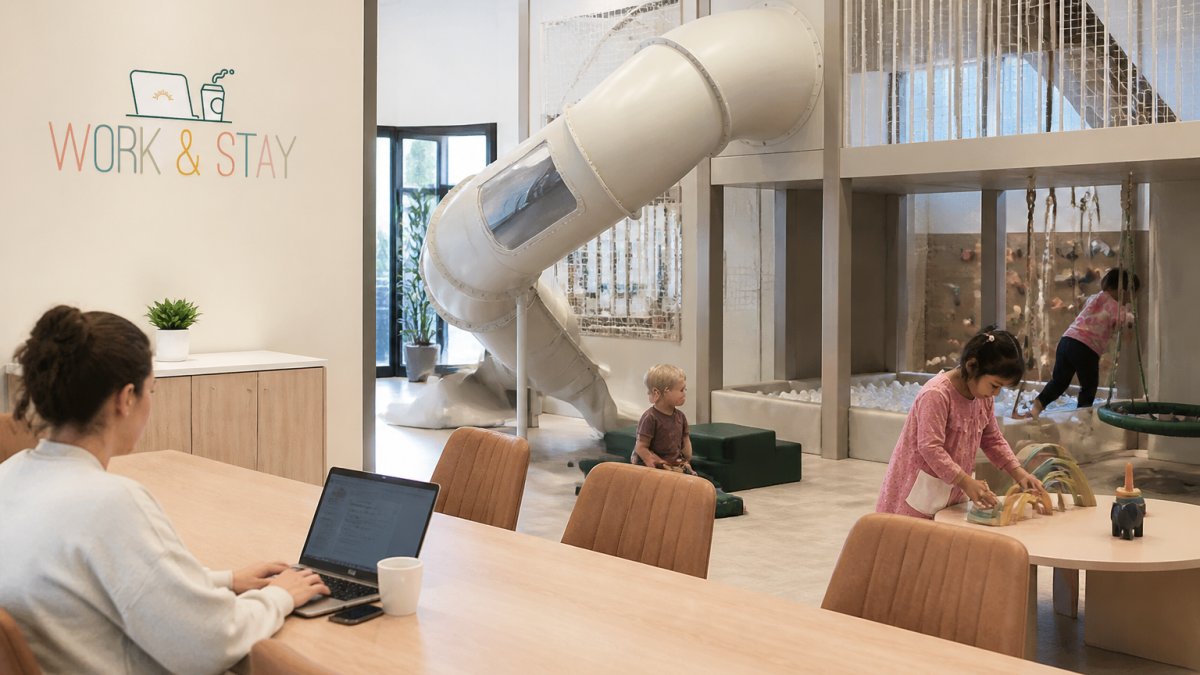
The Play & Stay model demonstrates how combining childcare with other services can appeal to modern families. By offering supervised, curriculum-based care alongside parent-focused amenities, hybrid concepts capture multiple revenue streams and serve broader customer needs. Prospective Founding Partners exploring this model should assess whether their target market values integrated solutions or prefers traditional standalone daycare.
Geographic location significantly impacts model viability. Urban areas with high concentrations of working parents may support premium, flexible-hour models. Suburban markets might favor full-time traditional centers. Rural areas often benefit from part-time or seasonal arrangements. Understanding local employment patterns, income levels, and family structures informs which model will succeed.
Daycare Licensing Requirements by State
Daycare licensing requirements vary dramatically by state, making this one of the most critical compliance areas for anyone planning to start a daycare business. Each state's regulatory agency sets different child-to-staff ratios, facility standards, staff qualifications, and operational requirements. Some states license all childcare facilities; others regulate only centers above a certain enrollment threshold, exempting small family daycares.
Before launching, operators must contact their state's Department of Health, Department of Human Services, or equivalent regulatory body to obtain current licensing rules. Requirements typically include health and safety standards, emergency preparedness protocols, background check procedures, staff training mandates, and facility inspection criteria. Many states require specific certifications such as CPR, First Aid, and early childhood education credentials.
Provider orientation is a mandatory component in most states. New operators and staff must complete orientation training covering child development, health protocols, safety procedures, and regulatory compliance. The intensity and duration of orientation vary, some states require a few hours, while others mandate multi-day programs before the center can admit children.
Background check procedures are non-negotiable. All staff members, volunteers, and household members in family daycare settings typically undergo fingerprinting, criminal history screening, and child abuse registry checks. Some states also require checks against sex offender registries and out-of-state criminal databases. These processes can take weeks, so operators should initiate them early.
Facility inspection is conducted before licensing approval and periodically thereafter. Inspectors verify compliance with health and safety standards, including sanitation protocols, fire safety measures, emergency preparedness, and proper equipment maintenance. Understanding these standards before building out or renovating a facility prevents costly corrections later.
Develop a Childcare Business Plan Template
A comprehensive childcare business plan serves as both an internal roadmap and an external document for securing funding or partnerships. The plan should address market analysis, competitive positioning, operational structure, financial projections, and growth strategy. This document becomes the reference point for decision-making throughout the business lifecycle.
The executive summary distills the entire plan into 2-3 pages, highlighting the business concept, target market, competitive advantage, and financial highlights. This section is critical because investors, lenders, and potential partners often read only this portion to decide whether to engage further.
Market analysis within the plan should detail the target demographic, local demand for childcare, competitor landscape, and pricing strategy. Operators should research how many families in the area need childcare, what age groups are underserved, and what price points the market supports. This data informs realistic enrollment projections and revenue estimates.
The operational plan describes daily workflows, staffing structure, curriculum or programming approach, and parent communication strategies. For hybrid models like Play & Stay's approach, the operational plan should explain how childcare and complementary services (such as parent workspace or structured activities) integrate logistically.
Financial projections typically span 3-5 years and include startup costs, monthly operating expenses, projected revenue based on enrollment scenarios, and break-even analysis. Conservative revenue estimates are preferable to inflated projections; lenders and partners scrutinize optimistic forecasts closely.
A childcare business plan template should also address regulatory compliance, insurance requirements, and contingency planning. Including a section on how the business will maintain licensing compliance, respond to emergencies, and adapt to market changes demonstrates thorough planning.
Calculate Startup Costs for a Childcare Center
Understanding startup costs for a childcare center requires itemizing facility expenses, equipment, staffing, licensing, and working capital. This calculation varies widely based on location, model, and target capacity, but comprehensive budgeting prevents cash flow crises in the early months.
Facility costs typically represent the largest expense. Operators must secure a lease or purchase property that meets state health and safety standards, including adequate square footage per child, separate spaces for different age groups, bathrooms with accessible fixtures, and outdoor play areas where required. Renovation or build-out costs to meet regulatory standards can range significantly depending on the property's initial condition.
Equipment and supplies include furniture, toys, learning materials, kitchen equipment, and safety fixtures. Childcare environments require age-appropriate equipment that meets Consumer Product Safety Commission standards. Initial purchases for classroom supplies, cleaning materials, and emergency equipment add substantially to startup costs.
Staffing represents ongoing operational expense, but initial hiring and training costs should be budgeted. Background checks, orientation training, and initial payroll for staff hired before enrollment begins create pre-revenue expenses. Many operators underestimate the cost of recruiting qualified staff in competitive labor markets.
Licensing and legal costs include application fees, facility inspections, legal entity formation, and consultation with attorneys familiar with childcare regulations. These expenses, while smaller than facility or equipment costs, are non-negotiable and often overlooked in preliminary budgeting.
Insurance is a critical startup cost. Liability insurance, property insurance, and workers' compensation coverage are essential. Operators should obtain quotes early because insurance costs vary based on facility size, location, and coverage limits.
Working capital, cash reserved for operations before sufficient enrollment generates revenue, is often underestimated. Many childcare businesses operate at a loss for the first 6-12 months while building enrollment. Operators should budget for at least 3-6 months of operating expenses as a safety buffer.
Secure Funding, Insurance, and Legal Structure
Securing adequate funding before launch prevents operational strain and allows the business to invest properly in quality. Funding sources for starting a daycare business include personal savings, bank loans, Small Business Administration (SBA) loans, investor capital, and grants from organizations supporting childcare entrepreneurship.
Bank loans typically require a solid business plan, personal credit history, and collateral. SBA loans offer favorable terms for small businesses and often appeal to childcare entrepreneurs. Some states and nonprofits offer grants or low-interest loans specifically for childcare facility development, particularly in underserved areas.
SIGN UP FOR YOUR MEMBERSHIP TODAY →
Liability insurance is non-negotiable. Childcare operators face significant legal exposure; liability insurance protects against claims of injury, negligence, or abuse. Comprehensive coverage should include general liability, abuse and molestation coverage, and property insurance. Operators should work with brokers experienced in childcare to ensure adequate coverage limits.
Legal structure decisions affect taxes, liability protection, and operational complexity. Most childcare businesses operate as limited liability companies (LLCs) or S-corporations, providing liability protection while offering tax advantages. Consulting with a business attorney and accountant ensures the structure aligns with the operator's goals and local regulations.
Employment law compliance is critical. Operators must understand minimum wage requirements, overtime rules, workers' compensation insurance mandates, and anti-discrimination laws. Many states have specific employment regulations for childcare facilities, including background check procedures for all staff and volunteers.
Contracts with parents should clearly outline enrollment terms, payment policies, cancellation procedures, and liability limitations. Written policies on discipline, health protocols, and emergency procedures protect both the business and families. Legal review of these documents prevents disputes and clarifies expectations.
Build Your Team and Establish Operations
Recruiting and retaining qualified staff is one of the greatest challenges in starting a daycare business. Childcare professionals require patience, training, and genuine commitment to child development, qualities that cannot be rushed. Competitive compensation, supportive work environments, and professional development opportunities help attract and retain talented educators.
Background check procedures must be completed before any staff member has contact with children. This includes criminal history screening, child abuse registry checks, and reference verification. The timeline for background checks can extend 4-8 weeks, so operators should initiate this process well before the planned opening date.
Staff certification requirements vary by state but typically include CPR, First Aid, and early childhood education credentials. Some states mandate specific coursework in child development, health and safety, or nutrition. Operators should budget for ongoing professional development to maintain certifications and keep staff current with best practices.

Curriculum planning and daily operations establish the framework for quality care. Whether following an established curriculum or developing a proprietary approach, the daily schedule should balance structured learning, free play, meals, and rest periods. Documentation systems for tracking child progress, attendance, and parent communication should be established before enrollment begins.
Health and safety protocols must be detailed and communicated clearly to all staff. Emergency preparedness plans, evacuation procedures, illness policies, and incident reporting systems protect children and staff. Regular training ensures all team members understand and can execute these protocols.
Technology and management software simplify operations. Many childcare centers use enrollment systems, billing software, parent communication platforms, and staff scheduling tools. Selecting appropriate technology early reduces administrative burden and improves parent satisfaction through transparent communication.
Launch Marketing and Enrollment Strategies
Marketing a new daycare business requires reaching parents actively searching for childcare solutions. Digital strategies, including a professional website, search engine optimization, and social media presence, help prospective customers discover the business. Local search visibility is critical because most families seek childcare within specific geographic areas.

Word-of-mouth referrals remain powerful in the childcare industry. Early families often become advocates who refer friends and family. Providing exceptional service to initial enrollees builds reputation and generates organic referrals that reduce marketing costs over time.
Open houses and facility tours allow prospective families to experience the environment firsthand. Parents want to see where their children will spend time, meet staff, and understand the daily routine. Tours should highlight cleanliness, safety features, learning spaces, and staff interactions with children.
Partnerships with local employers, pediatricians, and family service organizations extend reach. Some employers offer childcare benefits or referral programs; connecting with these organizations creates referral pipelines. Pediatricians often recommend specific childcare facilities to families seeking options.
Enrollment campaigns should emphasize what differentiates the business from competitors. Whether highlighting curriculum approach, flexible scheduling, specialized services, or hybrid models like integrated parent workspace, clear messaging helps families understand the unique value proposition.
Parent communication and satisfaction directly impact retention and referrals. Regular updates about children's activities, developmental milestones, and program changes keep families engaged. Responsive communication and transparent policies build trust and reduce turnover.
Starting a daycare business requires navigating complex regulatory requirements, substantial upfront investment, and ongoing operational challenges. Success depends on thorough market research, meticulous planning, and genuine commitment to quality childcare. The Play & Stay and Work & Stay model demonstrates how innovative approaches, combining childcare with complementary services, can differentiate a business and create stronger value for families and operators alike. Prospective entrepreneurs interested in bringing this proven concept to new markets should explore the Founding Partner opportunity at Play & Stay's Founding Partner program, which provides a pathway to launch a differentiated childcare business backed by an established model. Qualified candidates can learn more about requirements, support, and next steps by connecting with the expansion team to discuss how this opportunity aligns with their entrepreneurial goals and local market conditions.
Frequently Asked Questions
What are the primary regulatory requirements for opening a licensed childcare facility?
Licensing requirements vary by state but typically include background checks for all staff, health and safety inspections, child-to-staff ratio compliance, and staff training certifications. You'll need to apply through your state's regulatory agency, pass facility inspections, maintain liability insurance, and comply with fire safety and sanitation protocols. States may require early childhood education training or CPR certification. Check your specific state's requirements before launching.
How much does it cost to open a childcare center?
Startup costs for a childcare center depend on facility size, location, equipment, and staffing. Costs typically include facility lease or purchase, renovations to meet safety standards, furniture and learning materials, licensing fees, insurance, initial payroll, and working capital. A small home-based operation costs less than a full center. Create a detailed operating budget that accounts for your specific market, facility needs, and enrollment projections to determine your actual startup investment.
What should a childcare business plan template include?
A strong childcare business plan covers your business model, target market, competitive analysis, marketing strategy, operational procedures, staffing plan, financial projections, and funding needs. Include sections on your facility layout, curriculum approach, health and safety protocols, parent communication methods, and enrollment goals. Address regulatory compliance, insurance coverage, and emergency preparedness. Your plan should also outline how you'll manage finances, scale operations, and sustain profitability over time.
How do I navigate state-specific licensing and safety standards?
Contact your state's child care licensing agency or department of human services to obtain specific regulations for your area. Requirements cover facility inspection standards, child development programming, staff certification, health protocols, and emergency preparedness. Attend provider orientation sessions offered by your regulatory agency. Join professional organizations that provide guidance on compliance. Many states offer resources online; review them thoroughly and ask your licensing agency for clarification on any requirements before you open.
What's the difference between a hybrid coworking and childcare model versus a traditional daycare?
A hybrid model combines supervised childcare with workspace for parents, allowing caregivers to work while their children receive care nearby. This appeals to remote workers and entrepreneurs who need flexibility. Traditional daycare focuses solely on child supervision and programming without workspace for parents. The hybrid approach requires additional facility design, separate spaces for work and play, and staff trained to manage both environments. This model opens new revenue streams and attracts a different customer base than traditional childcare alone.
How do daycare owners pay themselves and ensure financial sustainability?
Daycare owners typically draw salary once the business covers operating expenses. Revenue comes from tuition, monthly memberships, and enrollment fees. Profitability depends on maintaining enrollment near capacity, managing labor costs, and controlling overhead. Many owners reinvest early profits into facility improvements and staff development. Create conservative financial projections that account for seasonal enrollment fluctuations and unexpected expenses. Track cash flow closely and adjust pricing or capacity as needed to maintain sustainability.
What steps should I take after launching to scale operations successfully?
After launch, focus on maintaining quality while building enrollment. Implement management software to track finances, attendance, and parent communication. Gather parent feedback and adjust programs accordingly. Invest in staff professional development to improve retention and service quality. Monitor your budget and adjust pricing if needed. Consider expanding capacity or adding programs once your core operation runs smoothly. Build strong community relationships and referral networks. Document your processes so you can replicate success if you expand to additional locations.
This article was written using GrandRanker