 ultimate-guide
Hourly Drop-In Childcare: 2026 Parent's Guide
Table of Contents
- What Hourly Drop-In Childcare Is (and What It Isn't)
- How to Find Safe Childcare: 7 Checks Before You Book
- Flexible Coworking Space With Childcare: How Work & Stay Works
- What to Pack for Hourly Childcare: A Printable Checklist
- Emergency vs. Planned Drop-In Care: Two Very Different Trips
- Membership vs. Hourly: Which Actually Costs Less for Your Week?
- Registration, Ratios, and Ages 0-6: What to Expect on Day One
- Frequently Asked Questions
Last Updated: September 15, 2026
What Hourly Drop-In Childcare Is (and What It Isn't)
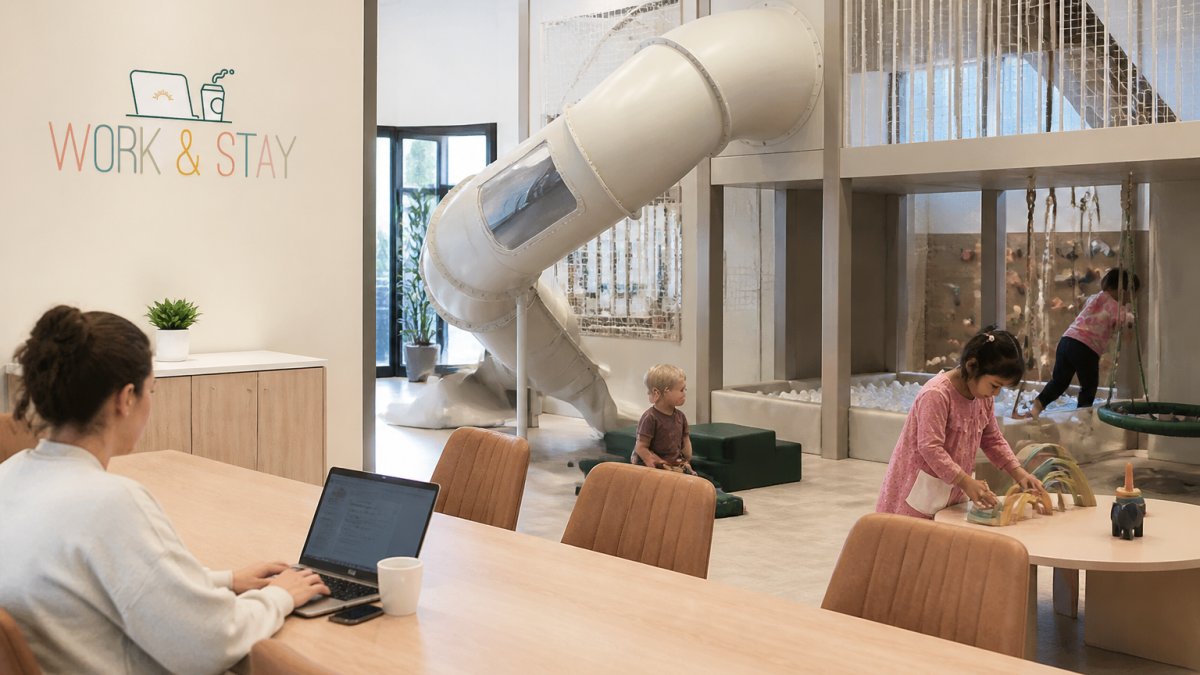
Hourly drop-in childcare is supervised care you book by the hour or half-day, without a standing weekly contract. You pay for the time you use, your child plays and learns in an age-appropriate room, and you leave with your kid when your errand, shift, or deadline is done. At Work & Stay in Scottsdale, that model comes with a workspace attached: parents work in a quiet lounge while children ages 0-6 stay in a separate, teacher-led classroom steps away.
What it isn't: a traditional daycare. Daycares enroll children on a fixed schedule and expect them five days a week. Drop-in care flips that. It also isn't a babysitter in your living room. The difference matters when you're comparing options, so here's the honest breakdown.
Drop-In Care vs. Traditional Daycare vs. a Babysitter
| Option | Commitment | Best For | Watch Out For |
|---|---|---|---|
| Hourly drop-in care | None; book as needed | Errands, backup care, part-time work | Limited hours; book ahead on busy days |
| Traditional daycare | Full-time enrollment contract | Families needing daily coverage | Waitlists, rigid schedules, higher monthly cost |
| Babysitter | Per-visit arrangement | Evening care, one-on-one attention | No group setting; vetting falls on you |
The Child Care Aware of America resource library is a solid starting point for understanding how licensed care differs from informal arrangements.
How to Find Safe Childcare: 7 Checks Before You Book
Knowing how to find safe childcare comes down to asking better questions than "are you licensed?" A license is the floor, not the ceiling. Run these seven checks before you hand over your toddler, and ask for documentation rather than verbal assurances.
- Licensing and inspection history. Ask for the license number and look it up through your state's child care licensing database, which publishes inspection reports and substantiated complaint histories. Read the two most recent inspections, not just the current status. A clean current status with a corrective-action plan from last quarter tells you more than a green checkmark.
- Background-checked staff, including floaters. Every adult who will be in the room should be screened, and that includes substitutes, kitchen staff, and anyone covering a lunch break. Ask when the last round of checks was run and whether they're re-run on a schedule.
- Child-to-staff ratio for your child's exact age. Ratios are set by age band, and infant ratios are far stricter than preschool ratios. Ask for the ratio in the specific room your child will use, and ask what happens when a staff member calls out sick.
- Secure check-in and authorized pickup. Look for a sign-in system with photo ID verification and a written authorized-pickup list that staff actually consult. Ask what happens if someone not on the list arrives.
- Cleaning routines you can observe. Look at the diaper changing station, the toy sanitizing schedule, and how snack surfaces are wiped between groups. Ask how often toys are cleaned and whether there's a written log.
- Age-appropriate, teacher-led activities. Curriculum-based time beats open TV and free-for-all play. Ask to see a sample daily schedule for your child's age group.
- Parent references, not just online reviews. Ask the facility to connect you with two or three current families. Online reviews skew toward extremes; a five-minute call with a parent who uses the space weekly tells you more.
A common mistake is touring during a quiet hour. Visit at pickup time instead, when you can see how staff handle transitions, how kids react to them, and how the room resets between groups.
Health, Illness, and Incident Policies to Ask About
Ask four questions before your first drop-off: What symptoms mean my child can't stay? How do you reach me if something happens? What's your incident protocol, and will I get a written report? How do you handle a child who becomes sick mid-visit? A facility that can't answer these in plain language on the spot is a red flag.
Most licensed programs follow a standard exclusion rule: a child with a fever, vomiting, diarrhea, or a suspected contagious rash is sent home and can't return until symptoms have resolved for a set period. Ask what that period is. Ask whether immunization records are required and how they're stored. Ask how the facility notifies parents if another child in the room is diagnosed with something contagious.
At Work & Stay, the childcare room is separated from the coworking lounge by walls, not just a hallway, and staff are trained to reach a parent in the workspace within moments. That proximity is a safety feature, not just a convenience one. Learn more about how the space is set up at memberships and day passes.
Flexible Coworking Space With Childcare: How Work & Stay Works
A flexible coworking space with childcare solves a specific problem: parents who need quiet to take calls but can't leave a young child home. Work & Stay pairs a coworking lounge and private workspaces with supervised, curriculum-based childcare for ages 0-6, all under one roof and separated by walls, not just a hallway.

Memberships and day passes come with no long-term contract. That matters for families who are only in town part of the year or who need care two days a week, not five. The classroom side is teacher-led, not just supervision, so your child gets structured time instead of a screen. Learn more about memberships and day passes.
SIGN UP FOR YOUR MEMBERSHIP TODAY →
Separation Anxiety: Staying Close While You Work
Separation anxiety doesn't disqualify a child from drop-in care. The setup matters more than the diagnosis. When the workspace sits steps from the classroom, a parent can be nearby without hovering. Start with a short first visit, stay for ten minutes at drop-off, and build up. Most children settle faster when they can see that you haven't actually left the building.
What to Pack for Hourly Childcare: A Printable Checklist
Packing for a two-hour visit is different from packing for full-day daycare. Keep it light, label everything, and skip anything valuable.
- Diapers and wipes (if applicable)
- A full change of clothes in a labeled bag
- A water bottle with your child's name
- A nut-free snack, if the facility allows outside food
- Comfort item: small stuffed animal or blanket
- Socks or soft shoes for indoor play
- Sunscreen applied before arrival
- Emergency contact card and authorized pickup names
What most guides miss: label the water bottle and the change of clothes, not just the bag. Items get separated during play, and unlabeled gear slows down pickup for everyone.
Emergency vs. Planned Drop-In Care: Two Very Different Trips
Planned drop-in care is scheduled ahead: you book a slot, pack a bag, and everyone knows the plan. Emergency backup care happens when a sitter cancels, a meeting moves, or a school closes. The two trips feel nothing alike, and facilities handle them differently.
For emergencies, call ahead and ask about walk-in availability and same-day slots. For planned visits, book early, especially around holidays and school breaks. Prepaid play passes and memberships exist precisely so the emergency version doesn't require a fresh registration every time. If your child has never been to the space, an emergency drop-off is the worst first visit.
Membership vs. Hourly: Which Actually Costs Less for Your Week?
Step 1: Count your real hours, not your ideal ones
Step 2: Find your break-even point
Step 3: Weigh the non-cost factors
Step 4: Match the plan to your pattern
Registration, Ratios, and Ages 0-6: What to Expect on Day One
Frequently Asked Questions
What is the difference between drop-in childcare and traditional daycare?
Traditional daycare enrolls your child on a fixed weekly schedule with a contract and enrollment fees. Hourly drop-in childcare is on-demand: you book only the hours you need, with no long-term commitment. At Work & Stay, supervised, curriculum-based care for ages 0-6 sits steps from a coworking lounge, so parents can work or run errands while kids stay nearby. Care is provided in a separate, dedicated childcare environment, not a free-play drop-off.
How do I verify the safety standards of a drop-in childcare facility?
Ask directly about licensing, background-checked staff, child-to-staff ratios, secure check-in and pick-up procedures, and immunization requirements. Request a tour so you can see the toddler play area, infant care space, and cleaning routines for yourself. A licensed facility should answer these questions without hesitation and show you its incident and illness protocols in writing before your first visit.
Is hourly drop-in childcare suitable for infants and toddlers in diapers?
It depends on the provider. Work & Stay is designed for children ages 0-6, with separate areas for the youngest guests and staff who handle diapering and changing stations. If your child is 18 months old and still in diapers, confirm the infant care setup, staff training, and supplies you need to bring. Ask about the child-to-staff ratio for infants specifically, since it should be lower than for preschoolers.
What should I pack for a few hours of hourly childcare?
Pack a labeled water bottle, a snack that follows the facility's allergy rules, diapers and wipes if needed, a change of clothes, and any comfort item like a small blanket or stuffed animal. Skip toys from home, which get lost easily. Label everything with your child's name, and hand medications directly to staff with written instructions rather than leaving them in a bag.