 How-to
What to Pack for a Day at an Indoor Playground?
Last Updated: November 4, 2026
Quick Summary
Pack grip socks, a change of clothes, a labeled water bottle, easy snacks, wipes, a small towel, and a light layer for a day at an indoor playground. These 12 essentials cover the spills, sweat, and sudden hunger that always happen during active play.
- Grip socks give kids traction on smooth play surfaces where bare feet and regular socks slide.
- Check the facility's food policy before your first visit to learn where food is allowed.
- Pack snacks that survive a bag and warm car, like fruit pouches, crackers, and apple slices.
- Give a five-minute warning and then a two-minute warning before leaving to avoid meltdowns.
- Pack in zones so wipes go in the front pocket and the water bottle in a side pocket.
Table of Contents
- The Indoor Playground Day Bag: What to Pack and Why
- Indoor Playground Dress Code: Clothing and Grip Socks
- Hydration, Snacks, and Food Storage
- Hygiene, Cleanup Items, and Post-Visit Routines
- Comfort Items, Transitions, and Packing for Neurodivergent Children
- Bag Organization Strategies That Save Your Sanity
- Coworking With Childcare Benefits: Packing When You Plan to Work
- What Not to Bring to an Indoor Playground
- Frequently Asked Questions
The Indoor Playground Day Bag: What to Pack and Why
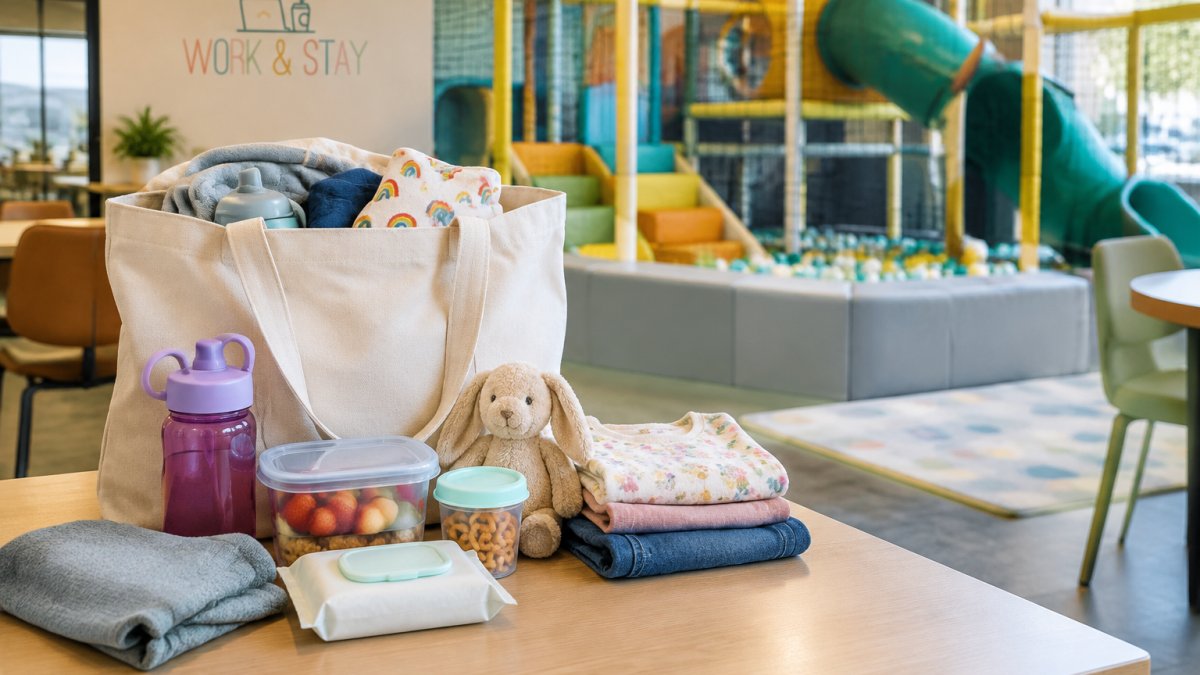
A good day bag turns a chaotic outing into an easy one. The goal is simple: pack light, but pack for the three things that always happen at an indoor playground, which are spills, sweat, and sudden hunger.
This guide from Play & Stay covers exactly what to pack for a day at an indoor playground, from grip socks to snacks. The 12 essentials below are the same items parents ask about most at the front desk.
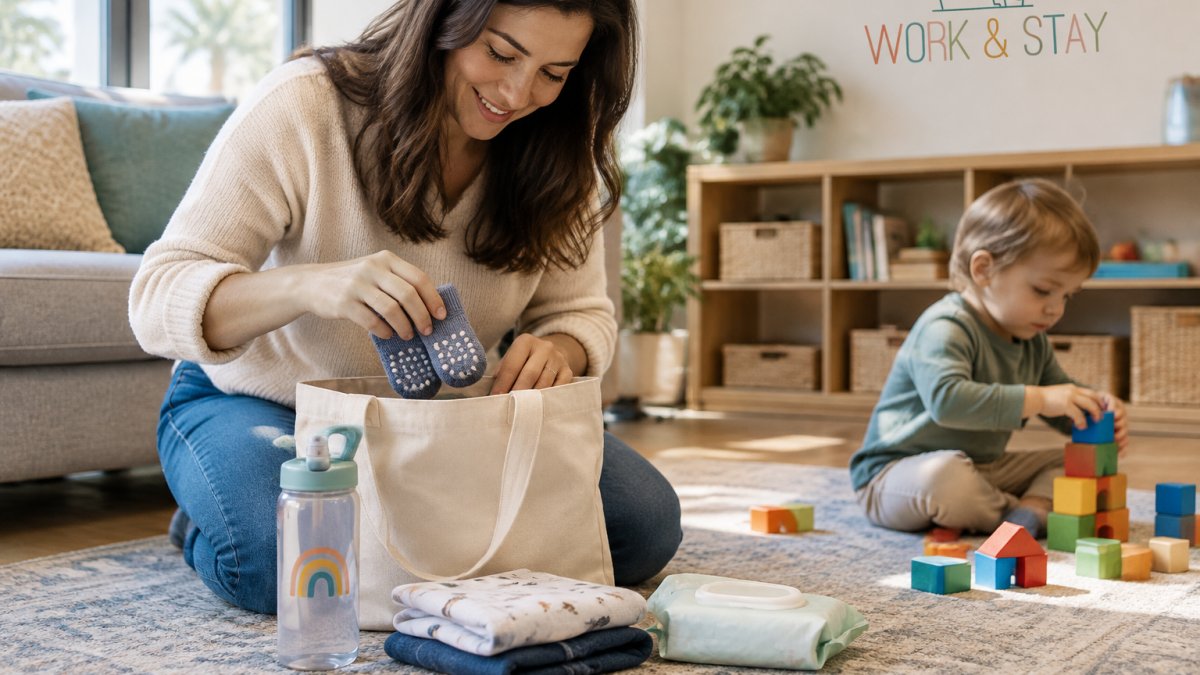
The 12 Essentials Checklist
Here is the full packing list in one place. Each item earns its spot because it solves a real problem, not because it looks good on a list.
| # | Item | Why It Matters |
|---|---|---|
| 1 | Grip socks | Required for safe footing on play surfaces |
| 2 | Change of clothes | Handles spills and post-play mess |
| 3 | Labeled water bottle | Keeps kids hydrated during active play |
| 4 | Easy snacks | Prevents meltdowns between meals |
| 5 | Hand sanitizer and wipes | Quick cleanup before and after play |
| 6 | Small towel | Dries hands, seats, and sweaty kids |
| 7 | Comfort object | Helps with transitions and goodbyes |
| 8 | Diapers and changing supplies | Essential for little ones |
| 9 | Mini first aid kit | Covers small scrapes and bumps |
| 10 | Emergency contact card | Useful if a caregiver is separated |
| 11 | Zip-top bags | Holds wet or dirty clothes |
| 12 | Light layer | Adjusts for a climate-controlled room |
Indoor Playground Dress Code: Clothing and Grip Socks
The best indoor playground dress code is simple: loose-fitting athletic wear and clean grip socks. But the details behind that rule are what keep a visit from ending early. Skip dresses, stiff jeans, and anything with long drawstrings that can catch on equipment.
Grip socks matter more than most parents expect. Bare feet slip on smooth play surfaces, and regular socks slide too. Non-slip grip socks give kids traction for climbing and running. Many indoor play facilities ask guests to wear grip socks on the play floor, so it helps to pack a pair for yourself as well as the kids.
Fabric choice is the quiet variable. Cotton blends breathe and wash well; slick synthetics can slide on vinyl slides and padded mats. Choose bottoms with an elastic waist over buttons and snaps, because a bathroom trip mid-play is easier to manage without a full outfit change.
Closures and accessories deserve a second look. Avoid long drawstrings on hoodies, dangling hair clips, and loose jewelry that can snag on netting or climbing holds. Closed-toe shoes are the norm in lobby and seating areas, while grip socks handle the play floor, so plan for both.
Dress kids in layers, since a climate-controlled play area can feel cool at first and warm up during active play. A light hoodie that comes off easily solves both. Label the hoodie and the socks with a name or initials, since identical sizes get mixed up in cubbies.
A common mistake is dressing a toddler in a cute outfit instead of a practical one. Freedom of movement matters most. Watch out: a stiff collar or a decorative bow can irritate a child during tummy time or a crawl through a tunnel, and the resulting fuss looks like a meltdown when it is really a wardrobe problem.
Before a first visit, check the facility's posted dress rules. Some venues ask families to change shoes at the door. Reading the rules once saves a trip back to the car.
Hydration, Snacks, and Food Storage
Active play drains kids fast, so hydration and snacks deserve real planning. A labeled water bottle should go in every bag, and it should be easy for a child to open alone. A straw lid or a flip-top spout works better for small hands than a screw cap, and a bottle with a name label is less likely to join the lost-and-found pile.
Pack snacks that survive a bag and a warm car:
- Fruit pouches with screw caps
- Crackers or pretzels in small containers
- Apple slices in a sealed bag
- Cheese sticks kept cool with a small ice pack
Food policy is where most parents get caught off guard. Many indoor play areas set rules about food near the play equipment. Check the facility's food policy before a first visit, and ask where food is allowed and whether outside food is permitted. Knowing the answer before you pack saves an awkward conversation at the door.
Budget-friendly tip: skip single-serve snack packs and portion snacks from a larger bag at home. It costs less and creates less waste. A reusable silicone pouch or a small divided container does the same job as a store-bought pack and holds up across dozens of visits.
Storage mechanics matter as much as the snack itself. A small insulated pouch with a freezer pack keeps cheese and yogurt safe for a couple of hours in a warm car. Keep wet items away from dry snacks with a zip-top bag, and put the snack pouch in an outside pocket so crumbs do not migrate into the change of clothes.
Watch out: a snack that melts or crumbles turns a bag into a cleanup project, and sticky residue on play equipment is exactly what venue staff ask families to avoid. Choose shelf-stable options for the play floor and save the messy favorites for home.
Hydration deserves the same planning. Offer water before play, at a mid-session break, and before leaving, rather than waiting for a child to ask. A child deep in play often ignores thirst until a meltdown signals it. Pack a full bottle and confirm whether refills are available at the facility.
Hygiene, Cleanup Items, and Post-Visit Routines
Hygiene items are the most forgotten part of the day bag. Pack sanitizer, wipes, and a small towel, then use them before snacks and after play.
SIGN UP FOR YOUR MEMBERSHIP TODAY →
A quick post-visit routine makes a real difference:
- Wipe hands and faces before buckling into the car
- Change kids out of play clothes and bag them in a zip-top bag
- Wash hands thoroughly once home
- Clean water bottles and grip socks after each visit
Parents who want more guidance on choosing a clean space can read this guide on how to find clean indoor playgrounds.
CDC guidance on handwashing for families recommends scrubbing with soap for at least 20 seconds, which is an easy habit to build after a play session.
Comfort Items, Transitions, and Packing for Neurodivergent Children
Comfort items reduce the sting of leaving. A security blanket, a small stuffed animal, or a favorite toy helps a child reset when playtime ends.
For neurodivergent children, packing takes extra thought. Sensory-friendly preparation can prevent a hard visit:
- Bring noise-reducing headphones for loud rooms
- Pack a familiar snack with a safe texture
- Include a visual schedule or a simple picture list of the visit
- Add a transition item, like a small timer or a comfort object, to signal when it is time to go
A common mistake is springing a departure on a child mid-play. Give a five-minute warning, then a two-minute warning. The meltdown you avoid is worth the extra effort.
Bag Organization Strategies That Save Your Sanity
A disorganized bag wastes time and patience. The fix is a simple system: pack in zones so anyone can find anything fast.
Try this setup:
- Front pocket: wipes, sanitizer, and tissues
- Main compartment: change of clothes and towel
- Side pocket: labeled water bottle
- Small pouch: snacks and a mini first aid kit
Use packing cubes or clear pouches and label them. Restock the bag the night before a visit, not in the parking lot. Keep a checklist taped inside a cabinet door so nothing gets forgotten.
Coworking With Childcare Benefits: Packing When You Plan to Work
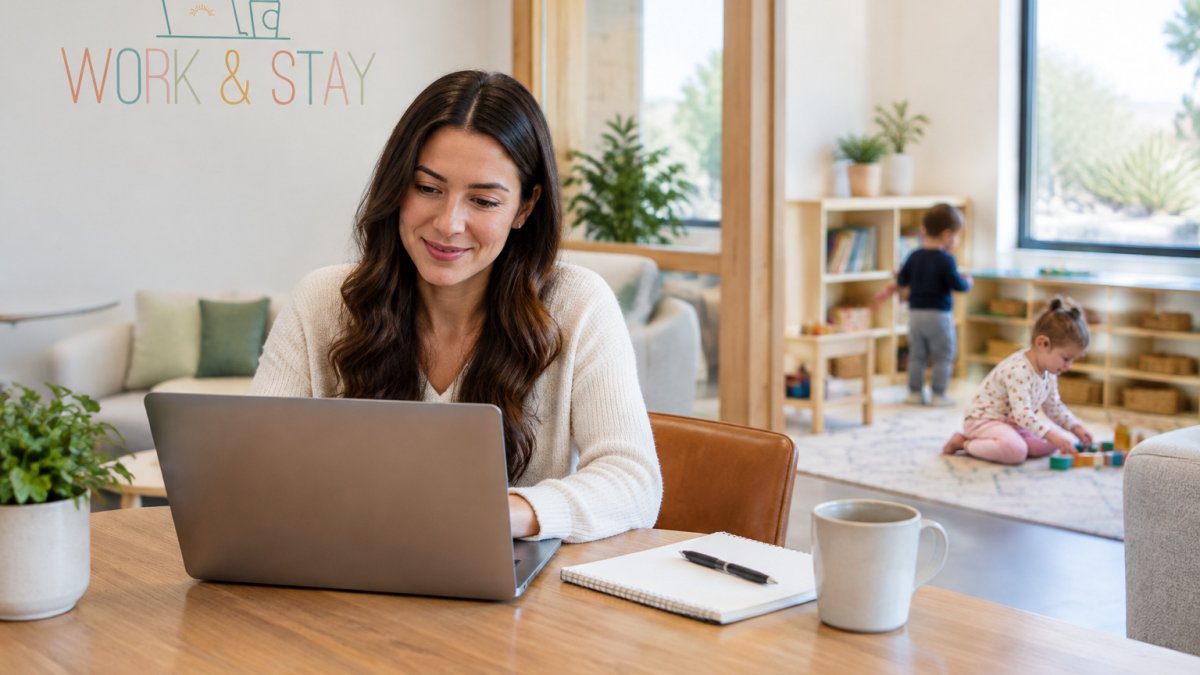
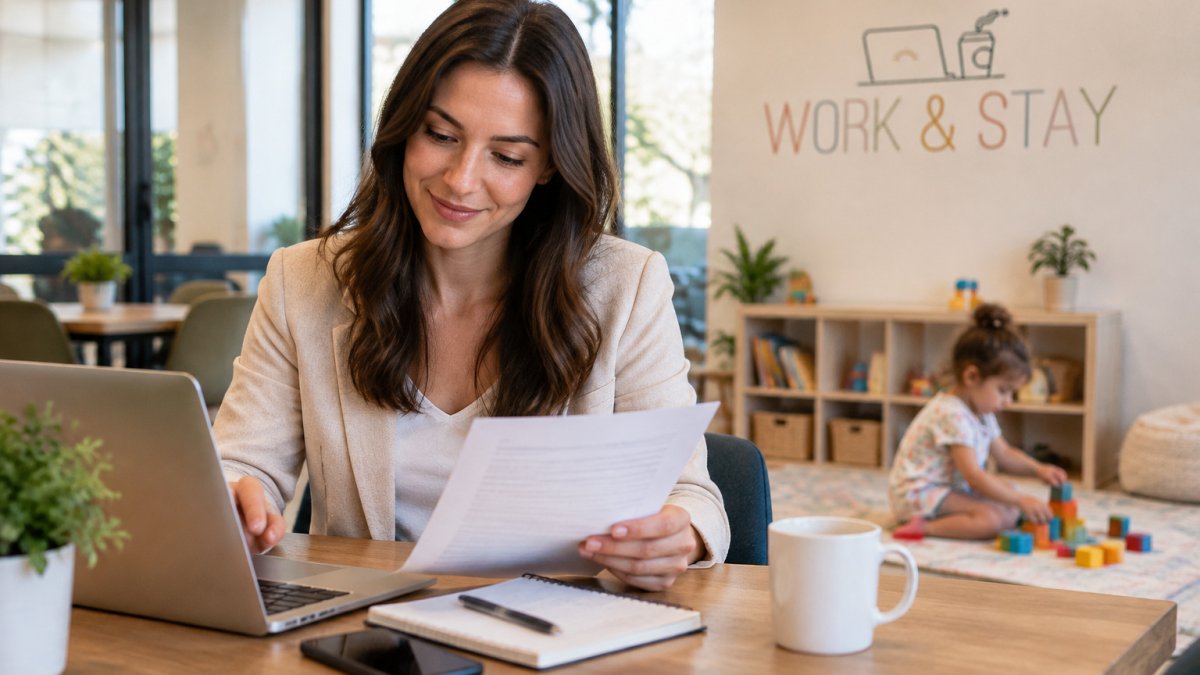
Parents who plan to work while kids play need a bag that serves two people. Coworking with childcare benefits works best when the parent's gear and the child's gear stay separate.
Pack a slim work kit:
- Laptop and charger
- Headphones for calls
- Notebook and pen
- A quiet snack for the adult
Keep the child's essentials in their own tote so a caregiver can grab what is needed without digging through a laptop bag. Parents planning a working visit can explore Work & Stay memberships and day passes to see how the workspace and supervised childcare fit together. For families traveling or planning longer work sessions, this list of gear for working parents traveling with kids covers the extras worth adding.
What Not to Bring to an Indoor Playground
Some items cause more problems than they solve. Leave these at home or in the car:
- Outside food that violates the snack policy
- Toys with small loose parts that get lost or shared badly
- Anything valuable, like jewelry or expensive electronics beyond a phone
- Oversized strollers that block walkways
- Sick children, who should stay home to protect other families
Most facilities post their rules at the entrance. Read them once, and the visit goes smoother for everyone.
Packing well is a small habit with a big payoff. A stocked bag means fewer meltdowns, cleaner hands, and more time for actual play. Play & Stay offers an indoor play space for children ages 0-6, with supervised open play, guided arts and music, and private party rooms. Families who want to work while kids play can pair a visit with Work & Stay, which combines a coworking lounge with supervised, curriculum-based childcare just steps away, available through memberships and day passes with no long-term contract. Get started with Play & Stay and turn a stressful outing into an easy one.
Frequently Asked Questions
Do indoor playgrounds require specific clothing for children?
Most indoor playgrounds ask kids to wear grip socks on the play structures and recommend loose-fitting athletic wear that allows freedom of movement. Avoid dresses, long skirts, and clothing with dangling strings that can catch on equipment. A light layer helps because climate-controlled spaces can feel cool at first. Pack a full change of clothes in your day bag, including socks, so a spill or a sweaty play session does not end the visit early.
Should I bring my own snacks to an indoor playground?
Yes, packing your own snacks is smart, but check the facility's snack policy first. Many indoor play areas allow snacks in designated seating zones only, not on the play floor. Bring low-mess options like crackers, fruit pouches, and pretzels, plus a labeled water bottle for hydration. Budget-friendly alternatives include bulk-purchased trail mix and sliced fruit in reusable containers. Avoid anything with nuts or heavy crumbs, and pack wipes for cleanup items afterward.
What should parents bring if they plan to work while their child plays?
If you plan to work, pack a laptop, charger, and headphones for calls, plus a notebook for quick notes. A coworking with childcare benefits setup like Work & Stay gives you a separate workspace while supervised childcare happens steps away, so you can focus without hearing every shriek. Bring your own labeled water bottle and a light sweater. Confirm the facility's Wi-Fi and quiet-call policy before you arrive.
What are the essential items to pack for a toddler at an indoor playground?
For a toddler, pack grip socks, a change of clothes, diapers and wipes if needed, a labeled water bottle, snacks, and a comfort object like a security blanket or small toy. Add a first aid kit with bandages and sanitizer, and a small towel for spills. If your child is sensory-sensitive, include noise-reducing headphones and a transition item. A structured checklist keeps your day bag light while covering toddler essentials for active play and cleanup.