 listicle
Best Indoor Playgrounds for Toddlers
Table of Contents
- Why Indoor Playgrounds Matter for Toddlers
- Play & Stay: Supervised Open Play and Curriculum-Based Activities
- Coworking with Childcare: Work & Stay for Remote-Working Parents
- Drop-In Childcare and Flexible Scheduling
- Birthday Parties and Private Events
- Climate-Controlled Play: Beat the Heat Year-Round
- Cleanliness, Safety Standards, and Parent Peace of Mind
- Conclusion
- Frequently Asked Questions
Last Updated: September 2, 2026
Why Indoor Playgrounds Matter for Toddlers
Toddlers between 18 months and 3 years need physical activity, social interaction, and sensory stimulation to develop motor skills, confidence, and emotional resilience. An indoor playground for toddlers provides a climate-controlled environment where children can climb, slide, jump, and explore safely year-round, especially valuable during extreme heat or rainy weather. Beyond physical benefits, these spaces offer parents respite from home chaos and peace of mind knowing their child is in a supervised, age-appropriate setting.
Play & Stay has designed its indoor play space specifically for toddlers and infants, combining soft play structures, sensory equipment, and guided activities in a single, clean environment. Parents often struggle with the choice between staying home, hiring individual childcare, or finding a facility that caters to the youngest children. An indoor playground for toddlers solves that problem by offering structured yet flexible play in a space built for safety and development.
Play & Stay: Supervised Open Play and Curriculum-Based Activities
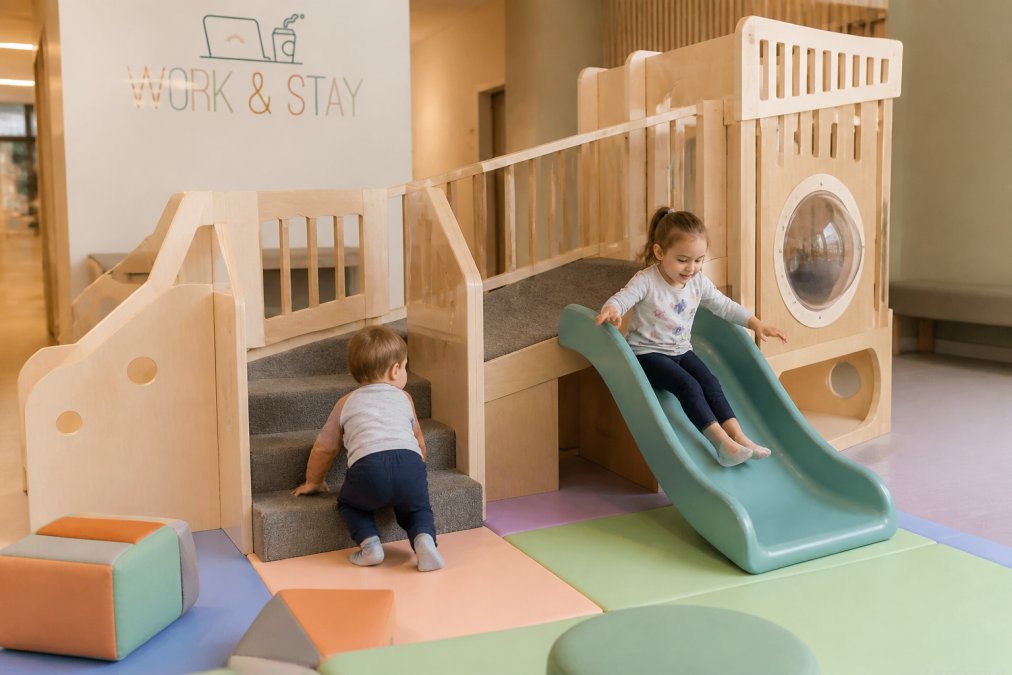
Play & Stay operates as a dedicated indoor play facility for children ages 0-6, featuring supervised open play sessions alongside curriculum-based activities led by trained staff. The facility includes soft play areas, climbing structures, ball pits, slides, and interactive sensory stations designed to build coordination, balance, and confidence.
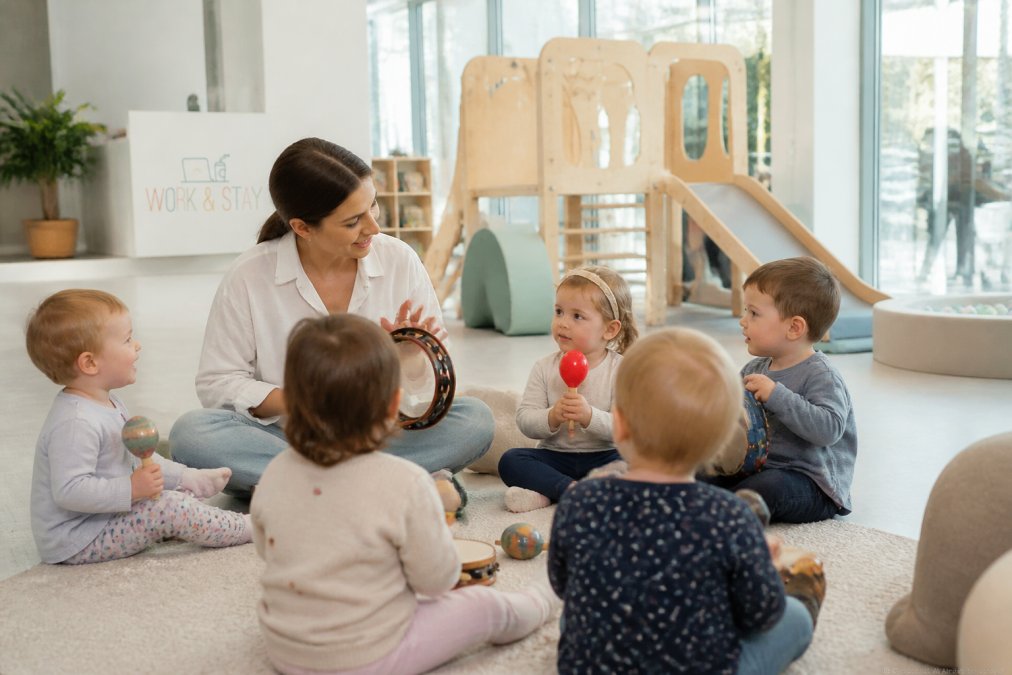
What sets Play & Stay apart is the integration of guided programming. Beyond open play, the space offers arts, music, and dance activities led by teachers, supporting early childhood development in language, creativity, and social skills while giving parents genuine downtime.
Age-Appropriate Zones and Safety Features
Toddlers develop rapidly between 12 and 36 months, and their play needs shift dramatically. An indoor playground for toddlers must accommodate walkers, cruisers, and independent climbers without mixing them with older children. Play & Stay maintains separate zones for infants (0-18 months) and toddlers (18 months-3 years), with soft foam structures, low climbing equipment, and padded surfaces that match developmental stages.
Safety standards matter enormously. The facility maintains strict cleanliness protocols, uses non-toxic materials, provides hand-sanitizing stations, and trains staff in CPR and first aid. Parents can observe play areas directly or relax in a dedicated parent lounge while remaining close. Changing stations, diaper disposal, and family restrooms are integrated into the space. The soft play approach with foam blocks, padded climbing structures, and cushioned landing surfaces reduces injury risk compared to traditional playgrounds.
Educational and Sensory Play Programming
Structured activities develop early literacy, numeracy, and creative expression. Music sessions introduce rhythm and coordination. Arts activities build fine motor skills through painting, playdough, and collage. Dance and movement classes encourage gross motor development and body awareness.
These guided activities differ fundamentally from daycare. Parents are paying for developmental programming in a safe, social setting. A toddler attending a music class at an indoor playground for toddlers learns song patterns, listens to live instruments, and participates in group movement, all under supervision.
Coworking with Childcare: Work & Stay for Remote-Working Parents
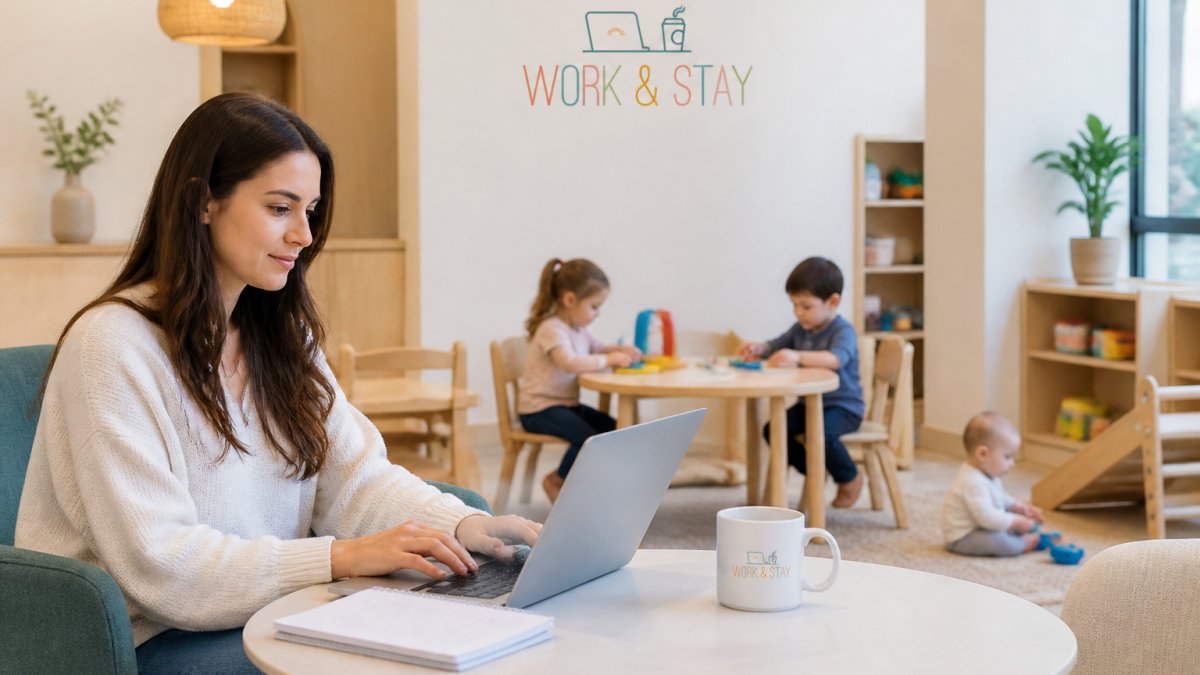
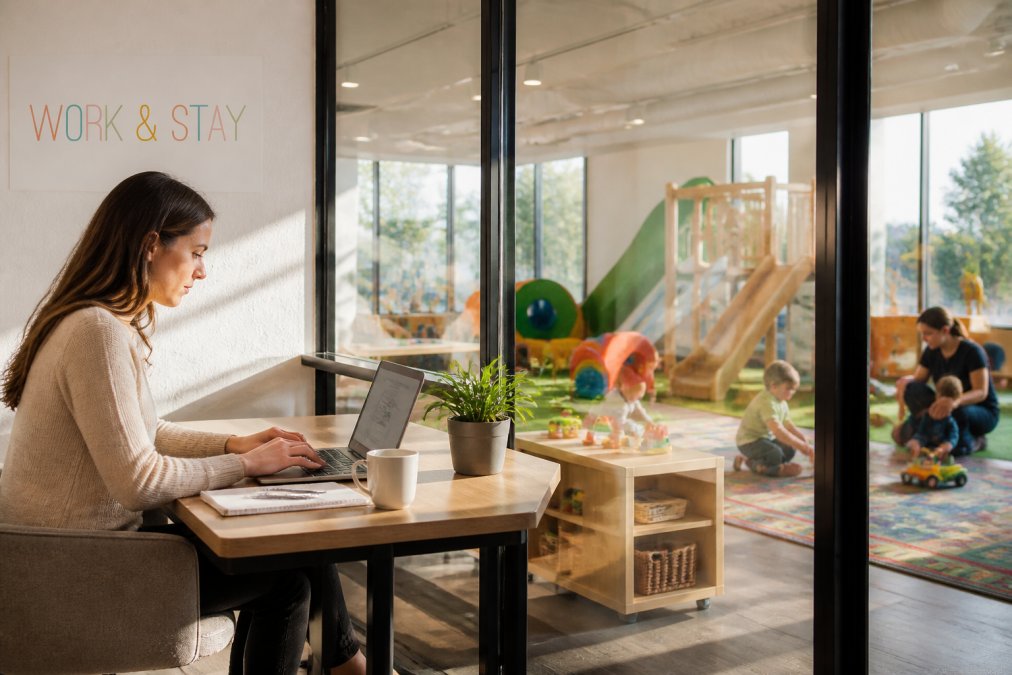
Remote-working parents face a fundamental challenge: maintaining productivity while managing young children at home. Video calls get interrupted by crying. Deadlines slip because childcare demands are unpredictable. Work & Stay solves this by combining a professional coworking space with supervised, curriculum-based childcare steps away, all under one roof.
This model is distinct from traditional childcare. Parents aren't dropping children off for the day; they're working in proximity to their kids while trained staff provide structured activity. A parent can join a client call in a quiet coworking lounge, knowing their toddler is engaged in supervised play nearby. If a child needs comfort or a diaper change, parents can respond immediately. If work demands focus, they can extend childcare time without guilt.
How the Workspace and Childcare Connect
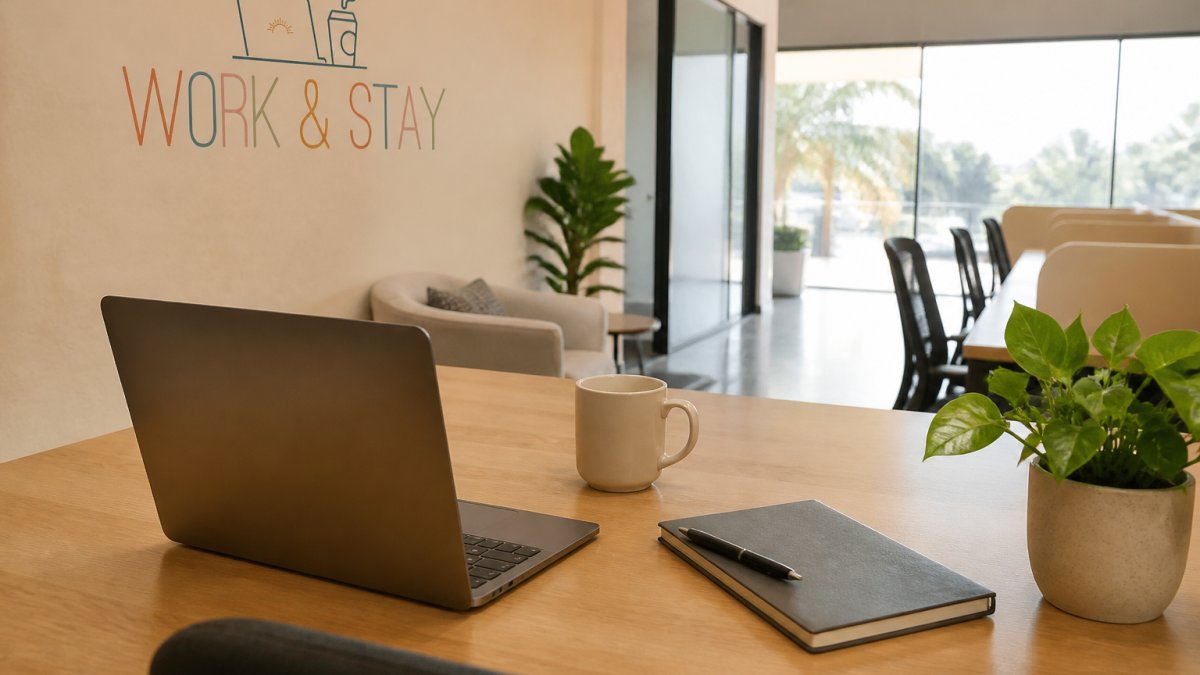
The coworking space includes private phone booths, shared desks, and a lounge area designed for parents who need quiet for calls and concentrated work. The childcare area is supervised by trained staff and physically separated to minimize noise transfer, but close enough that parents can check in or respond to needs. This proximity model appeals to parents with separation anxiety concerns: children see their parent nearby, reducing distress, while parents maintain professional boundaries and focus.
The curriculum-based approach means children aren't just "supervised," they're engaged in guided activities, learning songs, practicing fine motor skills, and interacting with peers. Parents don't feel guilty leaving their child; they're confident their child is developing while they work.
Membership and Day Pass Options
Work & Stay offers flexible membership and day pass options with no long-term contract required. This flexibility is critical for parents with variable schedules or seasonal needs. Some parents need workspace 3 days a week; others need drop-in access during travel or school breaks. The absence of long-term commitments removes the risk of paying for unused time or being locked into a plan that no longer fits.
Membership typically includes access to coworking space and childcare during membership hours. Day passes allow parents to try the service, access childcare during a specific week, or supplement a part-time schedule. For current membership and day pass options, visit https://playandstayaz.com/work-stay/.
Drop-In Childcare and Flexible Scheduling
Parents often need childcare on an unpredictable basis: a medical appointment, a work deadline, an hour to run errands without managing a toddler. Traditional childcare requires advance notice or long-term commitment. Drop-in childcare addresses this gap by allowing parents to access supervision and activity on short notice.
Play & Stay's drop-in model supports this flexibility. Parents can book a session online or call ahead, arriving with their child for a set duration (typically hourly or half-day blocks). The child enters a supervised play environment while the parent handles personal or professional needs. This approach is particularly valuable for parents who work from home but need occasional childcare support.
The distinction between drop-in play and drop-in childcare matters. Drop-in play is recreational; the child attends open play sessions under supervision. Drop-in childcare through Work & Stay combines supervision with curriculum-based activity, offering developmental value alongside care. Parents should clarify whether they need pure supervision or structured programming, and confirm availability and booking lead times before relying on drop-in access for recurring needs.
Sensory-Friendly and Accessibility Hours
Many parents of neurodivergent toddlers avoid busy open-play sessions because crowds, noise, and unpredictable peer interactions trigger overwhelm or meltdowns. Play & Stay addresses this by offering sensory-friendly hours, quieter, lower-stimulation sessions with reduced capacity, adjusted lighting, and calmer environments.
During sensory-friendly sessions, staff are trained to recognize and support children who need breaks, quiet spaces, or modified activity pacing. For families managing sensory sensitivities, knowing that a facility offers these sessions removes the barrier of "we can't go to indoor playgrounds because it's too much for our child."
Accessibility extends beyond sensory needs. Parents should ask about wheelchair and mobility device access, accessible parking and bathrooms, stroller storage, quiet spaces for nursing or decompression, and staff training to support children with developmental delays or communication differences. Facilities that proactively communicate these features signal that every child is welcome and supported.
Birthday Parties and Private Events
Hosting a birthday party at an indoor playground for toddlers eliminates the stress of managing a group of young children in a home setting. Play & Stay offers private party room rentals with access to the play facility, allowing children to enjoy supervised play before or after cake and presents. The venue handles setup, cleanup, and supervision, freeing parents to focus on celebration rather than logistics.
Party packages typically include access to the play area, a private party room, tables, and staff supervision. Parents bring food or arrange catering (policies vary). The climate-controlled environment means no weather concerns, and age-appropriate equipment ensures every child can participate safely. For parents of toddlers, this removes the anxiety of hosting multiple young children in a small space.
Climate-Controlled Play: Beat the Heat Year-Round
In regions with extreme heat, outdoor play becomes dangerous during summer months. An indoor playground for toddlers solves this by offering a climate-controlled alternative where children can run, climb, and explore safely regardless of temperature. This is particularly valuable for toddlers, who regulate body temperature less effectively than older children and dehydrate quickly in heat.
Beyond heat, indoor play addresses weather unpredictability: sudden rain, dust storms, or cold snaps no longer disrupt routine. Parents can commit to weekly play sessions without weather contingency planning. Climate control also supports extended play sessions. A toddler can spend 2-3 hours in active play without overheating, fatigue, or sun exposure concerns.
Cleanliness, Safety Standards, and Parent Peace of Mind
Parents of young children are understandably cautious about hygiene and safety. An indoor playground for toddlers that maintains rigorous cleanliness standards and transparent safety practices builds trust and confidence. Play & Stay prioritizes both through regular sanitization of equipment, hand-washing stations, diaper-changing protocols, and staff training.
What to Verify Before Choosing a Facility
Parents should ask specific questions and observe the facility in action. Here's what to look for:
Cleaning and Sanitization:
- Ask about the cleaning schedule: Is equipment sanitized daily, between sessions, or only at closing? High-touch surfaces should be sanitized multiple times per day.
- Observe the facility during operation: Do you see staff wiping equipment, checking bathrooms, or emptying diaper disposal bins regularly?
- Ask what sanitizing agents are used. Non-toxic, child-safe disinfectants are essential.
- Inquire about illness policies: Does the facility require parents to keep sick children home?
Staff Training and Ratios:
- Confirm staff-to-child ratios. For infants and younger toddlers (0-18 months), ratios should be no higher than 1 adult to 4 children; for toddlers (18 months-3 years), 1 adult to 6 children is standard.
- Verify that all staff have current CPR and first aid certification.
- Ask about background checks: Do all staff, including part-time and substitute staff, undergo background screening?
- Inquire about ongoing training in child development, behavior management, or recognizing signs of abuse or neglect.
Facility Design and Safety Features:
- Examine soft play structures for tears, loose padding, or worn seams.
- Check that climbing equipment has appropriate fall zones with adequate padding underneath.
- Verify that bathrooms are accessible to toddlers and that changing stations are at appropriate heights.
- Look for secured storage of cleaning supplies, medications, or other hazards away from play areas.
- Confirm that emergency exits are clearly marked and unobstructed.
Incident Reporting and Communication:
- Ask how the facility handles minor injuries. Do parents receive incident reports?
- Inquire about the process if a child has a behavioral incident or conflict with another child.
- Ask how the facility communicates health or safety concerns to parents.
Red Flags and Questions That Matter
Be cautious if a facility discourages parent observation, cannot clearly explain cleaning schedules or safety protocols, has staff without current CPR certification, resists discussing incident reporting, or shows visible dirt or broken equipment. A quality indoor playground for toddlers welcomes parental inquiry and demonstrates genuine commitment to safety through transparent practices.
Conclusion
An indoor playground for toddlers serves multiple needs simultaneously: safe, developmentally appropriate play; social interaction with peers; respite and productivity time for parents; and flexible scheduling that adapts to variable family needs. Play & Stay combines these elements by offering age-appropriate play zones, curriculum-based activities, and integrated coworking space through Work & Stay, all designed specifically for families with young children.
For remote-working parents, the coworking-plus-childcare model eliminates the false choice between professional productivity and parental presence. For parents seeking occasional childcare or social play opportunities, drop-in access and memberships provide flexibility without long-term commitment. For milestone celebrations, private party rentals transform a facility into a personalized event space. Learn more about https://playandstayaz.com/ or explore https://playandstayaz.com/work-stay/ for membership and day pass options.
Frequently Asked Questions
Q: What makes an indoor playground safe and appropriate for toddlers under 2?
A: Toddler-friendly indoor playgrounds feature soft play areas with padded surfaces, low-height structures, and separate infant zones away from older children. Safety features include cleanliness standards, staff supervision, age-appropriate equipment, and parent lounge areas where caregivers can monitor play. Look for facilities that maintain strict sanitation protocols and have trained staff trained in child safety and development.
Q: Can I work while my child is in drop-in childcare at an indoor playground?
A: Yes. Facilities like Work & Stay combine coworking with childcare, offering parents a workspace just steps away from supervised, curriculum-based activities for children ages 0-6. This setup lets you handle work calls and emails while your child engages in guided arts, music, dance, and sensory play. Drop-in childcare options make this flexible, no long-term contract required.
Q: How do indoor playgrounds help toddler development?
A: Indoor playgrounds support motor skills development, imaginative play, and social interaction. Supervised play environments encourage children to explore soft play structures, climb, slide, and interact with peers in a safe setting. Educational programming like music, dance, and arts activities boost self-esteem and coordination while helping toddlers build confidence in a structured, climate-controlled environment.
Q: Are indoor playgrounds in Scottsdale suitable for infants and very young toddlers?
A: Many facilities, including Play & Stay, offer dedicated infant zones with age-appropriate equipment and changing stations. Staff can assist with diaper changes and care for the youngest guests. Before visiting, confirm the facility has separate areas for infants and older toddlers, trained staff for very young children, and amenities like changing tables and parent seating near infant play zones.
Ready to explore flexible workspace and childcare designed for your family? Learn more about Work & Stay memberships and day passes at https://playandstayaz.com/work-stay/, or discover Play & Stay's open play sessions and programming at https://playandstayaz.com/. Both options support working parents and developing toddlers in one integrated environment.
This article was written using GrandRanker