 ultimate-guide
Indoor Playground Franchise: Ultimate 2026 Guide
Table of Contents
- What Is an Indoor Playground Franchise?
- Initial Investment and Franchise Fee Breakdown
- Building Your Indoor Playground Business Plan
- Childcare Licensing Requirements and Safety Compliance
- The Dual-Concept Model: Coworking Space with Childcare
- Operational Support, Training, and Ongoing Costs
- Profitability, ROI, and Exit Strategy
- Conclusion: Is an Indoor Playground Franchise Right for You?
- Frequently Asked Questions
Last Updated: August 21, 2026
What Is an Indoor Playground Franchise?
An indoor playground franchise is a business model where an entrepreneur licenses a brand's concept, systems, and operational framework to open a play facility for young children. Unlike starting independently, a franchisee gains access to an established brand, proven business model, training, and ongoing support. The franchisor typically provides play structures, curriculum guidelines, marketing templates, and operational playbooks that define how the facility runs.
The indoor playground industry has evolved significantly. What started as simple supervised play spaces has transformed into comprehensive facilities offering structured programming, birthday party hosting, membership models, and hybrid concepts that combine play with additional revenue streams. Some modern franchises now integrate coworking spaces or childcare services alongside open play, creating multiple income channels and addressing the real needs of working parents.
Initial Investment and Franchise Fee Breakdown
Starting an indoor playground franchise requires understanding several cost categories, each varying significantly based on location, facility size, and the specific franchise system.
Franchise fee is the initial licensing cost for the right to use the brand and systems. Real estate and build-out often represents the largest expense, typically requiring commercial space with leasing deposits, flooring, soft play structures, painting, HVAC modifications, and electrical upgrades. Play equipment and structures include soft play elements, climbing structures, slides, ball pits, and activity stations. Technology infrastructure covers point-of-sale systems, membership management software, online booking platforms, security cameras, and access control systems. Licensing, permits, and insurance are non-negotiable and vary by location. Working capital covers your first 3-6 months of operations: staff payroll, utilities, marketing, supplies, and contingencies.
| Investment Category | Notes |
|---|---|
| Franchise Fee | One-time licensing cost |
| Real Estate (deposit + buildout) | Highly location-dependent |
| Play Equipment & Structures | Quality and size vary |
| Technology & POS Systems | Often franchisor-approved |
| Licenses, Permits, Insurance | Regulatory and legal |
| Working Capital (3-6 months) | Covers early operations |
| Total Estimated Range | Varies by market and concept |
Your actual costs depend on real estate prices in your target market, facility size, local labor costs, and the specific franchise system you choose. Franchisors typically provide an Item 19 financial performance representation in their Franchise Disclosure Document (FDD) showing historical unit economics from existing locations.
Building Your Indoor Playground Business Plan
A solid business plan is your roadmap and financing document. Start with market analysis: identify your primary customers (parents with children ages 2-6), analyze population density, median household income, competitor saturation, and seasonal weather patterns in your target geography.
Revenue Streams: Memberships, Birthday Parties, and Concessions
Memberships create predictable recurring revenue through monthly or annual passes with unlimited open play access. Members typically receive discounts on birthday parties and concessions.
Birthday parties are high-margin events. A private party room, dedicated staff, structured activities, and catering options command premium pricing.
Concessions, snacks, drinks, toys, and merchandise, add to revenue with minimal additional overhead. Some franchises partner with specific vendors or require sourcing from approved suppliers.
Ancillary services vary by concept. Some facilities offer entertainment, photography services, or special programming. Others host corporate team-building events, school field trips, or summer camps.
Site Selection and Facility Requirements
Location determines success more than almost any other factor. A facility in a high-traffic shopping center near schools and residential neighborhoods will outperform an isolated location.
Key location criteria include visibility and accessibility, proximity to target demographic, complementary co-tenancy, zoning compliance, open floor plans with adequate ceiling height, and reliable climate control. Your franchise system will likely provide guidance on minimum and optimal size.
Childcare Licensing Requirements and Safety Compliance
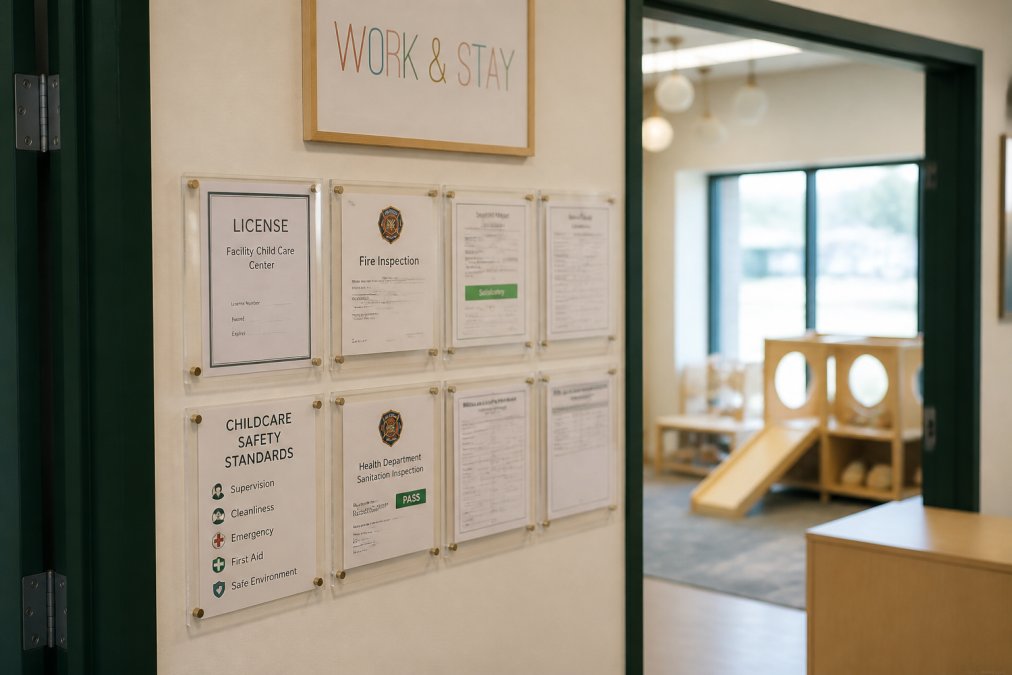
Licensing requirements vary significantly by state and sometimes by county. If your facility offers supervised childcare, you'll likely need a childcare license from your state's health or human services department.
State licensing typically covers staff-to-child ratios, staff qualifications (background checks, CPR, first aid, child development training), health and safety standards, facility standards, and curriculum or programming requirements.
Even if your state doesn't require licensing for open play facilities, safety compliance is non-negotiable. Equipment must meet ASTM F1487 standards for playground safety and be regularly inspected for wear or damage (astm.org).
Liability insurance is essential and often required by landlords. Create documented safety protocols: daily equipment inspections, incident reporting procedures, emergency response plans, parent sign-in/sign-out systems, and staff training records.
The Dual-Concept Model: Coworking Space with Childcare
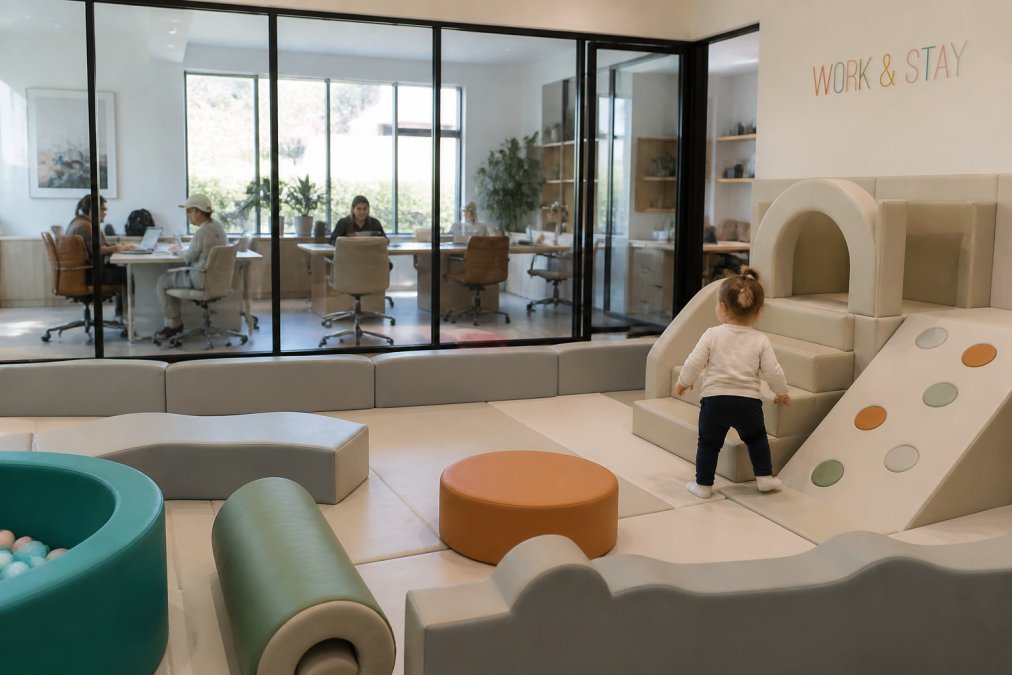
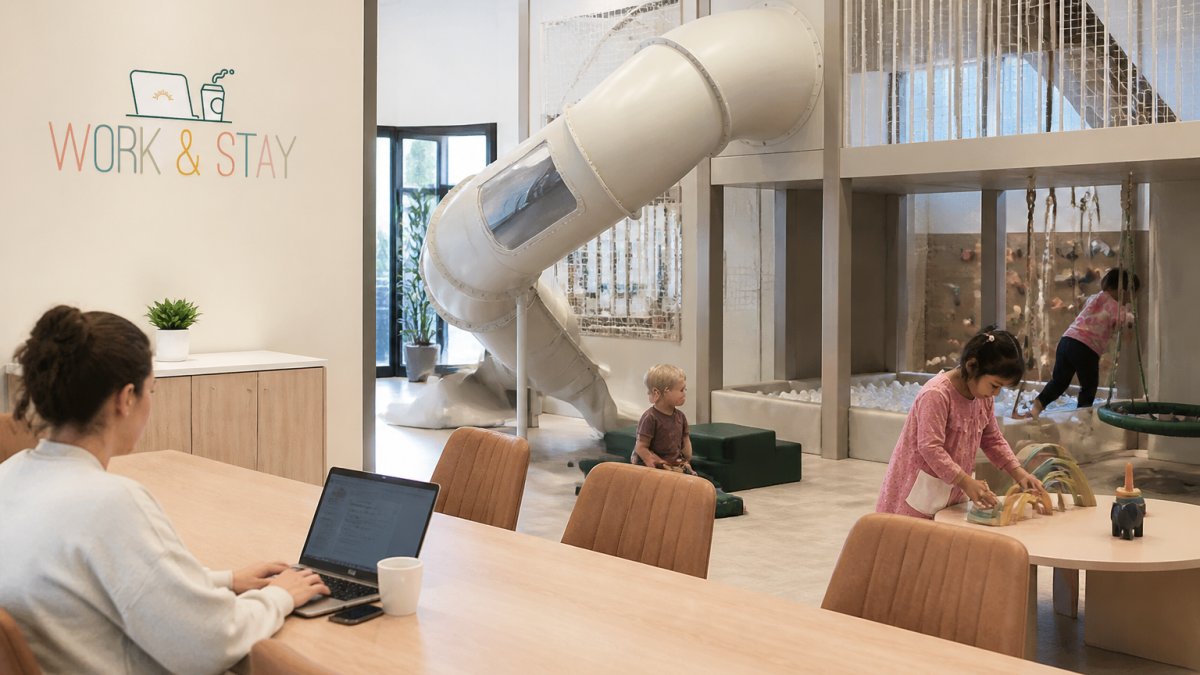
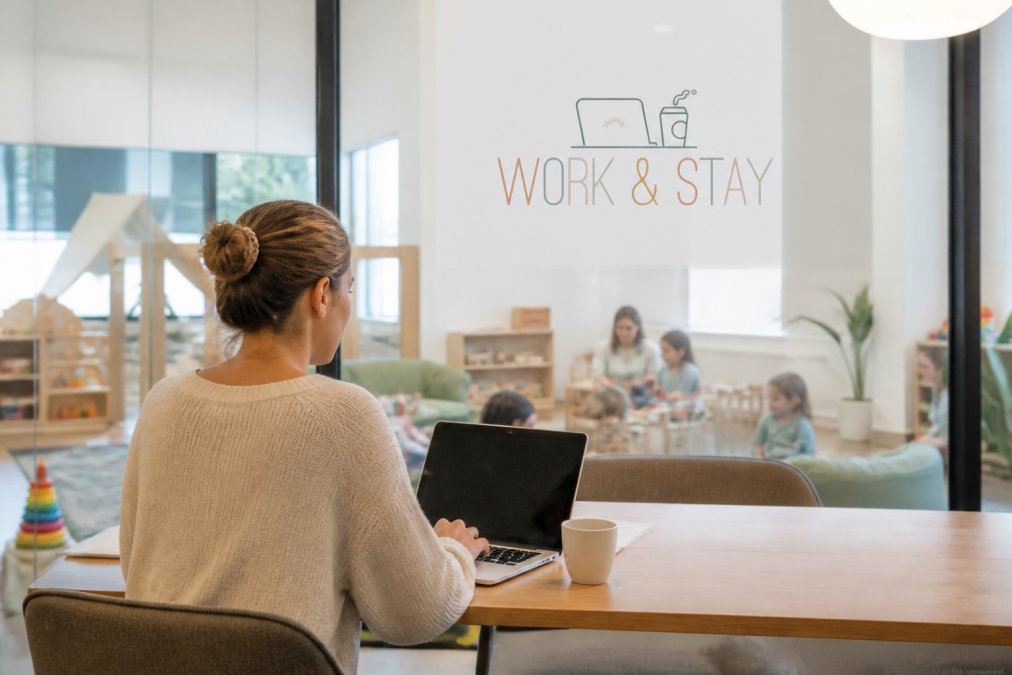
A growing segment of the indoor playground franchise market combines play facilities with coworking or workspace solutions. This model addresses a real pain point: working parents need both childcare and a productive work environment.
The dual-concept model typically features a separate childcare environment with curriculum-based activities and teacher-led programming for children ages 0-6, adjacent coworking space with private offices or shared workstations, and flexible membership options combining childcare access with workspace access without long-term contracts.
SIGN UP FOR YOUR MEMBERSHIP TODAY →
This model creates multiple revenue streams and appeals to entrepreneurs serving working parents holistically. However, it requires additional operational complexity. Staffing must include trained childcare educators, curriculum planning becomes more formal, and licensing requirements are typically more stringent. Real estate needs are larger to accommodate both spaces.
Operational Support, Training, and Ongoing Costs
Strong franchisors typically offer initial training, operational manuals, technology support, marketing resources, ongoing coaching, field support, and community access to other franchisees.
Ongoing costs include royalty fees (typically 5-7% of gross revenue paid monthly), marketing fund contributions (often 2-3% of gross revenue), technology fees for software licensing and online booking platforms, payroll, rent and utilities, and equipment maintenance and replacement (the FTC).
Franchisors should provide transparent disclosure of these ongoing costs in their Franchise Disclosure Document. Ask for Item 19 financial performance representations showing historical revenue and expense data from existing franchisees.
Profitability, ROI, and Exit Strategy
Profitability timelines vary widely. A well-executed facility in a strong market might reach profitability within 18-24 months; others take 3-5 years (sba.gov). Many facilities operate at a loss in year one while building reputation and membership. By year three, a well-run facility should approach profitability.
Exit strategy is important to consider from day one. Options include selling to another franchisee, selling to a private equity consolidator, transitioning to semi-absentee ownership, or closing and liquidating. A strong business plan includes an exit strategy that influences decisions about location, debt structure, and business model.
Conclusion: Is an Indoor Playground Franchise Right for You?
The indoor playground franchise model offers a proven concept, established brand recognition, and operational support, but it requires significant capital, hands-on management, and market execution. Success depends on choosing the right franchise system, securing the right location, building strong operations, and executing consistent marketing.
Before committing, evaluate your market carefully. Research competitor saturation, demographic trends, and real estate costs in your target geography. Request Item 19 financial performance data from franchisors. Talk to existing franchisees about their actual experience.
The dual-concept model combining play with coworking or childcare represents an emerging opportunity, particularly as working parents seek integrated solutions. If you have operational sophistication and capital to invest, this model can differentiate your location and create multiple revenue streams.
If you're interested in bringing an established indoor playground concept to your market, or if you're considering the dual-concept model that combines play with flexible childcare and workspace, the Founding Partner opportunity may be right for you. Play & Stay and Work & Stay have developed a proven concept serving working parents and young children in a single integrated facility. Learn more about the Founding Partner opportunity and how to bring this concept to your community. Qualified candidates can explore licensing options, territory availability, and support structures designed to help new franchise owners succeed. Apply today to explore whether this business model aligns with your entrepreneurial goals and market opportunity.
Frequently Asked Questions
Q: Is an indoor playground franchise profitable?
A: Profitability depends on location, membership adoption, birthday party bookings, and operational efficiency. Franchises with strong brand recognition and dual revenue streams (memberships plus events and concessions) typically perform better. Success requires careful market analysis, competitive pricing, and consistent marketing to build a local customer base. Exit strategy and resale value also improve with established operations and loyal member bases.
Q: What are the main startup costs for an indoor play center?
A: Indoor play center startup costs include the franchise fee, facility lease or purchase, build-out and equipment installation, soft play structures, safety compliance upgrades, insurance, licensing, and initial marketing. Site selection significantly impacts total expenses. The franchise disclosure document (FDD) will detail all required capital requirements and liquid capital needed to qualify.
Q: What childcare licensing requirements apply to indoor playgrounds?
A: Childcare licensing requirements vary by state and depend on whether your facility offers supervised childcare or open play. Most states require staff training, background checks, child-to-staff ratios, health and safety inspections, and liability insurance. If you operate a coworking space with childcare, additional regulations apply. Contact your state's department of health and human services for specific licensing rules in your market.
Q: How does a dual-concept indoor playground franchise work?
A: A dual-concept model combines an indoor play space for children with a coworking or workspace area for parents. Parents can work, attend meetings, or relax while their children play in a supervised, curriculum-based environment. This model expands revenue through memberships, day passes, and workspace rentals, while offering parents a unique value proposition. It requires separate zoning, staff management, and operational planning.
Q: What permits and zoning regulations do I need for an indoor playground?
A: Zoning regulations vary by municipality but typically require commercial or mixed-use zoning. You'll need building permits, occupancy permits, health department approval, fire safety inspections, and ADA compliance certification. If offering childcare, additional childcare facility permits apply. Consult your local zoning office and building department early in site selection to avoid costly delays.
Q: What operational support does a franchise provide?
A: Most franchises offer initial training programs, ongoing operational support, marketing templates, staff training resources, and technology platforms for membership management and scheduling. Some provide site selection assistance and facility design guidance. Territory protection and brand recognition help with customer acquisition. Review the franchise disclosure document to understand the specific support level and ongoing royalty fees.
Q: What should I look for in a franchise disclosure document?
A: Review the FDD for initial investment requirements, royalty fees, territory protection terms, training and support details, financial performance claims, litigation history, and exit or resale provisions. Pay attention to ongoing costs beyond royalties, such as technology fees or marketing contributions. Understand the turnkey solution components and what happens if you want to sell or exit the franchise.
This article was written using GrandRanker