 listicle
Indoor Play Areas for Toddlers: A 2026 Guide
Table of Contents
- Why Indoor Play Areas Matter for Toddlers
- Play & Stay: Supervised Open Play and Curriculum-Based Activities
- Coworking Space with Childcare: Work & Stay for Busy Parents
- Drop-in Childcare and Flexible Membership Options
- Private Birthday Parties and Event Hosting
- Beating the Heat: Why Indoor Play Matters in Summer
- What Makes a Safe, Clean Indoor Play Environment
- Frequently Asked Questions
Last Updated: September 25, 2026
Indoor play areas toddlers need have become essential for busy parents navigating heat, weather, and the constant need for safe, engaging environments where young children can burn energy and develop crucial motor skills. Whether you're a working parent seeking a space to combine productivity with childcare, or a caregiver looking for climate-controlled play during hot months, the right indoor play space makes all the difference. This guide breaks down what to look for in toddler-friendly facilities, highlights the best options available, and explains how indoor play supports early childhood development.
Why Indoor Play Areas Matter for Toddlers
Toddlers need movement, exploration, and sensory input to develop coordination, confidence, and social skills. Indoor play areas provide a controlled environment where children ages 0-6 can play freely without weather constraints, traffic hazards, or extreme heat exposure.
Physical development happens through climbing, jumping, sliding, and balancing on soft play equipment. A well-designed indoor play space offers age-appropriate zones where infants can safely explore while toddlers tackle more challenging activities. Beyond the physical benefits, supervised play environments reduce parental stress, you know your child is safe while you focus on work, errands, or simply catching your breath.
Early childhood development research emphasizes that play is how young children learn. Through unstructured play, toddlers practice problem-solving, build confidence, and develop friendships with peers. Structured programming, like guided arts, music, or dance, adds another layer by introducing rhythm, creativity, and teacher-led learning moments that complement home and school environments.
Play & Stay: Supervised Open Play and Curriculum-Based Activities
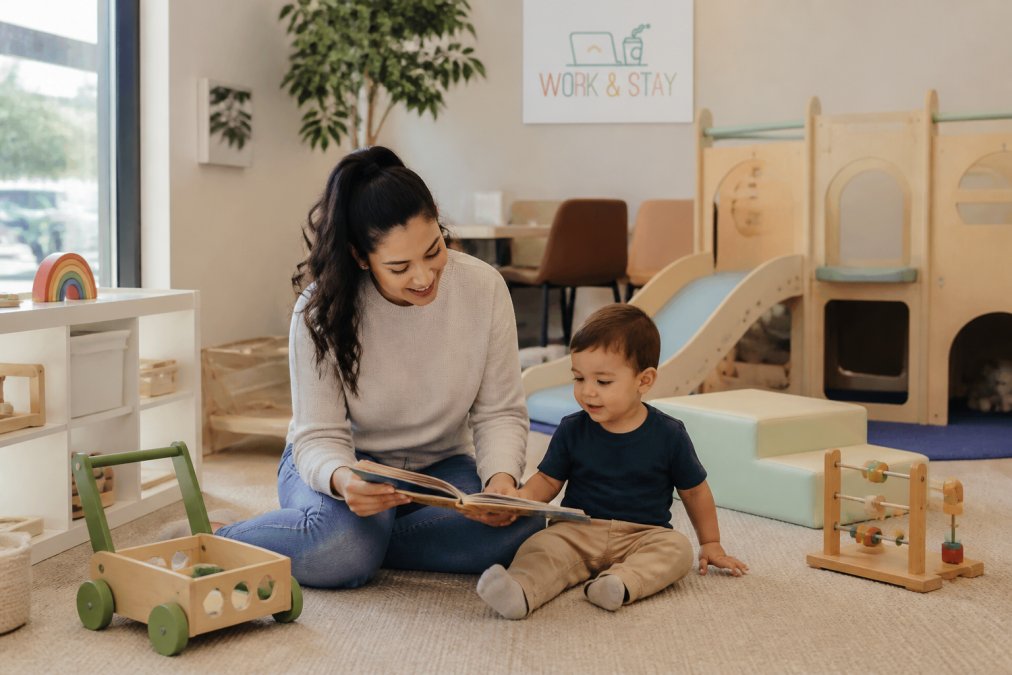
Play & Stay offers a dedicated indoor play space designed specifically for children ages 0-6, combining supervised open play with curriculum-based programming. This facility focuses on play-based learning in a safe, climate-controlled environment with flexible membership and day pass options.
The facility separates younger infants from older toddlers, ensuring age-appropriate activities and safety protocols. Infants have dedicated areas with soft play equipment, while toddlers enjoy more challenging structures. Parents can drop in for single sessions or explore membership options depending on their needs.
Age-Appropriate Zones and Safety Features
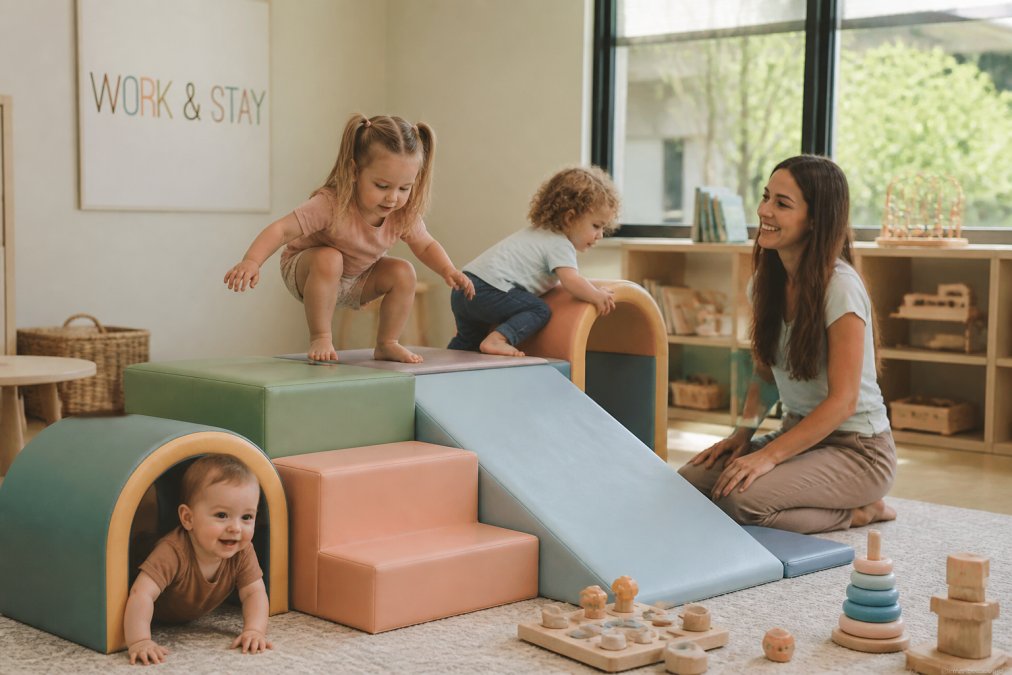
The space divides into distinct zones: an infant area for ages 0-18 months with soft mats and sensory toys, a toddler zone for ages 18 months-3 years with climbing structures and slides, and a preschool area for ages 3-6 with more advanced equipment. This separation prevents younger children from being overwhelmed by older, more active toddlers while allowing each age group to play at their developmental level.
Safety features include padded flooring throughout, supervision by trained staff, regular sanitization protocols, and clear capacity limits to prevent overcrowding. The environment is climate-controlled year-round, eliminating concerns about extreme heat or cold affecting your child's comfort.
Guided Arts, Music, and Dance Programming
Beyond open play, Play & Stay offers structured activities including guided arts and crafts, music classes, and movement-based dance sessions. These teacher-led experiences introduce toddlers to rhythm, color, creativity, and group participation, skills that support cognitive and social development. Programming is available, allowing families to choose sessions that fit their schedule.
Coworking Space with Childcare: Work & Stay for Busy Parents
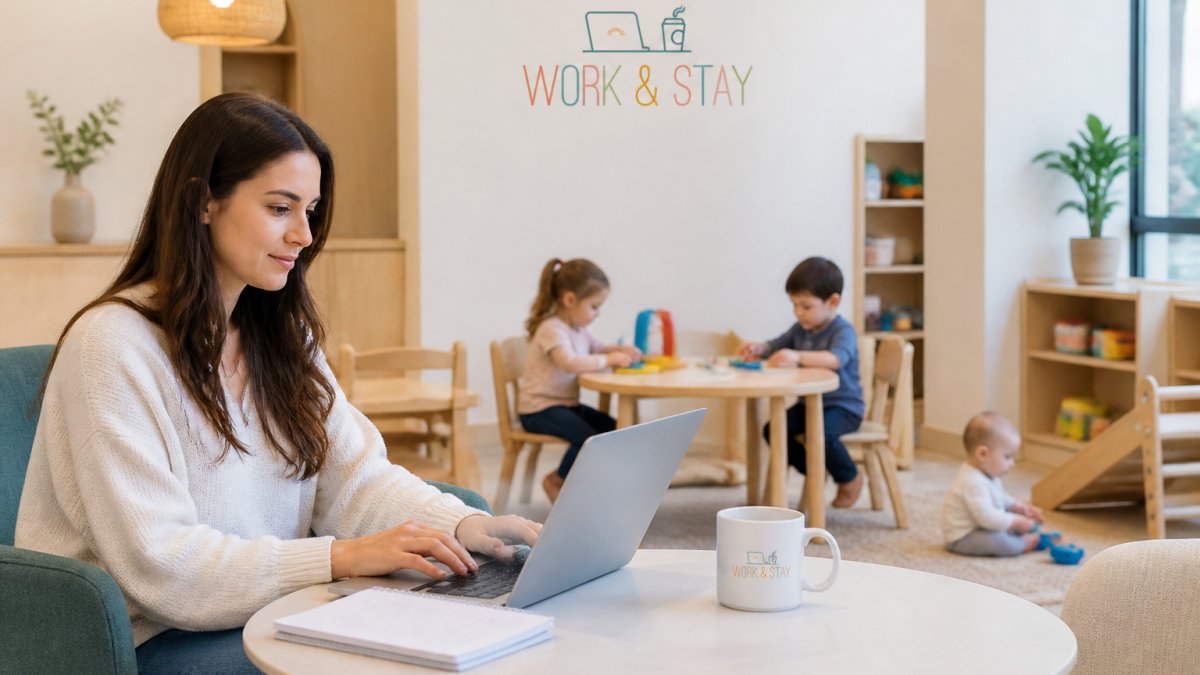
Work & Stay addresses a unique challenge: parents who need a professional workspace while their children receive supervised care nearby. It's a flexible coworking environment where parents work in separate, dedicated spaces while their children participate in curriculum-based childcare just steps away.
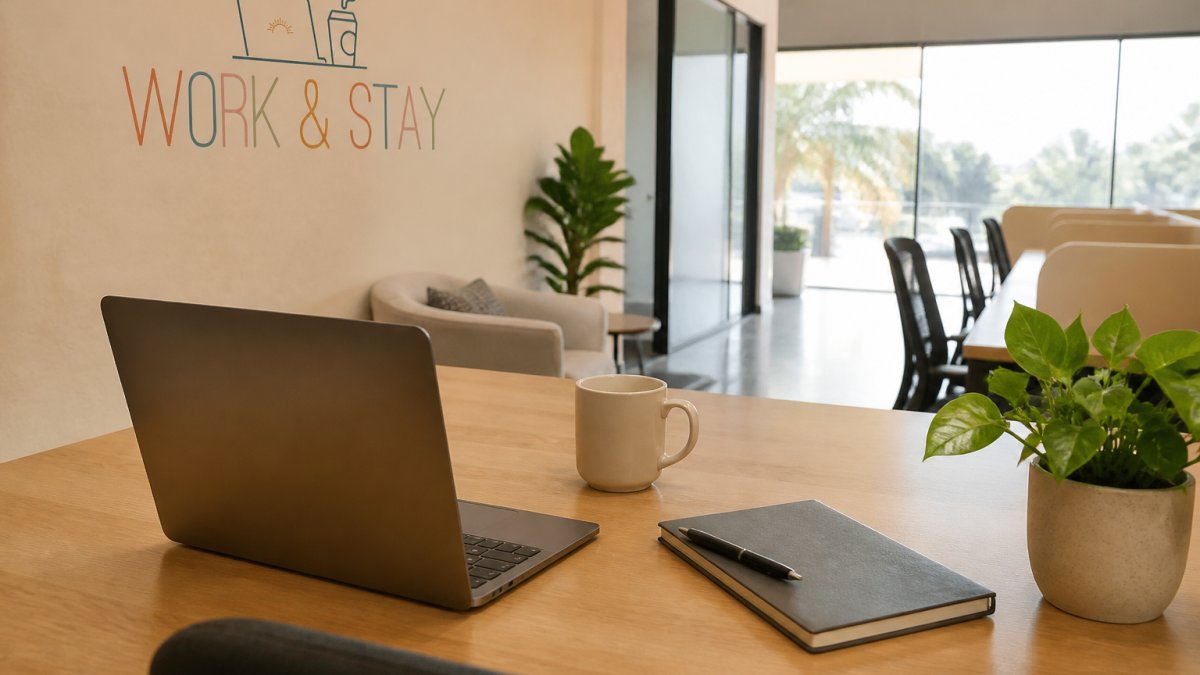
The setup includes a coworking lounge for informal work, private workspaces for focused calls and deep work, and a separate childcare environment with age-appropriate programming for children ages 0-6. Parents can check in on their children during breaks, and staff coordinate transitions seamlessly between work and childcare spaces.
This model works particularly well for remote workers, freelancers, entrepreneurs, and parents managing flexible schedules. You gain professional space, reliable childcare, and the peace of mind that comes from proximity to your child, all without the commute time or expense of traditional office space and separate childcare arrangements.
Drop-in Childcare and Flexible Membership Options
One of the biggest barriers parents face is inflexible childcare commitments. Work & Stay and Play & Stay both offer drop-in options and flexible memberships, no long-term contracts required.
Drop-in play lets families visit as needed, ideal for parents managing unpredictable schedules or trying out the space before committing. Memberships provide regular access for families who visit weekly or more frequently. The flexibility means you can adjust your usage based on seasonal needs, work demands, or changing family circumstances.
This approach is especially valuable during summer months when school is out, during periods of remote work, or when parents need backup childcare for unexpected schedule changes. You're not locked into a long-term commitment for services you won't use consistently.
SIGN UP FOR YOUR MEMBERSHIP TODAY →
Private Birthday Parties and Event Hosting
Play & Stay offers private party room rentals for toddler and preschooler birthday celebrations. The facility provides a dedicated space, supervision, and access to play equipment, eliminating the stress of hosting at home or managing logistics at an unfamiliar venue.
Party packages include the private room, supervised open play time, and age-appropriate activities. Parents handle cake and snacks (or coordinate with the venue), while staff manage supervision and safety. This setup works well for small, intimate gatherings or larger family celebrations, depending on group size and the venue's capacity.
Private events can also be booked for other occasions: playdates, family gatherings, or community group meetings. The flexibility allows parents to use the space beyond birthday parties when they need a safe, contained environment for children.
Beating the Heat: Why Indoor Play Matters in Summer
Summer in the region brings extreme heat that makes outdoor play unsafe for young children. Indoor play areas toddlers can safely use become essential during these months, offering climate-controlled environments where toddlers can run, climb, and explore without heat exposure risk.
Extended outdoor play in high temperatures increases dehydration risk and heat-related illness in young children, whose bodies regulate temperature less efficiently than adults.
Planning Your Visit: Timing, Crowds, and Logistics
While indoor play spaces solve the heat problem, parents often struggle with a different challenge: knowing when to visit to avoid overwhelming crowds. Peak times, typically mid-morning on weekdays and late morning through early afternoon on weekends, can feel chaotic, especially for toddlers who become overstimulated in busy environments.
What Makes a Safe, Clean Indoor Play Environment
Safety and cleanliness are non-negotiable in any space where young children play. The best facilities demonstrate clear standards in multiple areas.
| Safety Feature | What to Look For |
|---|---|
| Sanitization | Frequent cleaning, child-safe products, visible protocols |
| Supervision | Trained staff, appropriate ratios, clear visibility of all zones |
| Equipment | Padded flooring, age-appropriate structures, regular inspection |
| Capacity | Managed entry, clear occupancy limits, no overcrowding |
| Emergency Response | First aid trained staff, incident documentation, parent notification |
Accessibility and Sensory-Friendly Considerations
Many parents of neurodivergent or sensory-sensitive toddlers struggle to find indoor play spaces that accommodate their child's needs. Standard safety checklists don't address sensory overload, mobility challenges, or the need for quieter, lower-stimulation environments.
Sensory-friendly features to ask about include:
- Lighting control: Facilities with adjustable or dimmed lighting reduce sensory overwhelm for children sensitive to bright fluorescent lights.
- Sound management: Ask about background music or noise levels. Quieter zones or designated low-noise times can make a huge difference.
- Equipment variety: Look for spaces that offer both high-energy structures (climbing, slides) and calm zones with softer play, tunnels, or enclosed spaces where children can decompress. Variety allows each child to self-regulate.
- Crowd predictability: Knowing when the space is quietest helps families with sensory-sensitive children plan visits during less overwhelming times. Staff should be able to describe typical crowd patterns by day and time.
Accessibility for mobility challenges includes:
- Ramp or level access: Confirm the facility is fully accessible without stairs at the entrance. Families with strollers, walkers, or children with mobility differences need easy entry.
- Accessible restrooms: Ask about family/accessible restroom availability, especially important for parents managing toileting support or diaper changes for older toddlers.
- Adapted equipment: Ask what adaptations are available.
- Staff awareness: Staff should be trained to support children with various abilities and comfortable answering questions about accommodations.
Frequently Asked Questions
What age groups are best suited for indoor play areas in Scottsdale?
Most indoor play areas cater to children ages 0-6, with dedicated zones for infants and toddlers to ensure safety and age-appropriate activities. Play & Stay specializes in this age group, offering separate spaces designed for the youngest guests. Always check facility guidelines, as some areas may have specific age recommendations for certain equipment or activities.
Do indoor play areas offer drop-in childcare without a membership?
Yes, many facilities including Play & Stay offer drop-in childcare options and day passes alongside memberships. Drop-in childcare provides flexibility for parents who need occasional supervised play time without long-term contracts. This is ideal for managing errands, gaining respite time, or testing the facility before committing to a membership.
Can I work while my child plays at an indoor play space?
Work & Stay combines a coworking space with childcare, allowing parents to work in a separate professional environment while their children receive supervised, curriculum-based care just steps away. This setup is designed for remote-working parents who need quiet focus time while knowing their child is safe and engaged in structured activities.
What safety and cleanliness standards should I expect at an indoor play area?
Quality indoor play facilities maintain regular cleaning schedules, sanitize equipment frequently, enforce capacity limits to prevent overcrowding, and employ trained staff to supervise play. Look for facilities that clearly communicate their safety protocols, cleanliness standards, and incident procedures. Don't hesitate to ask about changing stations, handwashing areas, and staff training.