 how-to
Drop-In Hourly Childcare: A Complete 2026 Guide
Table of Contents
- What Is Drop-In Hourly Childcare?
- How Drop-In Hourly Childcare Differs From Traditional Daycare
- How to Find Safe Childcare in Your Area
- Coworking Space With Childcare: A Hybrid Option for Working Parents
- Backup Childcare Options When Your Regular Care Falls Through
- Safety Standards, Licensing, and What to Verify
- Making the Transition Easier for Your Child
- Frequently Asked Questions
Last Updated: September 23, 2026
What Is Drop-In Hourly Childcare?
Drop-in hourly childcare is a flexible care arrangement where parents access supervised childcare on an as-needed basis without long-term contracts. Unlike traditional daycare, which requires ongoing enrollment, drop-in hourly childcare lets parents bring their child for a few hours, a full day, or anything in between. This model works well for remote workers needing focused time, parents running errands, or families seeking respite care. 🎯
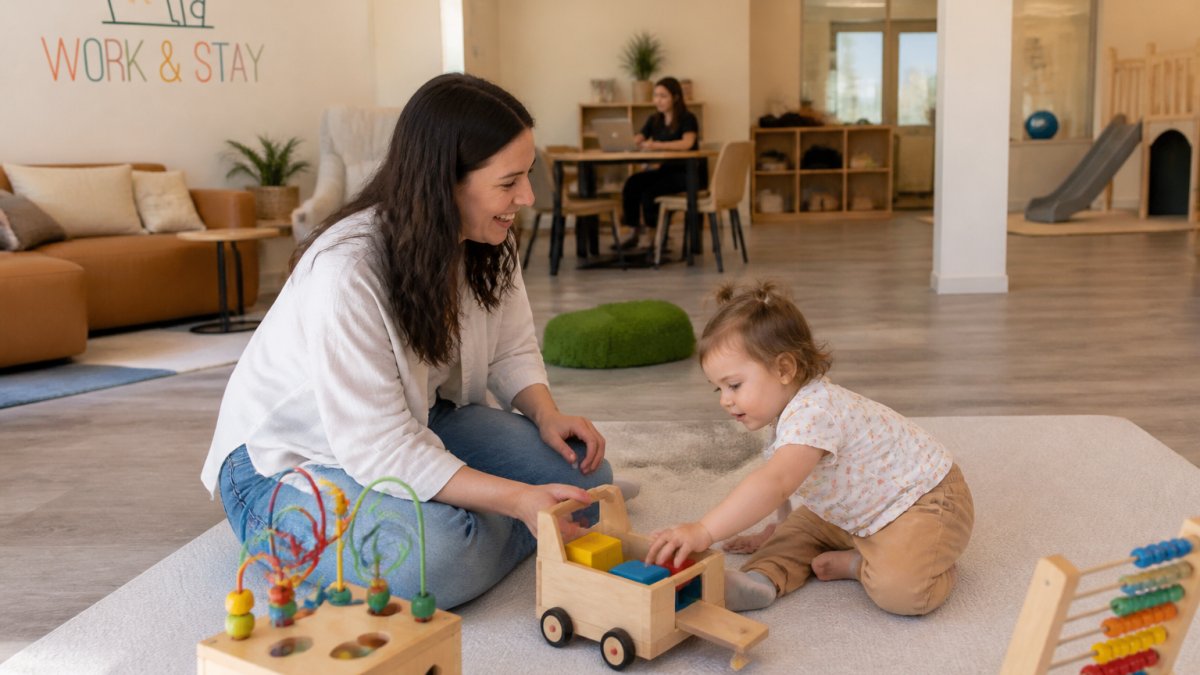
The core appeal is flexibility. Children receive supervision from trained staff in a safe, developmentally designed environment. At Work & Stay, this combines supervised childcare with coworking space, letting parents work steps away from their child, a hybrid option reshaping how working parents balance productivity and parenting.
How Drop-In Hourly Childcare Differs From Traditional Daycare
Traditional daycare requires enrollment in fixed weekly or monthly schedules with long-term contracts and cancellation penalties. Costs are predictable but inflexible, parents pay even when they don't use care.
Drop-in hourly childcare flips this model: parents book hours as needed with no contracts or cancellation fees. This flexibility appeals to freelancers, shift workers, and parents with variable schedules.
The trade-off: total monthly spending may vary for sporadic users.
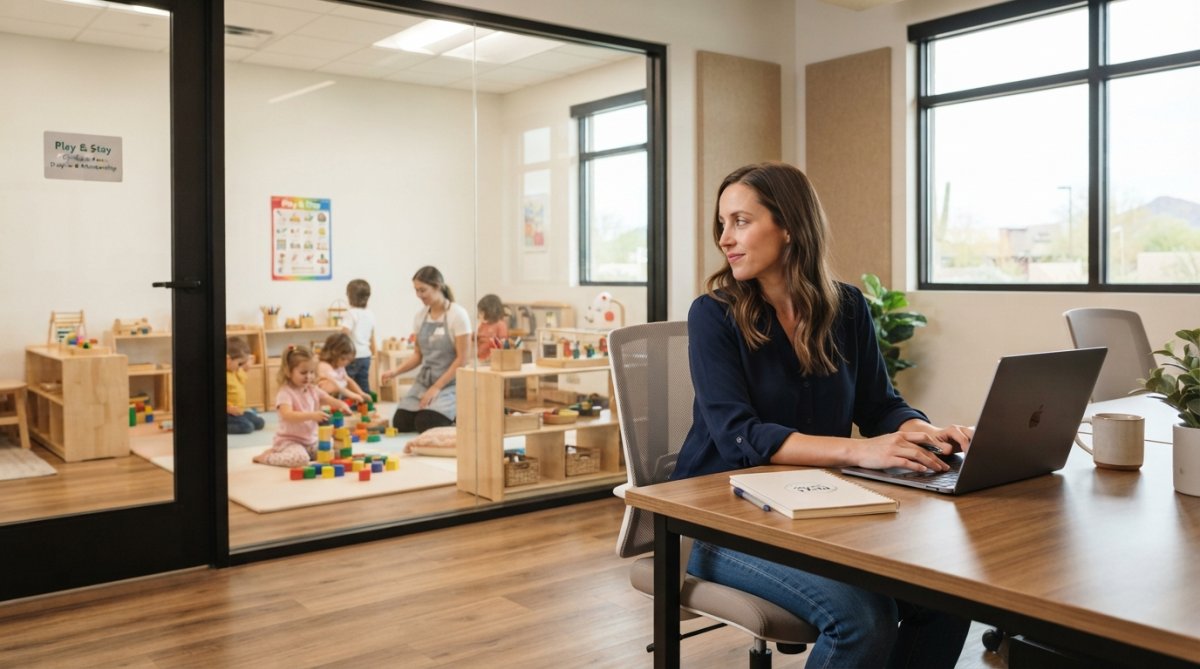
Another key difference is the environment. Facilities like Work & Stay combine drop-in hourly childcare with workspace, so parents work while their child plays nearby. This hybrid setup lets parents maintain professional focus while staying close enough to respond if needed.
How to Find Safe Childcare in Your Area
Finding safe childcare starts with verifying licensing and staff qualifications. Childcare facilities must meet state-specific regulations covering facility inspections, staff-to-child ratios, health and safety standards, and incident reporting. Ask for proof of current licensure, staff background checks, and child-to-staff ratios.
Verify licensing proactively. Request the facility's most recent inspection report (public record in most states). Look for patterns of violations versus isolated incidents, and how they were resolved. A facility with one resolved violation and a corrective action plan often signals better transparency than a pristine record with no documentation.
Understand child-to-staff ratios by age group. Regulations specify maximum ratios: typically 1 adult per 3-4 infants, 1 per 5-6 toddlers, 1 per 8-10 preschoolers. Ask the facility's actual ratios during peak hours. For drop-in hourly childcare, ask whether ratios change on busy days, some facilities cap enrollment to maintain consistency, while others stretch staff thin.
Vet staff qualifications thoroughly. Background checks should cover criminal history, sex offender registry, and child abuse registry clearance, renewed periodically. Verify current CPR and first-aid certification. Ask about staff training in recognizing abuse, handling medical emergencies, and de-escalating behavioral incidents. Ongoing professional development signals commitment to safety beyond minimum compliance.
Assess health and illness policies in detail. Ask which vaccines are required and how exemptions are documented. When is a child sent home sick? What's the threshold for fever, cough, or rash? How are illnesses tracked and communicated to parents? Request their sanitation protocol, how often are toys, surfaces, and bathrooms cleaned? Vague illness policies may expose your child to preventable infections.
Observe staff-child interactions in person. Visit during a busy time if possible. Watch how staff respond to crying, conflict, or requests for help. Red flags include ignoring children, harsh language, or lack of awareness of where children are in the space.
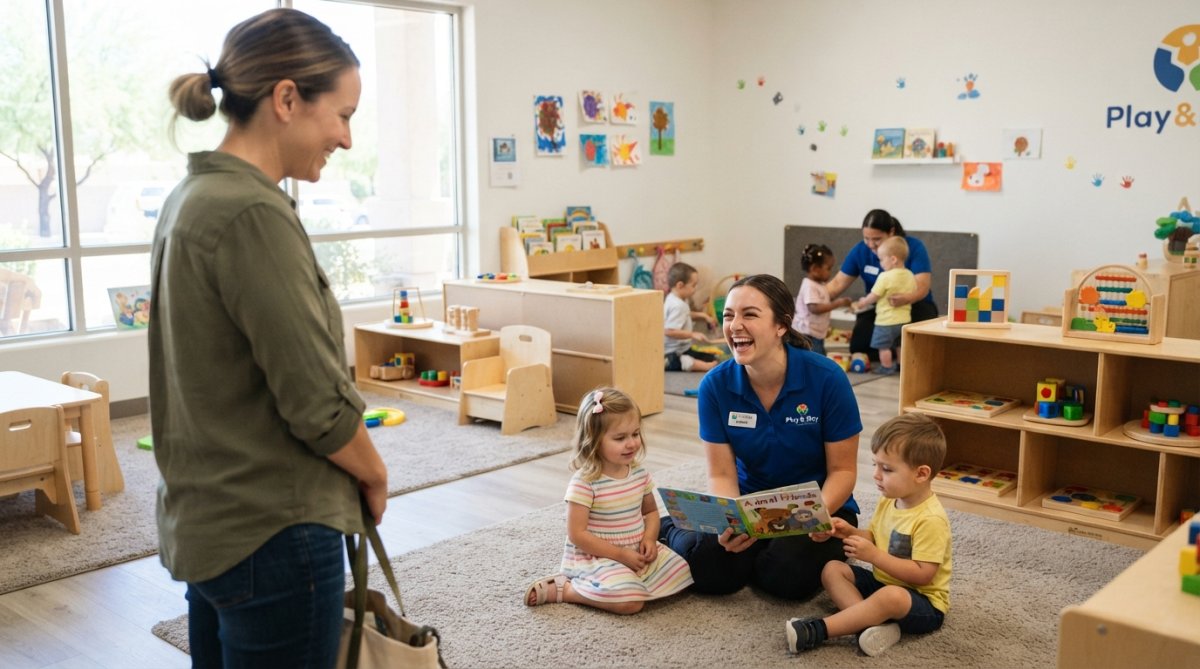
Check the physical environment for hazards. Are outlets covered? Are cleaning supplies and medications locked away? Are toys age-appropriate and free of choking hazards? Is the space clean? For infants, check whether diaper-changing stations are sanitized between changes and hand-washing stations are accessible to staff.
Request references and read reviews strategically. Ask the facility for current parent references. When reading online reviews, watch for patterns (staff turnover, unresponsive communication) rather than one-off complaints. Repeated praise for specific staff or curriculum indicates stability.
Ask about transition and separation practices. Do they allow parents to stay during initial visits? Do they use comfort objects or routines to ease separation? Thoughtful transition protocols show understanding of child development.
Evaluate the reservation and communication system. For drop-in hourly childcare, ask how reservations work and whether there's a real-time capacity system. How are parents notified of incidents, illnesses, or behavioral concerns? Clear communication systems reduce misunderstandings and build trust.
Coworking Space With Childcare: A Hybrid Option for Working Parents
The traditional choice has been binary: work from home with childcare chaos, or pay for separate daycare plus office space. Work & Stay bridges this gap by combining drop-in hourly childcare with coworking space.
Parents bring their child to a separate, supervised childcare environment (ages 0-6) while they work steps away in a quiet coworking space. They can focus on calls, emails, and deep work without home distractions, check in during breaks, and staff alert them immediately if needed.
This model solves the working-parent paradox: remote workers struggle with childcare interruptions, while traditional daycare requires commutes and rigid schedules. Coworking with onsite childcare eliminates commute time, allows flexible scheduling (hourly, half-day, full-day), and keeps parents close enough to respond if needed.
The childcare component is curriculum-based, not just supervision. Children engage in guided activities, structured play, and early childhood education while parents protect their work time.
Backup Childcare Options When Your Regular Care Falls Through
Every parent faces the scenario: regular childcare falls through, you have a deadline, and you need coverage today. Understanding the difference between emergency and planned drop-in care, and preparing for both, prevents panic.
Emergency vs. Planned Drop-in Care: Know the Difference
SIGN UP FOR YOUR MEMBERSHIP TODAY →
These are not the same thing, and conflating them leads to disappointment.
Planned drop-in care is booked 24 hours to a week ahead with confirmed availability and reserved time slots. This suits predictable needs and lets facilities maintain quality ratios.
Emergency same-day care is last-minute and availability is never guaranteed. Facilities may accommodate you if staff can absorb the extra child without exceeding ratios, but they may also be full. Emergency care is a safety net, not a reliable solution.
The mistake parents make: treating drop-in hourly childcare as emergency backup. It works sometimes, but relying on it often fails when you need it most (during peak hours or busy seasons).
How to Secure Same-Day Emergency Care
If you need childcare today, timing and strategy matter.
Call early. Most cancellations happen before 9 a.m. Calling at 7 or 8 a.m. gives you the best chance of catching a slot. Calling at 11 a.m. or later is usually too late.
Have a relationship established. Facilities are more likely to accommodate a child they know. Visit once or twice in advance so staff meet your child. This familiarity makes them more willing to help in a pinch.
Ask about standby or waitlist policies. Some facilities maintain a waitlist for same-day requests; others operate first-come, first-served. Knowing the system helps you plan.
Understand the limits. Same-day care is unreliable even with a good relationship. Don't schedule critical meetings assuming you'll get a slot.
Plan Ahead: Build a Backup Care Network
The smartest parents don't rely on luck. They build redundancy.
Combine primary and backup care. Use regular childcare (traditional daycare or scheduled coworking-with-childcare hours at Work & Stay) as your primary solution and maintain a relationship with a drop-in facility for overflow. This spreads your risk: if primary care falls through, you have backup; if backup is full, you still have primary.
Activate employer backup care benefits. If your employer offers backup childcare through a corporate network, register now before you need it.
When Emergency Care Isn't Enough: Longer-Term Flexibility
Safety Standards, Licensing, and What to Verify
Childcare safety rests on three pillars: licensing, staffing standards, and facility protocols. Understanding each helps you evaluate options effectively.
Making the Transition Easier for Your Child
Starting drop-in childcare can trigger separation anxiety, especially for children under three. A gradual transition eases this stress for both child and parent.
Frequently Asked Questions
What's the difference between drop-in hourly childcare and traditional daycare?
Drop-in hourly childcare offers flexibility without long-term contracts, you book hours as needed, pay only for what you use, and can adjust your schedule week to week. Traditional daycare typically requires a fixed weekly commitment, full-day enrollment, and monthly fees regardless of attendance. Drop-in care works best for parents with unpredictable schedules, those needing backup childcare, or families testing a new facility before committing to full-time enrollment.
How do I know if a drop-in childcare facility is safe and properly licensed?
Ask to see the facility's state licensing documentation and background check certifications for all staff. Verify child-to-staff ratios meet your state's requirements, inspect the space for safety hazards, and ask about their health and wellness policies, including immunization requirements and illness protocols. Check online reviews, ask for references from other parents, and request their incident reporting procedures. Licensed facilities undergo regular inspections and maintain safety standards that unlicensed options may not.
Is a coworking space with childcare a good option for remote-working parents?
Yes, especially if you need focused work time without distractions at home. A coworking space with childcare keeps your child supervised and engaged in age-appropriate activities while you work nearby or in a separate workspace. This hybrid model reduces guilt about screen time at home, provides your child with social interaction and structured play-based learning, and gives you a professional work environment. Many parents find it less isolating than hiring in-home care or managing childcare logistics separately.
What should I do if my child has separation anxiety when starting drop-in childcare?
Start with shorter visits to build comfort gradually, stay nearby during the first few sessions if the facility allows it, and maintain a consistent drop-off routine. Choose facilities with trained staff experienced in early childhood transitions, they can help your child adjust through play-based activities and positive reinforcement. Ask about their transition policy and whether they use a parent portal to share updates and photos throughout the day. Most children adjust within 1-2 weeks with consistent, patient exposure.