 listicle
Kids Birthday Party Venues: 7 Best Options for 2026
Table of Contents
- Quick Comparison: Kids Birthday Party Venues at a Glance
- How We Evaluated These Birthday Party Venues
- Indoor Play Space Birthday Parties: What to Expect
- Trampoline and Adventure Parks for High-Energy Parties
- Creative and Arts-Based Party Venues
- Your Birthday Party Planning Checklist
- Birthday Party Duration for Toddlers: How Long Is Too Long?
- Conclusion
- Frequently Asked Questions
Last Updated: September 21, 2026
Quick Comparison: Kids Birthday Party Venues at a Glance
Choosing kids birthday party venues comes down to three things: your child's age, your guest count, and how much planning you want to handle. This guide from Play & Stay breaks down seven options with pros and cons, a cost-per-head way to compare, and a planning checklist.
| Venue Type | Best Age Range | Planning Effort | Weather-Proof | Best For |
|---|---|---|---|---|
| Indoor play space | 0-6 | Low | Yes | Toddlers, sensory needs |
| Trampoline park | 6-12 | Low | Yes | High-energy groups |
| Arts studio | 4-10 | Low | Yes | Small, calm groups |
| Arcade center | 3-10 | Very low | Yes | Big guest lists |
| Private rental space | Any | High | Varies | Custom themes |
| Gym-based center | 2-6 | Low | Yes | Structured play |
| Outdoor park | Any | Medium | No | Budget parties |
How We Evaluated These Birthday Party Venues
Every venue on this list was judged on five criteria: age fit, supervision quality, setup and cleanup included, total cost per child, and booking ease.
Indoor Play Space Birthday Parties: What to Expect
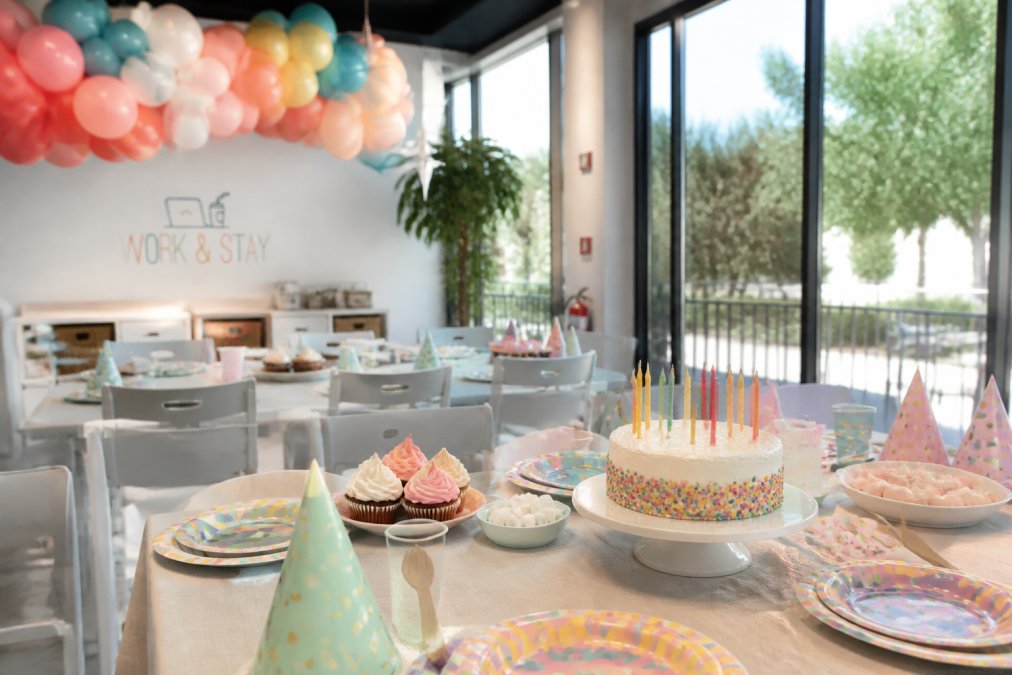
An indoor play space birthday party is a private or semi-private session in a climate-controlled facility, usually with a dedicated party room, a host, and age-appropriate play equipment. These venues work best for children ages 0-6, where soft structures, sensory areas, and enclosed spaces keep everyone safe.
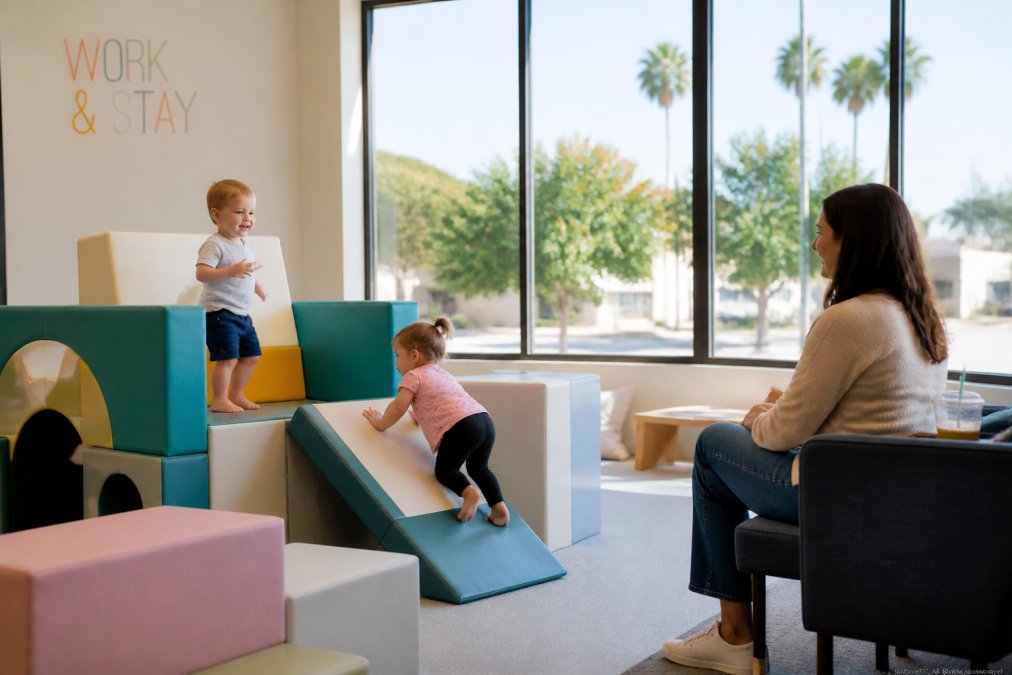
Play & Stay: A Dedicated Indoor Play Space for Ages 0-6
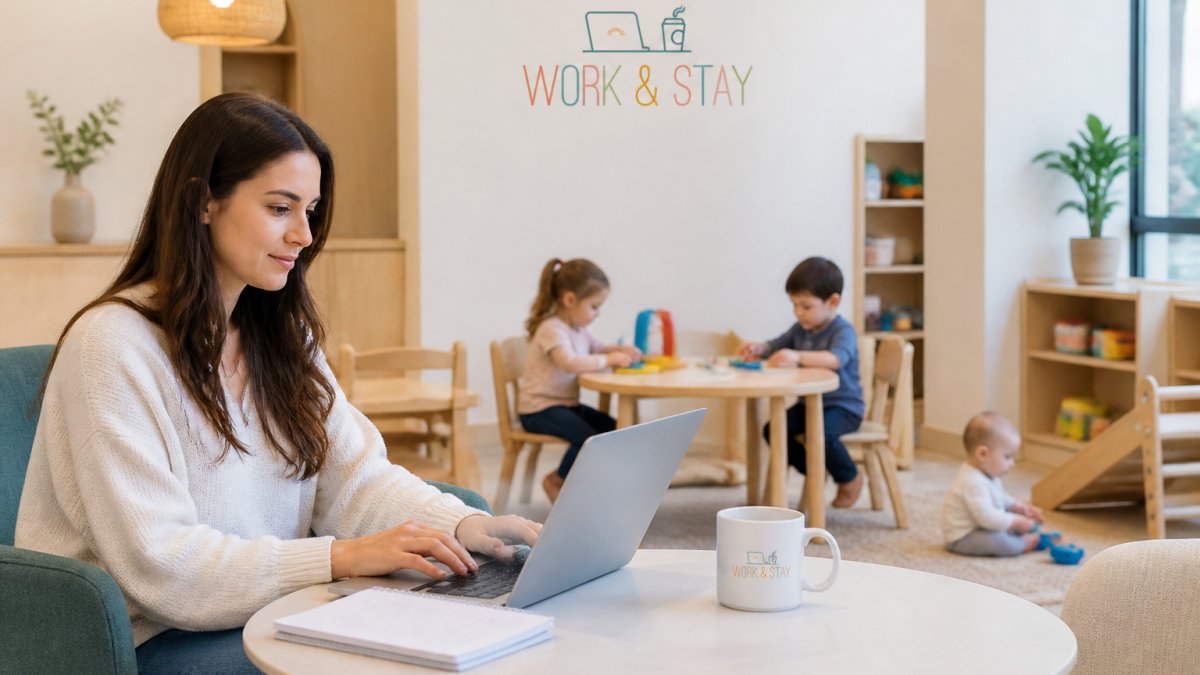
Play & Stay is an indoor play space built specifically for children ages 0-6, with separate areas for the youngest guests and private party room rentals. The environment is designed around early childhood development, so the equipment fits the age group rather than overwhelming it.
Other Indoor Play Space Options
Beyond dedicated play centers, trampoline and adventure parks, arcade centers, and gym-based children's programs all offer indoor play with party packages attached. Each trades something different: trampoline parks offer more physical variety but louder rooms, while gym programs offer structure but less free play.
Trampoline and Adventure Parks for High-Energy Parties
Trampoline and adventure parks are the default pick once a child turns six or seven and the guest list skews toward big-motor play. A typical package bundles a timed jump session, a private party room, pizza or a food credit, a dedicated host, and grip socks.
How the Packages Usually Work
Most parks sell party packages in tiers built around a jump-time window and a headcount cap:
- Base tier: a set number of jumpers for a fixed window (often 60-90 minutes), a party room for a set slot, and a host.
- Mid tier: adds food (usually pizza and drinks), a larger room, and extra jump time.
- Top tier: adds a private court, upgraded food, party favors, and sometimes a dedicated party coordinator.
Age, Weight, and Safety Rules to Confirm
Trampoline parks enforce rules that can reshape your guest list:
- Minimum age or height for open jump, which can exclude younger siblings.
- Weight limits on certain attractions, which vary by park and by apparatus.
- One-jumper-per-trampoline rules and no double-bouncing, which staff enforce during peak hours.
- Grip socks required, often sold separately if guests forget theirs.
The Real Trade-Offs
What works: Trampoline parks absorb high energy fast. A 90-minute jump session tires out a group of eight-year-olds in a way a craft table never will, and the host-and-room model means parents aren't running the show. The indoor setting also removes weather risk.
Cost-Per-Head Reality Check
Because trampoline packages are tiered, cost per child swings widely depending on how close you land to the cap. A package built for 10 jumpers filled with 10 kids costs noticeably less per head than the same package filled with 14, where the extra four are billed at the add-on rate.
- Divide the base package price by the number of jumpers included.
- Add the per-extra-jumper rate for each child above the cap.
- Add grip socks, gratuity (often auto-added), and any food beyond the package.
- Divide the total by the actual number of children attending.
Accessibility and Sensory Notes
Ask specifically about wheelchair access to the party room (not just the lobby), whether the park offers a quiet space away from the jump floor, and whether staff are trained to support children with different needs. A park that can't answer clearly is worth skipping, no matter how good the trampolines look.
Creative and Arts-Based Party Venues
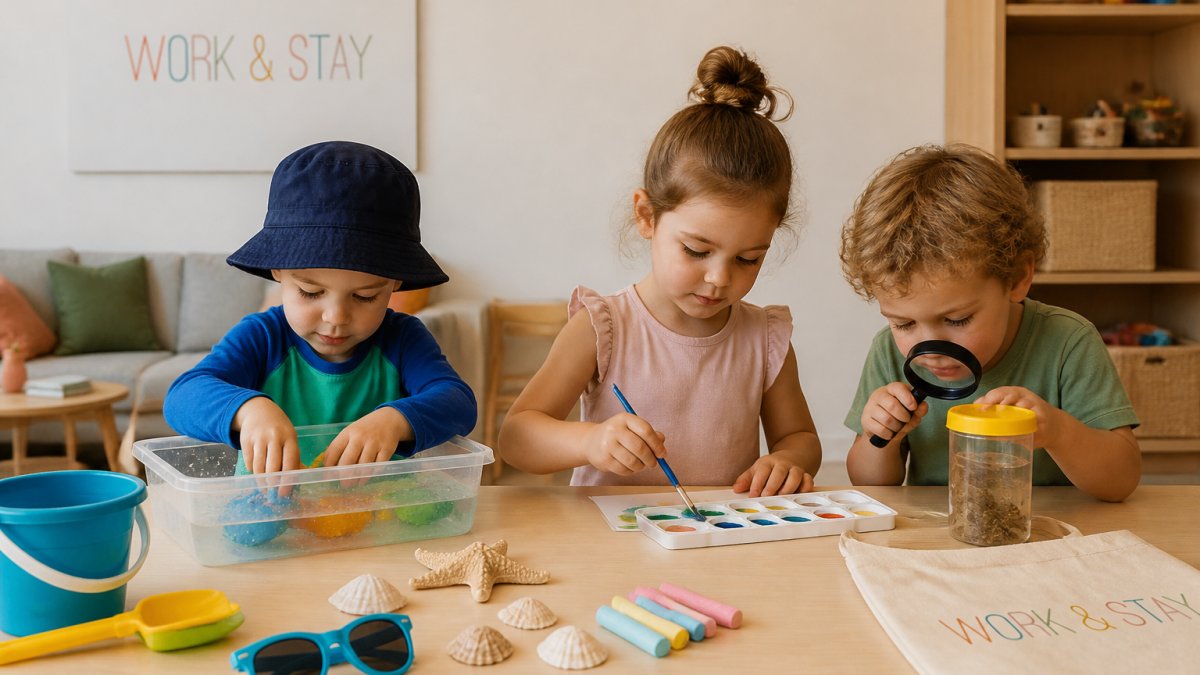
Arts venues trade chaos for calm. A paint-your-own-pottery studio, canvas-painting studio, jewelry-making bar, or slime-and-science lab gives each child a project to finish, a takeaway to bring home, and a reason to sit still for 45 minutes or more. For parents who want a quieter party, or have a child who melts down in loud, crowded rooms, this is often the best pick on the list.
The Main Formats
- Paint-your-own-pottery studios: each child picks a ceramic piece, paints it, and the studio fires and glazes it. The finished piece doubles as the party favor, which saves money and effort. Pieces are usually ready for pickup one to two weeks later, so plan for a second trip.
- Canvas-painting studios: a staff artist leads the group step-by-step through one painting. Everyone leaves with the same image, which works well for themed parties.
- Craft and maker bars: jewelry, slime, bath bombs, tie-dye, or wood-building. These tend to be the most flexible on age range and theme.
- Cooking and baking studios: kids decorate cupcakes or assemble pizzas. These usually require a minimum age (often six or seven) and a higher staff-to-child ratio.
What the Packages Typically Include
Most studios bundle project materials, a staff instructor, table space, and cleanup into one per-child rate. Food is usually not included, some studios let you bring a cake and drinks, others charge a room fee or require their catering. Confirm three things before booking:
- Is the project included in the per-child rate, or is it an add-on? Pottery pieces in particular are sometimes priced separately by the piece.
- Is there a minimum guest count? Many studios require a minimum (often 8-10 painters) to book a private party, and some charge for the minimum even if fewer children show up.
- How long does the project take? A 30-minute craft leaves a lot of dead time; a 90-minute project can outlast younger guests' attention spans.
Age Fit and Guest-Count Limits
Arts venues work best for small to medium groups, 8 to 15 children, ages four and up who can sit and focus. Younger guests (two and three) usually need a simpler project and a shorter window, and some studios won't book that age at all.
The Real Trade-Offs
What works: The room is calm, the mess stays at the studio, and every child leaves with something they made. Arts parties often feel more manageable than jump-and-run venues because the activity itself paces the event.
Cost-Per-Head Reality Check
Arts studios are usually priced per child, which makes the math simpler than a tiered park package, but watch for these line items:
- Studio fee vs. project fee: some studios charge a flat studio fee per painter plus the cost of the ceramic piece or canvas.
- Minimum guest count: if you book for 10 and only 7 attend, you may still pay for 10.
- Food and cake: often not included; ask whether outside food is allowed and whether there's a room fee for it.
- Firing and pickup: pottery firing is usually included, but a second trip is required.
Accessibility and Inclusivity Notes
Ask about wheelchair-accessible tables, whether the studio can accommodate a child who needs a quieter corner, and whether staff have experience supporting children with different needs. Studios that host regular sensory-friendly sessions tend to be the most prepared and flexible on project choice.
Your Birthday Party Planning Checklist
A smooth party comes down to logistics, not luck. Here's the checklist most parents wish they'd had before their first booking.
- Confirm the date and time, then book the venue before sending invitations
- Ask what the venue provides and what you must bring
- Set a guest count cap and stick to it
- Send digital invitations with an RSVP deadline
- Track RSVPs and dietary restrictions in one place
- Confirm the deposit and cancellation policy in writing
- Plan the cake, food, and any allergy-safe alternatives
- Assign one adult to photos and one to gifts
- Prepare party favors and a bag for leftovers
- Confirm parking and drop-off instructions for guests
Cost-Per-Head Breakdown
Comparing venues by total price hides the real number. Divide the package cost by the number of children attending to get your cost per head. A venue charging a flat rate for up to 15 kids gets cheaper per child as the group grows; a per-head venue does not.
Accessibility and Inclusivity Features
Not every child handles a loud, crowded room well. When touring a venue, ask about sensory-friendly hours, quiet spaces, wheelchair access, and whether staff are trained to support children with different needs. Indoor play spaces with separate areas for younger guests can be beneficial for mixed-age and sensory-sensitive groups.
Birthday Party Duration for Toddlers: How Long Is Too Long?
The right birthday party duration for toddlers is 90 minutes to two hours. Anything past two hours usually ends in meltdowns, not memories. A workable structure: 45-60 minutes of play, 20-30 minutes for food and cake, and 15 minutes for favors and goodbyes. For children under three, 90 minutes is plenty.
Weather-Contingency Planning
Indoor venues remove weather risk entirely, which matters where summer heat can hit triple digits. If the plan involves an outdoor park or backyard, book an indoor backup or reserve a shaded pavilion. Check the venue's rain and heat policy before paying a deposit, and make sure guests know the backup location in advance.
Post-Party Logistics
The party doesn't end when the last guest leaves. Someone has to hand out favors, collect gifts, pack leftover food, and return rentals. Ask the venue upfront whether cleanup is included, since some charge extra. If gifts are opened at the party, assign one adult to record who gave what, which makes thank-you notes far easier later.
Conclusion
Planning a children's birthday party means juggling guest counts, age ranges, weather, and a budget that never quite stretches far enough. For families with children ages 0-6, Play & Stay offers a contained indoor play space, supervised play, private party room rentals, and guided arts, music, and dance programming, all designed around early childhood.
Frequently Asked Questions
Where is the best place to have a birthday party for kids?
The best venue depends on your child's age and interests. For children under 6, an indoor play space with age-appropriate equipment and supervised play works well. Older kids often prefer trampoline parks or adventure centers with more physical challenges. Creative venues like pottery studios suit children who enjoy focused activities. Consider your guest count, budget, and whether you want an all-inclusive package or a more customizable space. Visiting venues in person before booking helps you gauge whether the environment matches your child's energy level and your party vision.
What factors should you consider when choosing a kids birthday party venue?
Start with your child's age and the age range of guests. Venue capacity matters if you are inviting a large group. Check whether the venue offers all-inclusive packages or requires you to bring your own catering and supplies. Ask about deposit policies, cancellation terms, and weekend availability. Accessibility features matter if any guests have mobility needs. Also consider the party duration the venue allows and whether you can extend if needed. A birthday party planning checklist helps you compare venues side by side before committing.
Are there indoor birthday party venues suitable for children under age 6?
Yes. Indoor play spaces designed for early childhood are ideal for this age group. Venues like Play & Stay in Scottsdale cater specifically to children ages 0-6 with separate areas for the youngest guests, soft play equipment, and supervised environments. These spaces eliminate weather concerns and provide age-appropriate activities that keep toddlers engaged without overwhelming them. Look for venues with sensory-friendly options, diaper-changing stations, and staff trained to work with young children. The right indoor venue makes the party manageable for parents and enjoyable for little ones.
How far in advance should you book a kids birthday party venue?
Most venues recommend booking four to six weeks ahead for weekend slots, especially during peak birthday season. Popular indoor play spaces and trampoline parks fill up quickly on Saturdays and Sundays. If your child's birthday falls near a holiday or during summer, book eight weeks out. For weekday parties, two to three weeks may be enough. Always confirm the deposit policy and ask about their cancellation window. Having a backup date in mind helps if your first choice is unavailable.
What amenities should a top-tier kids birthday party venue provide?
A strong venue offers a private party room, a dedicated party host, and setup and cleanup included in the package. Look for age-appropriate entertainment options, secure entry and exit points, and clean restroom facilities with changing stations. Catering services or a kitchen area for food storage add convenience. Some venues provide party favors, digital invitations, and guest list management tools. Accessibility features like wheelchair-accessible entrances and sensory-friendly quiet areas set exceptional venues apart from basic options.
The hardest part of party planning isn't the cake or the invitations; it's finding a venue that fits your child's age and your sanity. For parents of children ages 0-6, Play & Stay offers a contained indoor play space, supervised play, private party room rentals, and guided arts, music, and dance programming built for early childhood. Get started with Play & Stay and book a party your child will actually remember.