 listicle
Indoor Infant Playground: Safe Play for Ages 0-6
Table of Contents
- What Makes a Quality Indoor Infant Playground
- Soft Play and Sensory Play for Infants
- Drop-In Childcare and Flexible Play Options
- Coworking Spaces with Childcare for Working Parents
- Developmental Benefits of Indoor Play
- What to Look for in an Indoor Playground for Your Infant
- Frequently Asked Questions
Last Updated: September 22, 2026
What Makes a Quality Indoor Infant Playground
An indoor infant playground is a climate-controlled play environment designed specifically for children ages 0-6, featuring age-appropriate equipment, supervised spaces, and safety standards that prioritize younger children's developmental needs. 🎨 The best facilities combine soft play structures, sensory activities, and clean, secure zones that allow infants and toddlers to explore freely while parents stay nearby or work in an adjacent space.
Quality separates from generic on three fronts: intentional design for the youngest ages, rigorous cleanliness protocols, and staff trained in early childhood development. Many facilities treat infants as an afterthought, cramming soft blocks into a corner of a space built for older kids.
Quality facilities zone age groups separately: infants need low-height climbers and soft edges; toddlers need sensory input and balance practice; preschoolers need complex structures. Each zone is equipped intentionally for its developmental stage.
Safety Standards and Cleanliness Protocols
Safety starts with transparent cleaning schedules and documented protocols. High-touch surfaces like railings, toys, and changing tables should be sanitized between sessions, especially critical for infants who mouth objects.
Look for posted cleaning logs, staff trained in CPR and first aid, and equipment meeting ASTM International standards for impact-absorbing flooring, guardrail heights, and entrapment prevention. Clear incident protocols and liability documentation should be available to parents.
A quality playground serving infants should have staffed changing areas, hand-washing stations, and staff trained to assist with diaper changes, especially important for parents managing multiple young children.
Age-Appropriate Equipment and Zones
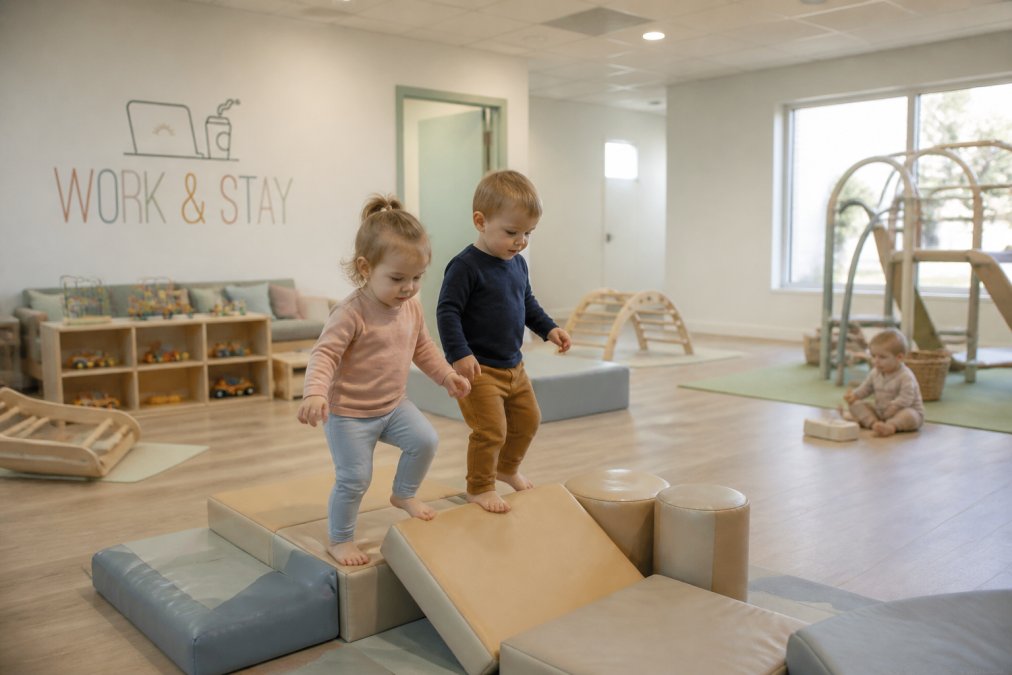
Equipment reveals whether a facility truly serves infants or tolerates them. Infant zones need soft foam climbers under 2 feet, textured mats, and low structures. Toddler zones benefit from 3-4 foot climbers, balance beams, and motor-skill challenges.
Preschoolers thrive on multi-level frames, slides, and tunnels. Separating age groups prevents younger children from being intimidated or injured by older kids.
Quality playgrounds include sensory elements, textured walls, lights, musical instruments, interactive features, that help infants and toddlers build neural pathways through play.
Soft Play and Sensory Play for Infants
Soft play, padded structures, foam blocks, ball pits, cushioned slides, is essential for infants whose bones are still developing and spatial awareness is limited.
Sensory play, activities engaging touch, sound, sight, and movement, supports cognitive development. Quality playgrounds weave sensory experiences throughout: textured surfaces, mirrors, cause-and-effect toys, and spaces for free movement.
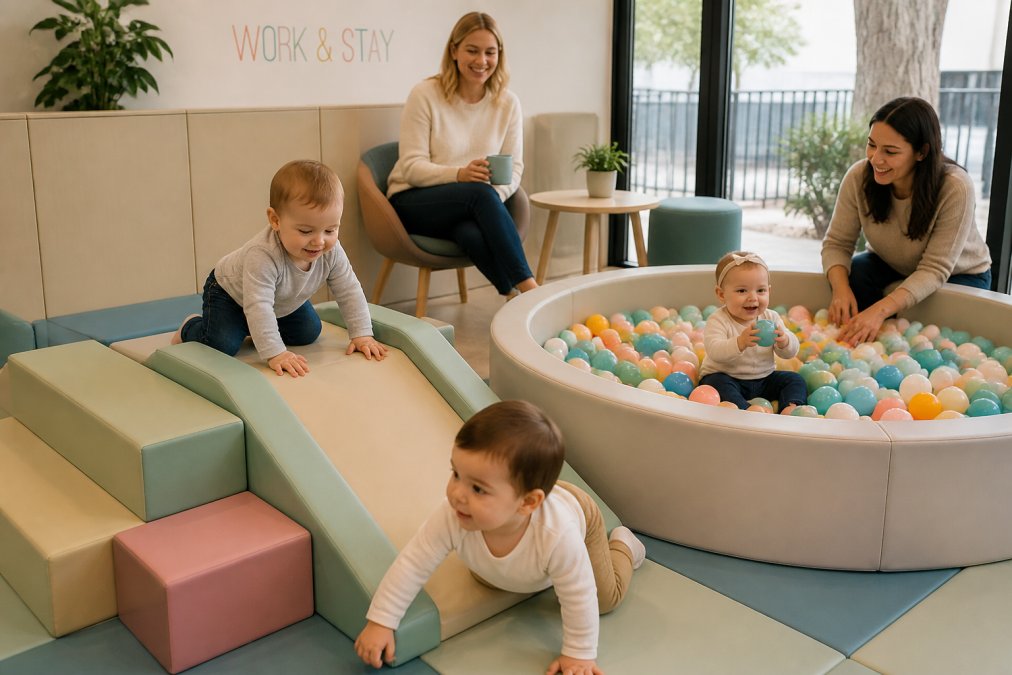
Soft play plus sensory engagement separates developmental space from containment. When infants safely climb, fall, and explore, they build confidence and motor skills. Parents nearby or working in an adjacent space gain peace of mind knowing their child is engaged in meaningful play.
Drop-In Childcare and Flexible Play Options
Drop-in childcare offers flexibility traditional daycare cannot: no long-term contracts, no penalties for missing days, ability to add hours as needed. It solves the logistical challenge of managing work, errands, and quality play time across multiple locations.
How Drop-In Childcare Works
Quality drop-in models offer flexible options with transparent pricing and no minimum commitments.
Parents can use drop-in flexibility strategically: a few hours for errands, a half-day while working from the facility's coworking area, a full day for project deadlines. It works well for remote workers needing focus time or those with variable schedules.
The Childcare-Plus-Workspace Model
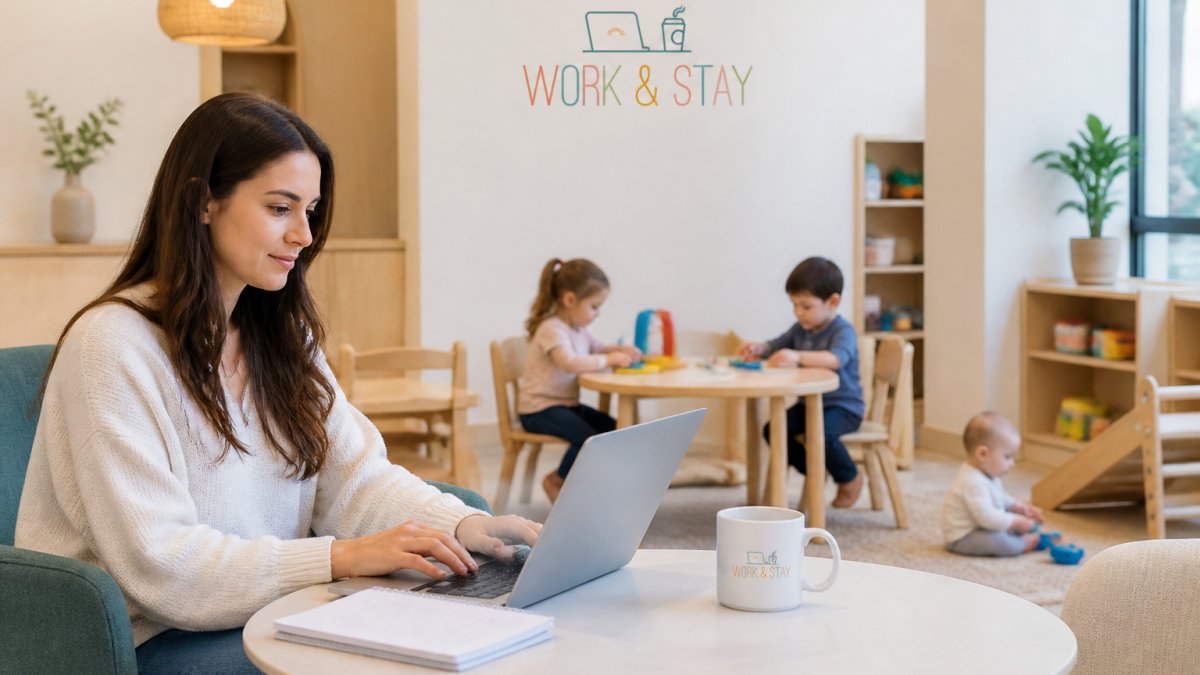
The most powerful model combines supervised play with adjacent workspace. Your infant plays in a supervised, curriculum-based environment while you work in a professional space with Wi-Fi and quiet focus areas, all in one building.
SIGN UP FOR YOUR MEMBERSHIP TODAY →
This solves several problems at once:
- Proximity without distraction: You're in the same building, able to check in during breaks or lunch, but not tempted to interrupt your child's play or your own focus.
- Separation anxiety management: For children who struggle with drop-off, knowing a parent is nearby (even if not visible) can ease the transition. For parents, the ability to respond quickly if their child is truly distressed provides peace of mind.
- Flexible transitions: You can extend your work session if you're in flow, pick up your child early if needed, or transition between focused work time and family time without the friction of multiple locations or commute time.
- Curriculum-based childcare, not just supervision: The play environment should be structured around developmental activities, sensory play, motor skill building, social interaction, not just passive watching. Staff should be trained in early childhood development and intentional about activities, not just managing safety.
Why This Matters for Working Parents
Traditional childcare requires parents to commit to fixed hours and locations. If you work from home and need 3 focused hours on a Tuesday, you still have to pay for a full day or negotiate with a daycare provider. If you're a freelancer with variable income and unpredictable project deadlines, long-term childcare contracts feel risky. If you have separation-anxious children or manage a child with special needs, the distance between your workspace and their care environment creates constant stress.
Drop-in childcare with coworking solves this by making the parent's work and the child's play part of the same ecosystem. You're not choosing between being productive and being present; you're doing both in a way that works for your family's rhythm.
Evaluating Drop-In Childcare Options
When comparing drop-in childcare facilities, ask:
- Booking and cancellation: Can you book online or by phone? How far in advance? Can you cancel without penalty if plans change?
- What's included: Are diapers, wipes, and snacks provided, or do you bring your own? Is there a curriculum or structured activities, or is it open play?
- Staffing and ratios: How many staff supervise the play area? What's their training background? Are they actively engaged with children or passively watching?
- Workspace quality: If you plan to work while your child plays, what's available? Is there Wi-Fi, quiet workspace, comfortable seating, or a dedicated coworking area? Can you see into the play space from your work area?
- Parental communication: How do staff communicate with you during the session? Do they share updates, photos, or notes about your child's play and development?
For parents in the area seeking this integrated model, Work & Stay combines flexible childcare with coworking space, allowing you to work in a professional environment while your infant plays in a supervised, curriculum-based setting in an adjacent space. The facility is designed specifically for ages 0-6, with separate zones for the youngest children and staff trained in early childhood development. You can learn more about memberships and day passes at playandstayaz.com, or explore the full Play & Stay experience at playandstayaz.com.
Coworking Spaces with Childcare for Working Parents
The combination of coworking space and supervised childcare in one location solves a real problem for remote-working parents: how to be productive while knowing your child is safe and engaged nearby. 🖥️
A coworking space with integrated childcare allows parents to work in a professional environment, with Wi-Fi, quiet focus areas, and a separation from home distractions, while their children play in an adjacent supervised space. This model works because parents aren't commuting to a traditional office and leaving their child in a separate location; instead, they're in the same building, often able to check in during breaks or lunch.
The setup typically includes a parent workspace (lounge, private offices, or shared desks) and a separate, supervised play environment for children. Parents maintain flexibility: they can extend their work session if they're in flow, pick up their child early if needed, or transition between focused work time and family time without the friction of multiple locations.
This approach particularly appeals to parents managing unpredictable schedules, those with separation-anxious children, or anyone who values proximity to their child while maintaining professional boundaries. The childcare environment is curriculum-based and teacher-led, offering structured activities that support development.
Developmental Benefits of Indoor Play
Indoor play isn't just entertainment; it's a critical part of early childhood development. Through play, infants and toddlers build gross motor skills (climbing, balance, coordination), fine motor skills (grasping, manipulating objects), and social-emotional skills (confidence, peer interaction, emotional regulation). 🧠
Soft play structures develop strength and proprioception, the sense of where the body is in space.
What to Look for in an Indoor Playground for Your Infant
Choosing an indoor infant playground requires evaluating several factors beyond just "does it exist near me." 🔍
Frequently Asked Questions
What is the best age to start using an indoor infant playground?
Infants can begin exploring soft play spaces around 6 months old, once they can sit upright. Crawlers and toddlers benefit most from dedicated crawler zones with soft play equipment, ball pits, and low-height structures. Most quality indoor infant playgrounds serve children from birth through age 6, with separate zones designed for each developmental stage. Always check the facility's age guidelines to ensure the environment matches your child's mobility level.
How do I know if an indoor playground is clean and safe for my infant?
Look for facilities that publicly share their sanitization protocols, including how frequently play equipment is cleaned and what cleaning products are used. Ask about staff training in infant safety and supervision ratios. Check for certifications or compliance with local health codes. Visit in person to observe the cleanliness of changing stations, restrooms, and play surfaces. Read recent reviews from other parents about their experience with hygiene and safety standards at the facility.
Can I work while my infant plays in a supervised environment?
Yes, many facilities now combine indoor play spaces with coworking spaces with childcare designed specifically for working parents. These environments feature separate areas where children play under supervision while parents access a quiet workspace, Wi-Fi, and professional amenities nearby. This setup allows you to work on calls and emails while remaining close to your child. Flexible memberships and day passes make this option accessible for parents who need occasional or regular childcare support.
What equipment and activities support infant development at indoor playgrounds?
Quality facilities offer age-appropriate equipment like soft foam climbers, crawling tunnels, ball pits, and sensory play stations that develop motor skills and coordination. Guided activities such as music, dance, and arts programming help infants and toddlers develop self-esteem and social skills. Equipment designed for different developmental milestones, from tummy time areas for younger infants to climbing structures for preschoolers, ensures every child stays engaged and challenged at their level.