 How-to
What Time of Day Is Best for a Toddler Birthday Party?
Last Updated: October 29, 2026
Quick Summary
The best time for a toddler birthday party is the longest awake block in your child's day, usually the stretch between the first and second naps. Start the party in the first two-thirds of that block so the cake and goodbyes finish before your child fades, and keep the whole event to 60 to 90 minutes.
- Log three typical days of wake times and naps before choosing a start time.
- Place the party in the first two-thirds of your child's longest awake block.
- Decide whether to serve a meal or snacks before locking in the start time.
- Keep parties to 60 minutes for one- and two-year-olds and about 90 minutes for three- and four-year-olds.
- Put the food plan on the invitation so guests arrive with the right expectations.
Table of Contents
- Why Timing Matters More Than the Party Itself
- Morning Versus Afternoon: Which Works Better?
- Building the Toddler Birthday Party Schedule Around Naps
- Planning the Toddler Birthday Party Timeline Around Meals
- How Long a Toddler Birthday Party Should Last
- Handling Skipped Naps, Early Wakers, and Other Surprises
- Booking Your Toddler's Party Slot at Play & Stay
- Frequently Asked Questions
Why Timing Matters More Than the Party Itself
Picking the right time of day for a toddler birthday party can make or break the afternoon. A toddler birthday party that runs during a nap window or past bedtime tends to end in tears, no matter how good the cake is. Parents often plan the theme and guest list first, then realize the schedule clashes with everyone's routine.
Timing shapes almost everything else. It affects how rested the birthday child is, how hungry the guests get, and how long the adults can stay on their feet. Get the timing right and the party feels relaxed. Get it wrong and you spend the whole time managing meltdowns.
Think of the party as a set of small blocks: arrival, play, food, cake, and goodbyes. Each block needs to fit inside your child's awake time. That simple idea drives most of the advice below.
Morning Versus Afternoon: Which Works Better?
Most families choose between a morning party and an afternoon party. The page compares both options with venues designed for toddler birthday parties, see the venue options. Each has real trade-offs.
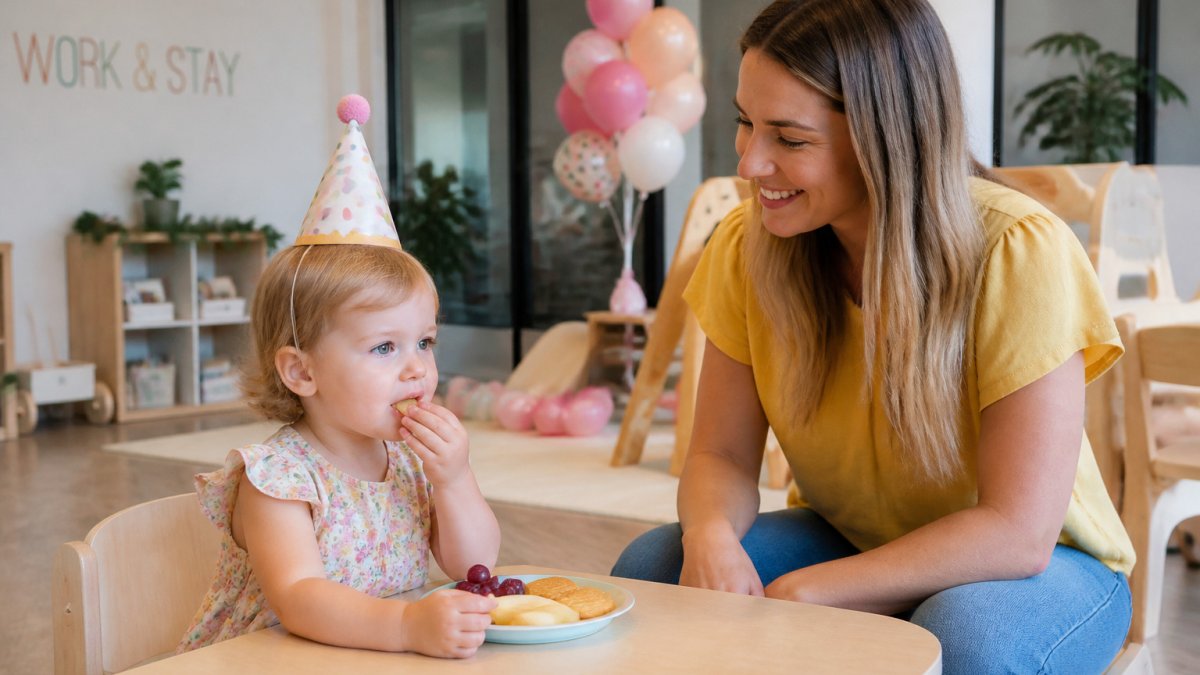
A morning party, often in the 9 to 11 a.m. window, works well for early risers who fade by mid-afternoon. Kids tend to be fresh, and the rest of the day stays open for naps. The downside is that some guests may arrive still groggy, and parents with weekday jobs may find weekend mornings crowded with other plans.
An afternoon party, often between 3 and 5 p.m., suits families whose children nap late or wake later. It also gives guests time to finish lunch first, which can simplify food planning. The risk is overtiredness. A toddler who skipped a nap can turn a fun party into a rough one fast.
A simple rule: pick the window that falls about two hours after your child's usual wake time, and never schedule it during the nap or the hour before it.
Building the Toddler Birthday Party Schedule Around Naps
Most advice on the best time of day for a toddler birthday party stops at "avoid nap time." That is not specific enough to plan around. A better approach is to build the party from your child's actual sleep log rather than from a generic window.
Step 1: Log three typical days
For three ordinary days, write down the wake time, the start and end of each nap, and bedtime. Do not use a day that was disrupted by travel or illness. You are looking for the child's real pattern, not the ideal one.
Step 2: Find the longest awake block
Mark the stretch between the end of the first nap and the start of the second nap (or bedtime, for a child on one nap). That stretch is your party window. For many toddlers it runs about three to four hours, but the length varies widely by age.
Step 3: Place the party in the first two-thirds of that block
A party that starts right after a nap catches the child at peak energy. A party that starts near the end of the awake block catches a child who is already fading. Aim to have cake and goodbyes finished before the last third of the block begins.
Step 4: Work backward to a start time
If your child typically wakes from a nap at 1:30 p.m. and is ready for the next nap around 5 p.m., a 2 to 3:30 p.m. party fits comfortably. If your child wakes at 6:30 a.m. and naps at 12:30 p.m., a 9:30 to 11 a.m. party uses the morning block instead.
What to do when the schedule is unpredictable
Some toddlers are in the middle of a nap transition, dropping from two naps to one, and their awake block shifts week to week. In that case, pick the window that is most consistent across the past two weeks, and plan a shorter party so a late or skipped nap does not wreck the whole event. A 60-minute party is far more forgiving of a bad sleep day than a two-hour one.
If your child is an early waker who is cranky by mid-morning, do not force a morning party just because it is the conventional choice. A late-morning or early-afternoon slot that follows the first nap often works better for that temperament.
Planning the Toddler Birthday Party Timeline Around Meals
Food is where many toddler parties go wrong, and the fix starts with one decision: does your party window overlap a meal or not? Get that wrong and guests arrive either expecting lunch that is not there or too full to eat the cake.
Decide meal or snack before you pick the start time
A party that starts between 10 and 11 a.m. and ends by noon sits in the snack zone for most families. A party that starts at 11:30 a.m. or later and runs past noon overlaps lunch. The same logic applies in the afternoon: a 3 to 4:30 p.m. party is a snack party, while a 4:30 to 6 p.m. party overlaps dinner for many families.
SIGN UP FOR YOUR MEMBERSHIP TODAY →
If you want to keep food simple, choose a start time that ends before the meal. If you want to serve a full meal, choose a start time that lands squarely on lunch or dinner so guests arrive hungry.
Sample timelines by party length
60-minute party (best for one- and two-year-olds)
| Time Block | Activity | Notes |
|---|---|---|
| 0:00 to 0:10 | Arrival and free play | Greet guests, let them settle |
| 0:10 to 0:30 | Open play or one simple activity | Keep it low-structure |
| 0:30 to 0:40 | Snack | Small, easy-to-hold foods |
| 0:40 to 0:50 | Cake and singing | One short round of "Happy Birthday" |
| 0:50 to 1:00 | Goodbyes and favors | Expect early departures |
90-minute party (best for three- and four-year-olds)
| Time Block | Activity | Notes |
|---|---|---|
| 0:00 to 0:15 | Arrival and free play | Let guests settle in |
| 0:15 to 0:45 | Structured activity | Music, games, or crafts |
| 0:45 to 1:00 | Snack or light food | Keep it simple |
| 1:00 to 1:15 | Cake and singing | Keep the singing short |
| 1:15 to 1:30 | Goodbyes and favors | Plan for early departures |
Invitation wording that prevents mismatched expectations
Put the food plan on the invitation in plain language. Parents read these lines closely because they decide whether to feed their child before leaving the house.
- For a snack party: "Light snacks and cake will be served. Please eat lunch before you come."
- For a lunch party: "Lunch and cake will be served. Come hungry!"
- For a party that overlaps a meal but only serves snacks: "We will have snacks and cake. Feel free to bring a lunch for your little one if they will be hungry."
- For dietary needs: "Please let us know about any allergies or dietary needs when you RSVP."
Keep the food itself toddler-friendly
Whatever you serve, choose items a toddler can hold and finish in a few bites. Small sandwiches, fruit, cheese cubes, and pretzels work well. Avoid anything that requires a fork or a long sit-down, because toddlers at a party rarely stay seated long enough to finish a plated meal.
How Long a Toddler Birthday Party Should Last
Most toddler parties run between 60 and 90 minutes. Attention spans are short, and tired kids lose interest quickly. Even a two-hour party can feel long for a two-year-old.
Match the length to your child's age. A one-year-old may only manage 45 to 60 minutes. A three-year-old can often handle 90 minutes with a good mix of activities. Build in a clear end time so guests know when to leave.
Also allow time for setup before guests arrive and cleanup after they leave. Many hosts forget this, then rush through the final minutes.
Handling Skipped Naps, Early Wakers, and Other Surprises
Even the best plan can fall apart. A skipped nap or an early waker can change the whole day. Have a backup plan ready.
If your child skips a nap, shorten the party or move it earlier, when energy is still high. If your child wakes early and is cranky by 9 a.m., a late-morning party may work better than an early one.
Watch out: a toddler who is overtired can become hard to calm, and that stress spreads to other guests. If you see early warning signs such as rubbing eyes or clinginess, wrap up the activities and move to quiet play.
Booking Your Toddler's Party Slot at Play & Stay
Play & Stay offers indoor play space and private party rooms for children ages 0 to 6, which takes much of the scheduling guesswork out of hosting. Contact Play & Stay for current availability and party options.
Learn more about private birthday party options at Play & Stay.
Frequently Asked Questions
What is the best time of day for a toddler birthday party?
For most toddlers, a late-morning window between about 10 a.m. and 12 p.m. or a mid-afternoon window between 3 and 5 p.m. works well. Both avoid the tired hour before a nap and the overtired stretch before bedtime. The best choice is the window that falls after your child has had a full nap and a snack, when they are rested but not yet hungry or cranky. Plan around your own child's routine rather than a fixed clock time.
Is 9 p.m. too late for a two-year-old's birthday party?
Yes, a 9 p.m. party is usually too late for a two-year-old. Toddlers typically go to bed well before that, and an evening party can lead to meltdowns, overtiredness, and a difficult bedtime afterward. Earlier windows, such as late morning or mid-afternoon, give young children the best chance to enjoy the celebration and stay regulated.
How long should a toddler birthday party last?
A toddler birthday party generally works best at about 60 to 90 minutes. Young children have short attention spans, so a shorter party with a clear beginning, middle, and end keeps them engaged. Build in time for guests to arrive, a single activity block, a snack or cake, and a clear goodbye. Ending before anyone becomes overstimulated is more important than filling the full time slot.
How do you schedule a toddler birthday party around nap time?
Start by noting when your child usually wakes, naps, and goes to bed. Schedule the party to begin about 60 to 90 minutes after a nap ends, so your child is rested and has had time to settle. Avoid starting right before a nap, when your child is likely to be overtired. If the party overlaps a nap, plan for a quiet space nearby so your child can rest if needed.