 blog
blog
Private Birthday Party Venues for Toddlers
Table of Contents
- What Makes a Good Private Birthday Party Venue for Toddlers
- 2-Year-Old Birthday Party Ideas and Activities
- How Long Should a Toddler Birthday Party Last
- Toddler Birthday Party Planning Checklist
- Toddler Birthday Party Activities That Keep Kids Engaged
- Play & Stay: Your Private Party Venue Option
- Frequently Asked Questions
Last Updated: October 10, 2026
What Makes a Good Private Birthday Party Venue for Toddlers
Choosing the right private birthday party venues for toddlers sets the tone for the entire celebration. Parents planning a party for 1- to 3-year-olds face unique challenges: the space must be safe, the activities age-appropriate, and the environment controlled enough that chaos doesn't take over. The best venues combine thoughtful design with staff who understand how toddlers actually behave, not how parents hope they'll behave.
A quality venue handles the mess and noise so parents enjoy the party instead of managing logistics, separate, enclosed spaces, soft equipment scaled to toddler size, and trained staff who keep kids engaged without overwhelming them.
Safety and Age-Appropriate Equipment
The best private birthday party venues for toddlers feature low-height structures, padded surfaces, and soft play equipment, foam blocks, climbing structures, slides, and ball pits, that allow safe exploration without traditional playground injury risk.
Venues that separate age groups work better, smaller climbing heights, wider pathways, and cushioned landings prevent injury. Staff should be CPR and first-aid trained with a visible incident protocol.
Private Party Rooms and Exclusive Access
A dedicated private party room means your group isn't competing with other families for space, equipment, or staff attention. Since toddlers are easily overwhelmed by crowds and noise, exclusivity creates a calmer, more enjoyable experience.
Exclusive access means the birthday child gets priority on equipment, reduces conflict, and keeps energy positive.
Staffing and Supervision
Staff makes or breaks a toddler party. Ask about staff-to-child ratios (ideally one staff member per 4-5 toddlers) and whether supervisors can manage group dynamics, redirect behavior gently, and respond quickly to injuries or upset.
Staff should brief parents on party flow, bathroom and water station locations, and how they'll handle separation anxiety or diaper changes.
2-Year-Old Birthday Party Ideas and Activities
Two-year-olds thrive with sensory-rich, low-pressure activities where they participate at their own pace. Forcing structured games rarely works; instead, create an environment where exploration happens naturally.
Sensory Play and Soft Play Equipment
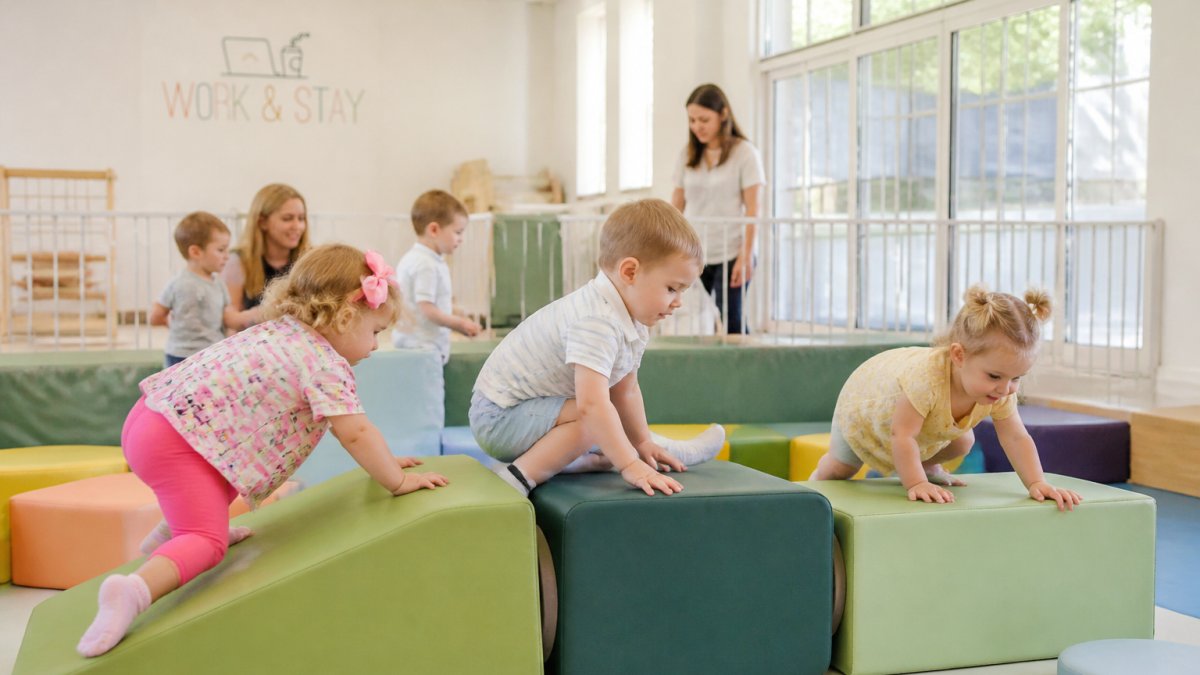
Soft play equipment, foam climbing structures, tunnels, slides, and ball pits, engages kids physically while keeping injury risk low and holding attention longer than structured activities.
Sensory stations, water tables, kinetic sand, or shaving cream exploration, let kids experiment safely and work well for shy or overwhelmed children.
Music, Dance, and Creative Activities
Simple music and movement activities capture toddler energy without demanding coordination. A playlist of upbeat songs lets kids dance, jump, or sway without formal instruction.
Creative stations, coloring, stickers, playdough, give kids a break from active play, prevent overstimulation, and let introverted toddlers participate on their own terms.
How Long Should a Toddler Birthday Party Last
A toddler birthday party should last 60 to 90 minutes maximum, the "golden window" before fatigue and overstimulation set in. Ideal length depends on your child's age, temperament, and party time.
Why 60-90 Minutes Works for Toddlers
Toddlers have limited attention spans: 1-year-olds sustain focus for 5-10 minutes, 2-year-olds for 10-15 minutes, and 3-year-olds for 20-30 minutes (though group settings shorten these windows).
Beyond 90 minutes, toddlers become overstimulated, hunger and nap pressure build, and novelty wears off. Parents also fatigue. Ending while energy is positive leaves everyone happier than dragging on until meltdowns occur.
Age-Specific Timing Within the Toddler Range
For 1-year-olds: Keep the party to 45-60 minutes to reduce separation anxiety, hunger, or nap-time meltdowns. Focus on sensory play and free exploration.
For 2-year-olds: 60-75 minutes works well, allowing arrival play, a snack or activity station, cake, and wind-down without overstimulation.
For 3-year-olds: 75-90 minutes is appropriate, as they handle more structured activities and social interaction.
The Party Arc: How to Use Your Time
Most parties follow a natural rhythm that works across the toddler age range:
-
Arrival and free play (15-20 minutes): Guests arrive staggered, and kids explore the space at their own pace. This low-pressure start lets toddlers acclimate and burn initial energy. Staff can greet families and answer questions while kids play.
-
Structured activity or snack time (15-20 minutes): Transition to a guided activity (music, sensory station, or simple games) or snack time. This breaks up free play and gives kids who are overstimulated a calmer option. Keep instructions minimal and participation optional.
-
Cake and singing (10-15 minutes): Gather for cake, singing, and the birthday moment. Keep this brief, toddlers don't need long speeches or elaborate traditions. A quick song, cake distribution, and back to play works best.
-
Wind-down play (15-20 minutes): Return to free play with lower energy. This gives kids a chance to decompress before leaving and lets parents chat while toddlers play. It also prevents the abrupt "party's over" transition that can trigger meltdowns.
Timing and Nap Schedules: The Critical Factor
When you schedule your party matters as much as how long it lasts.
Morning parties (9 AM-11 AM): Often work best. Toddlers are fresh, nap pressure is minimal, and parents can manage the rest of the day easily. Morning parties also align with typical toddler wake times and feeding schedules.
SIGN UP FOR YOUR MEMBERSHIP TODAY →
Early afternoon (12 PM-2 PM): Risky. This window overlaps with lunch and the first nap window for many toddlers. Hungry, tired toddlers are less engaged and more prone to meltdowns.
Late afternoon (3 PM-5 PM): Works if your guest list includes older toddlers (2.5-3 years) who've transitioned to one nap or no nap.
Ask your venue about their most popular party times and which time slots they recommend for toddler groups. They'll have data on which times produce the happiest, most engaged parties.
Flexibility and Your Child's Temperament
These guidelines are starting points, not rules. Some toddlers are energetic and social and can sustain a 90-minute party. Others are introverted, sensory-sensitive, or prone to overstimulation and do better with 45-60 minutes. You know your child best.
If your toddler is easily overwhelmed, tends to have meltdowns in group settings, or has a rigid nap schedule, err toward the shorter end of the range. If your child is social, adaptable, and energetic, you can push closer to 90 minutes. Discuss your child's temperament with the venue when booking, they can adjust activities and pacing to match.
Toddler Birthday Party Planning Checklist
Planning a toddler birthday party involves more moving parts than it seems. A simple checklist keeps details organized and prevents last-minute stress.
| Planning Phase | Key Tasks | Timeline |
|---|---|---|
| Before You Book | Choose date and venue, confirm guest count, discuss dietary needs | 4-6 weeks prior |
| Two Weeks Before | Finalize headcount, arrange transportation, confirm special requests | 2 weeks prior |
| One Week Before | Prepare decorations, pack supplies, brief staff on any special needs | 7 days prior |
| Day Of | Arrive early, set up, greet guests, manage timing | Party day |
Before You Book
Confirm the venue has availability on your preferred date and time. Ask about the party package, what's included, what costs extra, and what you need to bring. Discuss any dietary restrictions or allergies among guests. Ask about the cancellation policy and deposit requirements.
Visit the venue in person if possible. See the party room, check bathroom access, and ask about staff-to-child ratios. A space that looks nice in photos might feel cramped or chaotic in person.
Two Weeks Before the Party
Get final headcount confirmation from guests. This helps the venue plan staffing and activity stations. Discuss any special needs, a child with separation anxiety, dietary restrictions, or mobility concerns, so staff can prepare.
Arrange transportation and parking. Ask the venue about parking availability and drop-off procedures. Toddler parties often involve multiple caregivers, so clear logistics prevent confusion on party day.
One Week Before and Day-Of Details
Prepare any decorations, supplies, or food you're bringing. Pack a bag with diapers, wipes, extra clothes, and first aid supplies. Brief the venue staff on your child's personality, any sensitivities, and what makes them happy.
Arrive 15 minutes early to set up and give yourself a buffer if anything needs adjustment. A calm start sets the tone for the entire party.
Toddler Birthday Party Activities That Keep Kids Engaged
The secret to keeping toddlers engaged isn't complicated activities, it's variety and low pressure. Rotate between active play, sensory exploration, and quieter creative time. Let kids move between stations freely instead of forcing everyone to do the same thing at the same time.
Active play stations, soft climbing structures, slides, ball pits, burn energy and build confidence. Sensory stations, water, sand, playdough, appeal to kids who like exploration over physical activity. Creative stations, coloring, stickers, playdough, give kids who are overstimulated a calmer option.
Music and movement work well as a group activity, but keep it short and optional. Some toddlers love dancing; others prefer watching. Both are fine. The goal is engagement, not performance.
Play & Stay: Your Private Party Venue Option
Play & Stay offers a purpose-built environment for toddler birthday parties. The space is designed specifically for children ages 0-6, with separate areas for the youngest guests and equipment scaled to their size. This thoughtful design means your party feels curated for toddlers, not adapted from a generic space.
Play & Stay's private party offerings
What Sets Play & Stay Apart
Play & Stay combines multiple activity zones. Soft play equipment, sensory stations, and creative activity areas give kids choices and keep energy engaged throughout the party. Trained staff manage the flow and supervise safely, so parents can actually relax.
The venue handles the mess and cleanup, a significant advantage when hosting young children. No bringing cake crumbs and playdough home in your car. No sanitizing soft play equipment yourself. Staff manages the entire experience, which means parents spend the party enjoying their child instead of managing logistics.
Party Room Setup and Amenities
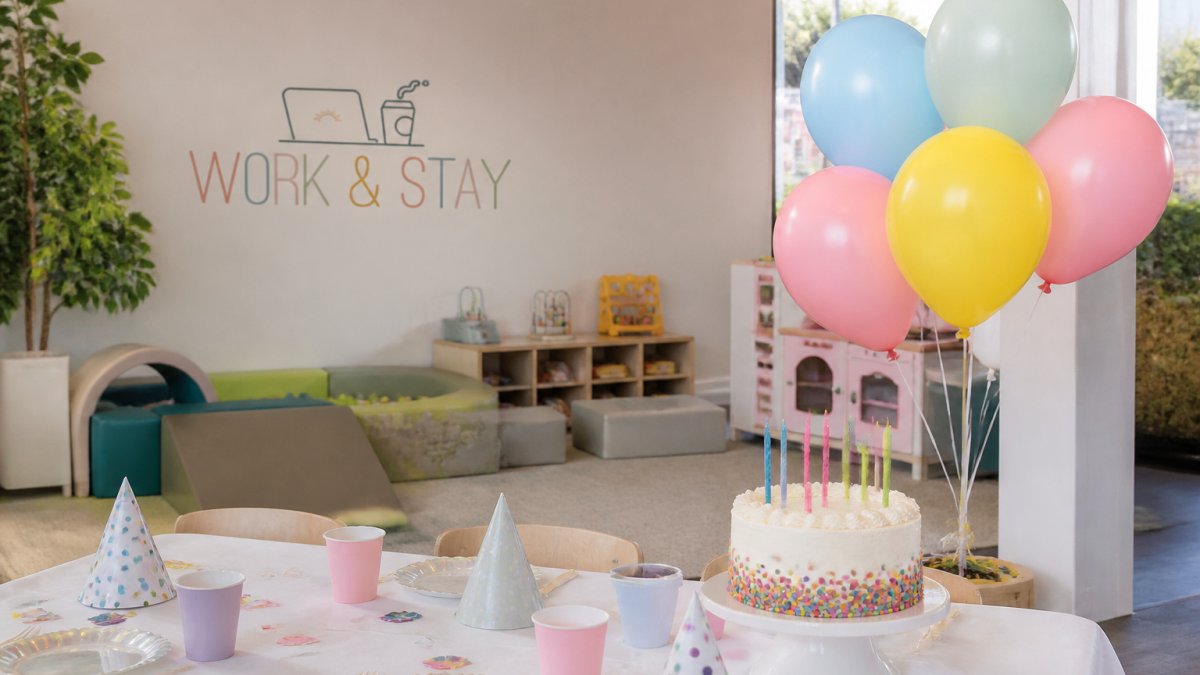
Play & Stay's private party room includes access to soft play structures, sensory exploration stations, and creative activity areas. The space is climate-controlled and designed so staff can supervise safely while parents have clear sightlines to their children.
Bathrooms are nearby and equipped for diaper changes. This all-in-one approach means less setup work for parents and a smoother experience for kids.
Hosting a private birthday party venue for toddlers doesn't have to mean renting a generic space and hoping it works. Play & Stay combines purpose-built equipment, trained staff, and a private environment designed specifically for young children. The soft play structures, sensory stations, and guided activities keep toddlers engaged while parents relax and enjoy the celebration.
Frequently Asked Questions
What should I look for in a private birthday party venue for toddlers?
Look for venues with age-appropriate equipment, a dedicated private party room, trained staff supervision, and a safe play environment designed for young children. Verify that the space is clean, climate-controlled, and equipped with changing stations if needed. Ask about party duration, guest capacity, included activities, and what happens if your child needs comfort or a break during the party.
How long should a toddler birthday party last?
Most toddler birthday parties work best when kept to 60-90 minutes. Younger toddlers (ages 1-2) may do better with shorter celebrations around 45-60 minutes, while 3-year-olds can often handle closer to 90 minutes. Shorter parties prevent overstimulation, reduce meltdowns, and keep energy levels manageable for both children and parents.
What are good toddler birthday party activities?
Sensory play, soft play structures, music and dance, arts and crafts, and guided group games work well for toddlers. Choose activities that don't require long attention spans and allow children to play at their own pace. Many venues offer a mix of free play and structured activities led by staff, which keeps toddlers engaged without overwhelming them.
Are indoor playgrounds a good choice for toddler birthday parties?
Yes, indoor playgrounds designed for young children are excellent for toddler birthday parties. They provide a safe, contained space with age-appropriate equipment, climate control, and supervision. Private party rooms or exclusive access times ensure your group has space to celebrate without crowded conditions, which is especially important for managing toddler behavior and comfort.