 Listicle
Indoor Play Activities for Kids Under Six: A Parent's Guide
Last Updated: November 4, 2026
Quick Summary
Indoor play activities for children under six are low-prep games using household items, sorted by the skills they build. Choose activities that match your child's current developmental stage, and keep setup shorter than your child's attention span so play actually happens.
- Match activities to the skill a child is working on now, not catalog age labels.
- For a two-year-old, keep setup under roughly five minutes; for a five-year-old, fifteen is realistic.
- A toddler who helps set up an activity is more likely to play on it.
- Painter's tape lifts cleanly from floors; masking and duct tape can leave residue.
- Rotate toys out of sight every couple of weeks to keep engagement higher.
Table of Contents
- Why Indoor Play Activities Matter for Children Under Six
- Low-Prep Indoor Play Activities Using Household Items
- Creative Arts, Pretend Play, and Quiet Time Ideas
- Active Indoor Games: Obstacle Courses and Scavenger Hunts
- What to Look for in Indoor Playgrounds for Young Children
- Flexible Coworking Spaces With Childcare for Working Parents
- Planning Your First Visit to Play & Stay
- Frequently Asked Questions
Why Indoor Play Activities Matter for Children Under Six
Indoor play activities for children under six are the everyday routines, games, and creative projects that build movement skills, language, and social confidence without a screen or a trip across town. This guide focuses on what actually works for families with limited space, limited time, and a toddler who loses interest fast.
The early years move quickly. A two-year-old who stacks blocks today will be balancing on one foot next month, and the activities that fit that change matter more than any toy catalog.
The core tension most parents run into: the activities that build the most skills often take the most setup, and the ones that take no setup often hold attention for about four minutes. Everything here tries to land in the middle.
Matching Activities to Developmental Milestones
Developmental play means choosing an activity for the skill a child is working on right now, not the skill a catalog says is age-appropriate.
That distinction changes what you set out. For the youngest children, reach-and-grab games and sensory bins do more than elaborate crafts.
A quick way to sort it:
- Under 18 months: texture, sound, and cause-and-effect play. Drop toys into containers, roll soft balls, explore safe sensory bins.
- 18 months to 3 years: fine motor skills and early pretend play. Stacking, scribbling, pretending a box is a car.
- 3 to 4 years: gross motor play, turn-taking, and simple rules. Obstacle courses, matching games, scavenger hunts.
For a fuller age-by-age breakdown, this play guide for ages 0 to 6 maps activities to each stage.
Low-Prep Indoor Play Activities Using Household Items
Low-prep activities are the ones that use what's already in your kitchen or laundry room, set up in under five minutes, and clean up in less. The trick is choosing household items that are safe for the age group and interesting enough to hold attention. Most roundups stop there. The two constraints that actually decide whether a parent uses an idea, how much floor space it needs and how long setup takes, are the ones competitors skip, so each activity below is tagged with both.
Five-minute setup, small-space friendly
These work in an apartment, a hallway, or a corner of a living room, and they are ready before a toddler loses interest.
- Cushion mountain. Stack couch cushions and pillows into a low hill. Gross motor play and balance practice, zero cost, five-second setup. Needs about a three-foot square of floor. Ages 18 months to 4 years.
- Laundry basket toss. Rolled socks into a laundry basket from increasing distances. Builds coordination and gives a toddler a clear win. One basket, one open stretch of floor. Ages 2 to 5.
- Tape lines on the floor. A line of painter's tape becomes a balance beam, a road for toy cars, or a jump target. Repositionable and removable, and it needs no floor space beyond the line itself. Ages 18 months to 6 years.
- Kitchen band drum. Pots, wooden spoons, and a plastic bowl. Loud, but it builds rhythm and cause-and-effect understanding. A towel under the pot quiets it and protects the floor. Ages 1 to 4.
- Sock sorting. A pile of clean socks and a muffin tin. The child sorts by color or pairs them. Fine motor and early categorization, and the cleanup is the activity. Ages 2 to 4.
Ten-to-fifteen-minute setup, worth the floor space
These need a little more room or a little more prep, but they hold attention longer and are the ones to reach for on a rainy afternoon when the day needs a reset.
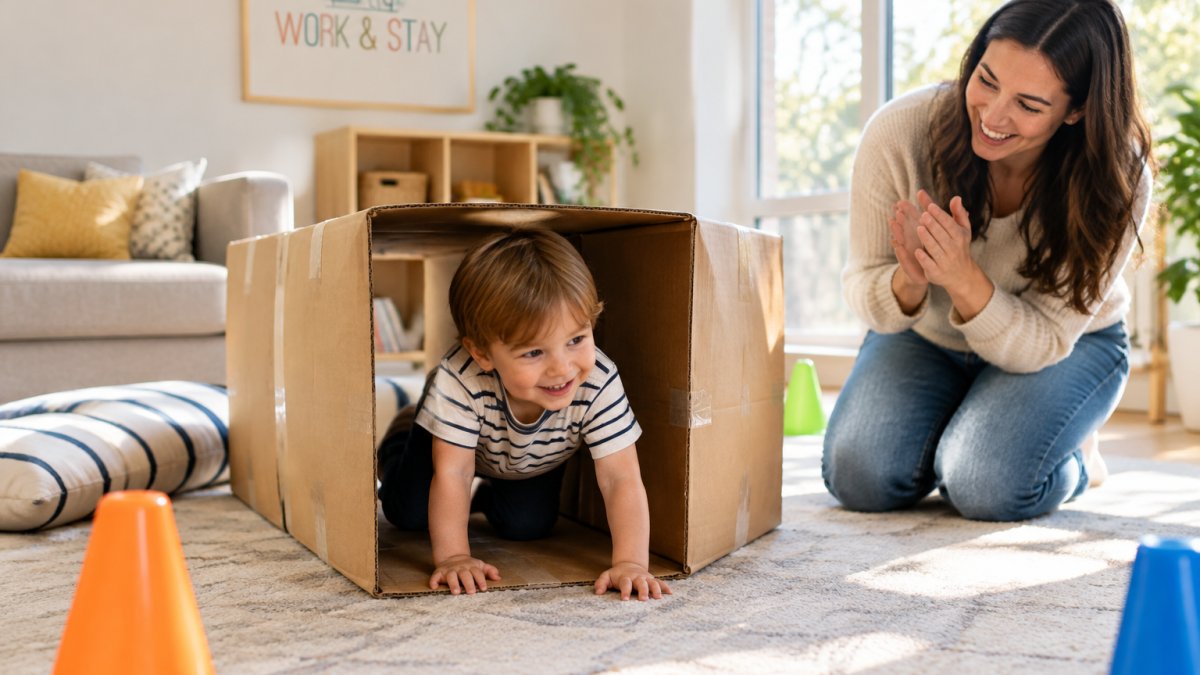
- Cardboard box tunnel. Two or three boxes taped end to end become a crawl-through obstacle course. Needs a clear path of about six feet. Ages 1 to 4.
- Painter's tape hopscotch. A grid of tape squares on a hard floor. Jumping, counting, and coordination. Needs a four-by-four-foot clear area. Ages 3 to 6.
- Pillow obstacle course. Cushions to crawl over, a tape line to balance on, a chair to circle. Three stations is enough. Needs a room with furniture pushed back. Ages 2 to 5.
- Indoor "snowball" fight. Rolled socks or crumpled paper into a laundry basket, with a tape line down the middle of the room. Gross motor and turn-taking. Needs two open sides of a room. Ages 3 to 6.
The setup-time rule that actually matters
The engagement factor matters more than the activity itself.
A common pattern is that parents over-build.
Watch out: painter's tape is the right choice for floors and low-pile carpet because it lifts cleanly; masking tape and duct tape can pull finish or leave residue, so test a small strip first.
Here are the low-prep activities, sorted by how much setup and floor space each one needs.
| Activity | Ages | Setup and space | Skills |
|---|---|---|---|
| Cushion mountain | 18 months to 4 years | Five-second setup, three-foot square | Gross motor play, balance |
| Laundry basket toss | 2 to 5 | One basket, open floor | Coordination |
| Tape lines on the floor | 18 months to 6 years | No floor space beyond the line | Balance, coordination |
| Kitchen band drum | 1 to 4 | Pots, wooden spoons, plastic bowl | Rhythm, cause-and-effect |
| Sock sorting | 2 to 4 | Clean socks and a muffin tin | Fine motor, categorization |
| Cardboard box tunnel | 1 to 4 | Ten to fifteen minutes, six-foot path | Crawl-through obstacle course |
| Painter's tape hopscotch | 3 to 6 | Ten to fifteen minutes, four-by-four-foot area | Jumping, counting, coordination |
| Pillow obstacle course | 2 to 5 | Three stations, furniture pushed back | Gross motor play |
Creative Arts, Pretend Play, and Quiet Time Ideas
Creative expression and pretend play are where young children practice language, sequencing, and emotional regulation. Art projects don't need to be elaborate.
For pretend play, the props do the work. A basket of old hats, scarves, and bags becomes a dress-up station.
Quiet time deserves its own slot in the day. After active play, a child's nervous system needs a downshift. Ideas that work:
- A book corner with a floor cushion and three or four rotating books
- A felt board with shapes to rearrange
- Simple puzzles for problem-solving practice
Rotating toys out of sight and back in every couple of weeks keeps engagement higher than leaving everything out at once.
Active Indoor Games: Obstacle Courses and Scavenger Hunts
Obstacle courses and scavenger hunts are the highest-energy indoor games on this list, and the best ones use furniture and household objects rather than equipment.
SIGN UP FOR YOUR MEMBERSHIP TODAY →
Scavenger hunts work best when they're visual rather than written.
Relay races need two or more children, or one child and one adult. Carry a beanbag across the room and back, hand it off, repeat.
A screen-free rule for these games is easier to hold when the adult plays too.
What to Look for in Indoor Playgrounds for Young Children
Indoor playgrounds solve the space problem. Most homes don't have room for a climbing structure, and most parents don't want one in the living room.
Here's a practical checklist to run through on a first visit or a call ahead:
- Age separation. Are the youngest guests in a separate area from older, faster children?
- Supervision. Is there staff on the floor, or is it parent-supervised only?
- Sightlines. Can a parent see the whole play area from one spot?
That last point is the one parents ask about most, and it's the one worth checking in person. A detailed breakdown of what to look for in indoor playgrounds covers the rest of the criteria.
Flexible Coworking Spaces With Childcare for Working Parents
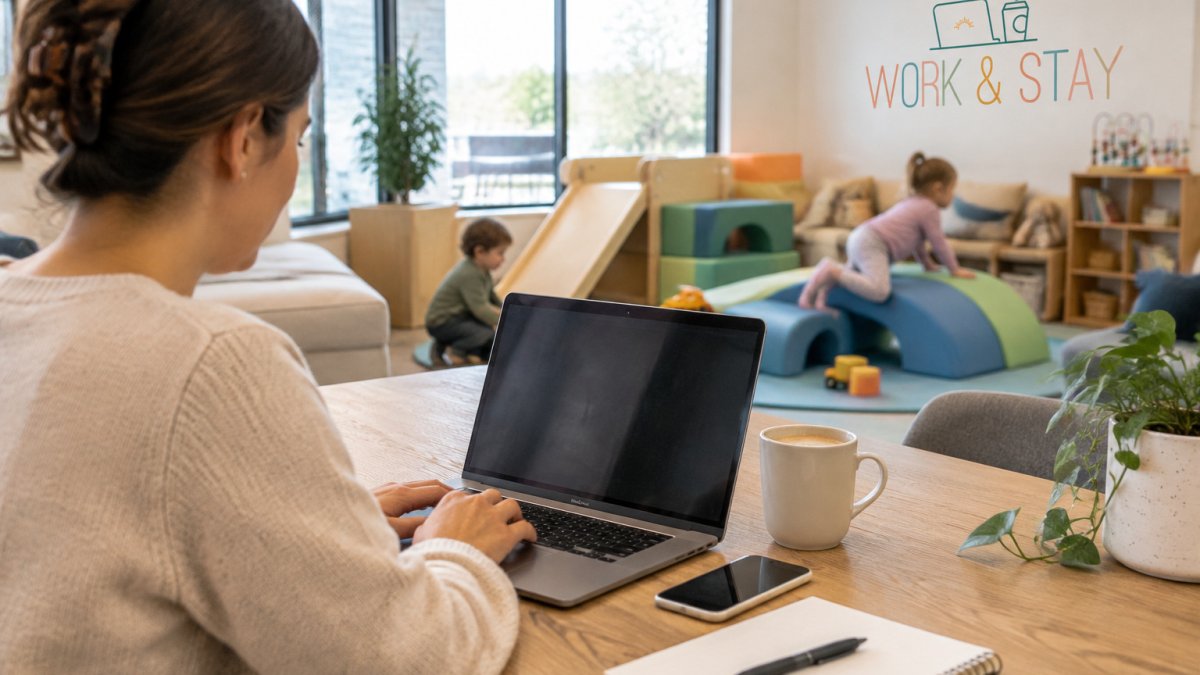
Flexible coworking spaces with childcare solve a different problem: the parent who needs two uninterrupted hours to answer email or take a call, and a child who needs somewhere safe and engaging to be during that time. It's not daycare. It's a workspace with supervised childcare on site, which is a meaningfully different model.
The distinction matters. A traditional daycare runs on a fixed schedule and a long-term enrollment. A flexible workspace with childcare is built around the parent's workday, with memberships or day passes and no long-term contract.
What to check before committing to one:
- Is the childcare curriculum-based or just supervised play? Teacher-led classroom time looks different from a room full of toys.
- How separate is the childcare space from the workspace? A parent on a call needs the noise to stay on the other side of a wall.
- Can a parent check in during the session? For a child with separation anxiety, proximity matters more than constant contact.
For parents who work from home and need actual quiet, the answer is usually a workspace where the childcare is in a separate, supervised environment rather than a corner of the same room.
Planning Your First Visit to Play & Stay
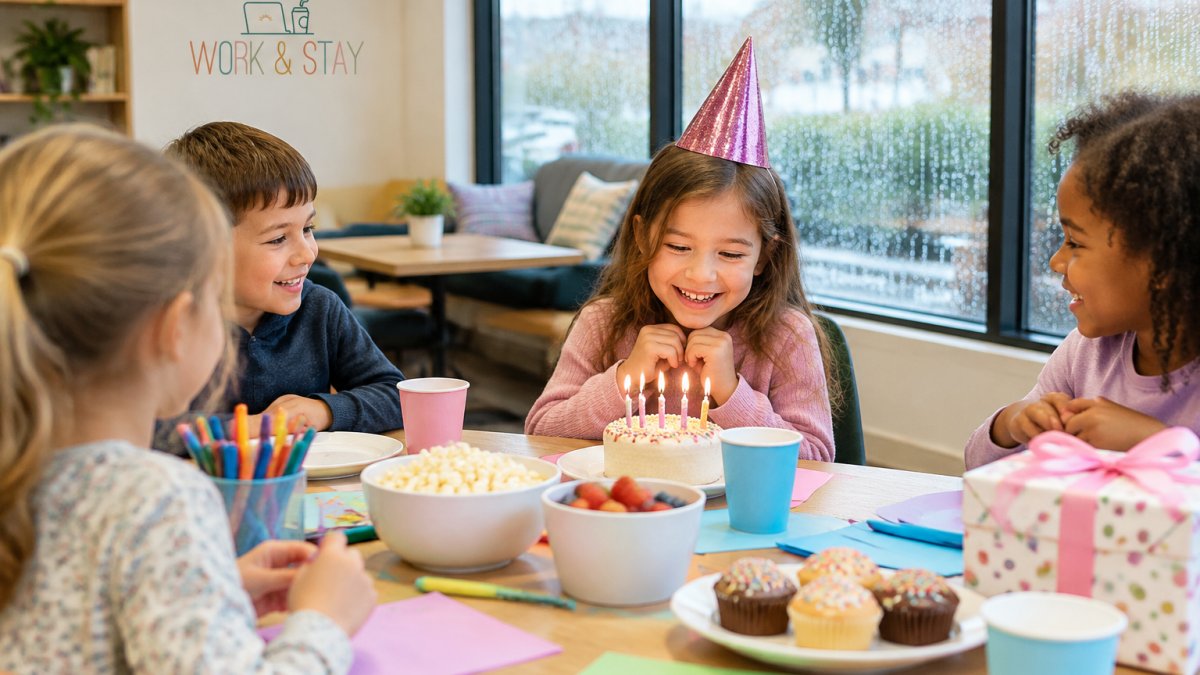
Play & Stay is an indoor play space for children ages 0 to 6, with supervised open play, guided arts, music and dance, and private party room rentals.
Parents who want to test the coworking side can look into day passes before deciding on a membership.
If you're weighing drop-in options before committing, this guide to affordable drop-in play options walks through what to expect. And when you're ready to book, memberships and day passes are the place to start.
Best for: parents who want supervised play and a workspace in one trip. Skip if: you need full-day traditional daycare with a fixed schedule.
Frequently Asked Questions
What are the best indoor play activities for a 3-year-old?
Three-year-olds do well with activities that mix movement and imagination. Try a cushion obstacle course for gross motor play, a sensory bin of dry rice and scoops for fine motor skills, and simple pretend play like a pretend grocery store. Rotate three or four options each week so the novelty holds. Short sessions of 15 to 20 minutes work better than one long block, and a quiet activity like coloring helps them wind down afterward.
How can I keep my preschooler active indoors?
Build movement into small pockets of the day rather than one big event. Relay races down a hallway, a scavenger hunt for colored toys, and freeze-dance songs all burn energy in ten minutes or less. Indoor playgrounds give kids room to climb and run in a contained space, which helps on days when the backyard is too hot or wet. Aim for several short active bursts instead of one long session.
Are there indoor play spaces that offer coworking for parents?
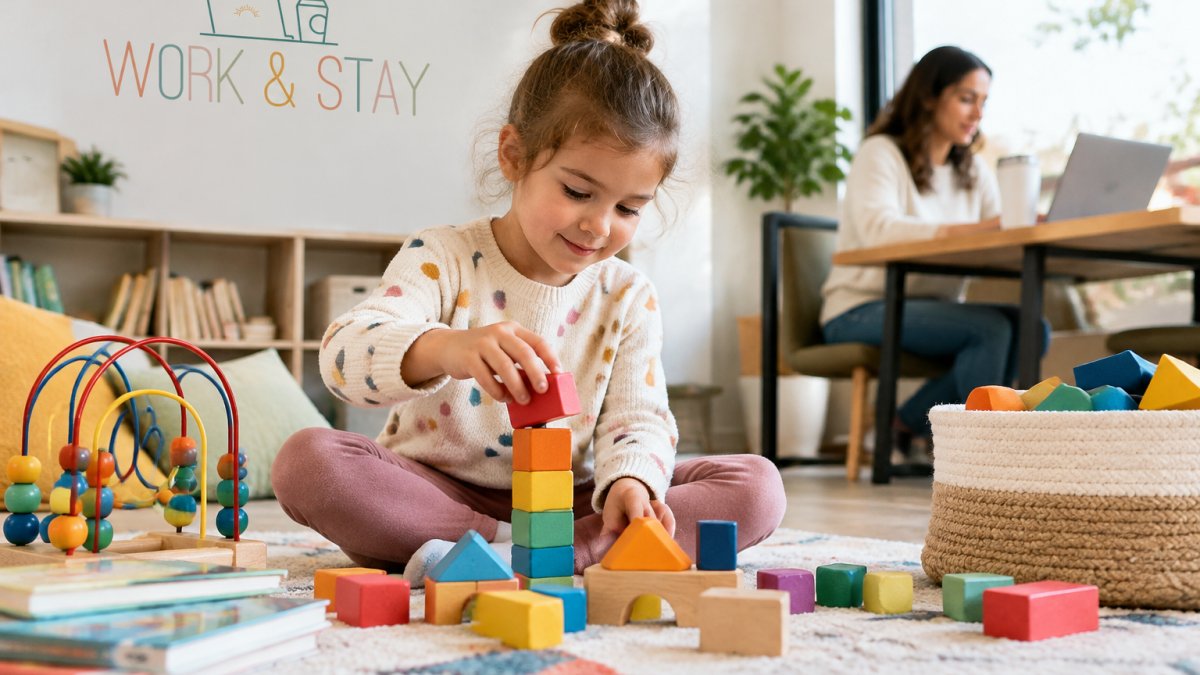
Yes. Flexible coworking spaces with childcare combine a quiet workspace with supervised play for children ages 0 to 6 in a separate area. At Work & Stay, parents can work in a coworking lounge while kids are in supervised, curriculum-based childcare steps away, and memberships or day passes are available with no long-term contract. It suits remote-working parents who need focus time without arranging a separate sitter.
How do I choose a safe indoor play environment for my child?
Ask about age separation, supervision, cleaning routines, and how staff handle incidents. A space designed for children under six should have distinct areas for the youngest guests, soft surfaces, and clear sightlines for caregivers. Visit in person before committing, watch how staff interact with kids, and check whether the facility explains its incident protocol. A tour in person can tell you more than a website photo.
What are some screen-free indoor activities for young children?
Open-ended play does the most work: blocks, play dough, dress-up clothes, and a basket of household items like measuring cups and cardboard boxes. Scavenger hunts, art projects, and pretend play kitchens keep kids engaged without a screen. Rotating toys every couple of weeks makes old items feel new. A predictable quiet-time routine with books or puzzles also gives everyone a reset.
The hardest part of indoor play isn't finding activities. It's finding a space where a child can play freely while a parent gets something done. Play & Stay and Work & Stay are built for exactly that: supervised, curriculum-based childcare for ages 0 to 6, a coworking lounge and private workspaces next door, and memberships or day passes with no long-term contract. Get started with Play & Stay and turn a rainy afternoon into a productive one.