 listicle
Indoor Play Areas for Kids Ages 0–6: A 2026 Guide
Table of Contents
- Why Indoor Play Areas Matter for Young Children
- What to Look for in a Safe Indoor Play Area
- Supervised Open Play: What It Offers Your Family
- Drop-in Childcare and Flexible Membership Options
- Coworking Space with Childcare: A Solution for Working Parents
- Age-Appropriate Zones and Activity Types
- Birthday Parties and Special Events
- Conclusion
- Frequently Asked Questions
Last Updated: August 28, 2026
Why Indoor Play Areas Matter for Young Children
Young children need space to move, explore, and develop physical skills, exactly what an indoor play area provides. Whether it's climbing structures, ball pits, or soft play zones, these spaces give children ages 0-6 freedom to burn energy safely while parents get a moment to breathe.
In hot climates, outdoor play becomes limited during peak heat months. An indoor play area solves this immediately. Kids improve coordination and balance through movement, parents avoid home chaos, and children develop confidence by navigating new environments and interacting with peers in a setting designed for their developmental stage. For working parents juggling remote work, these spaces offer something invaluable: a place where children are engaged, safe, and supervised.
What to Look for in a Safe Indoor Play Area
Safety is the foundation of quality indoor play, but "safe" is only meaningful when backed by verifiable standards and transparent practices.
Safety certifications and standards. Ask whether equipment meets ASTM F1487 standards and request documentation (astm.org). Verify whether the facility has been inspected by a certified playground safety inspector (CPSI), third-party verification signals genuine commitment to safety.
Cleanliness protocols and verification. Request the facility's written cleaning schedule showing what gets cleaned, when, and with what products. High-touch surfaces should be sanitized multiple times daily. Ask about disinfectants used and whether they're safe for young children. A facility showing cleaning logs demonstrates transparency.
Age-appropriate equipment and layout. The best facilities physically separate zones for different developmental stages. Younger toddlers (18 months to 3 years) need soft play structures under 4 feet with padded surfaces. Preschoolers (3-6 years) can handle taller equipment. Soft surfaces should include engineered wood fiber, foam, or rubber mulch at depths appropriate to equipment height, typically 6-12 inches for toddler equipment.
Staff training and supervision ratios. Request staff-to-child ratios. Industry best practice for toddler zones is 1 caregiver per 4-6 children; preschool zones may operate at 1 per 8-10 (naeyc.org). Verify staff are trained in pediatric first aid and CPR with annual renewal (redcross.org). Background checks should be non-negotiable.
Visibility and supervision design. Tour the facility and assess sightlines from staff stations to all play areas. Can caregivers see children simultaneously, or are there blind spots? Ask whether security cameras exist in common areas and whether parents can request footage if an incident occurs.
Incident protocols and liability. Ask for the facility's written incident response procedure. What happens if a child gets injured? How are parents notified? Is an incident log maintained? Verify liability insurance coverage. A reputable facility provides this information without hesitation.
Health and illness policies. Request the health screening policy. Do they exclude children with fever or contagious symptoms? Ask about hand hygiene stations and staff training. For families with allergies or medical conditions, verify staff are trained to recognize and respond to emergencies.
A quality facility welcomes these questions and provides documentation. If a facility becomes defensive or offers only verbal assurances, continue your search.
Supervised Open Play: What It Offers Your Family
Supervised open play means children have freedom to move, climb, jump, and explore while trained staff maintain a safe environment. This model balances independence with oversight, kids aren't directed through every activity, but they're never unsupervised.
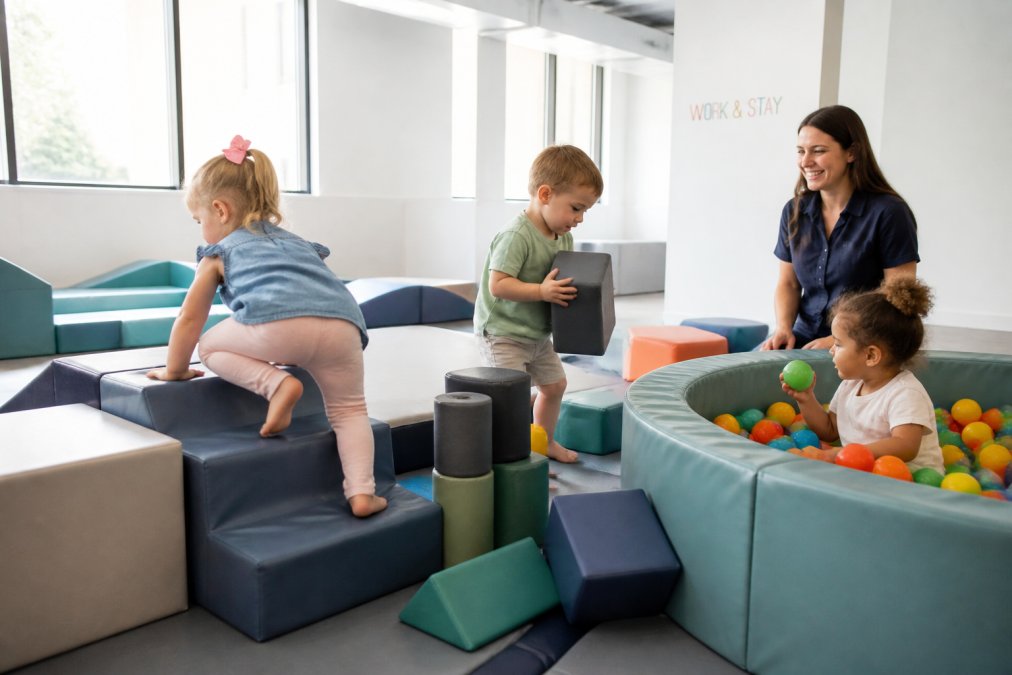
For children ages 0-6, open play is developmentally essential. Toddlers develop gross motor skills by climbing and crawling. Preschoolers build confidence tackling new challenges at their own pace. The freedom to choose activities helps children develop decision-making skills and self-direction.
Parents benefit equally. Many supervised open play facilities allow parents to remain on-site, working from a quiet coworking lounge or relaxing in a parent area. This removes separation anxiety while giving parents focused time to work or decompress. Children interact with peers in a structured environment, learning to share, take turns, and navigate social situations with staff support.
Drop-in Childcare and Flexible Membership Options
Not every family needs a long-term commitment. Drop-in childcare works on a per-visit basis, parents bring children for a few hours, pay for that session, and leave. No contracts, no unused credits, no obligation to return. This suits families with unpredictable schedules.
Memberships offer different value. Families using a facility regularly save money compared to per-visit rates and often receive priority access and perks like birthday party discounts. The key is finding a facility offering both options without pressure. Avoid facilities requiring long-term contracts or charging cancellation penalties. The best providers understand family needs change and build flexibility into their offerings.
Coworking Space with Childcare: A Solution for Working Parents
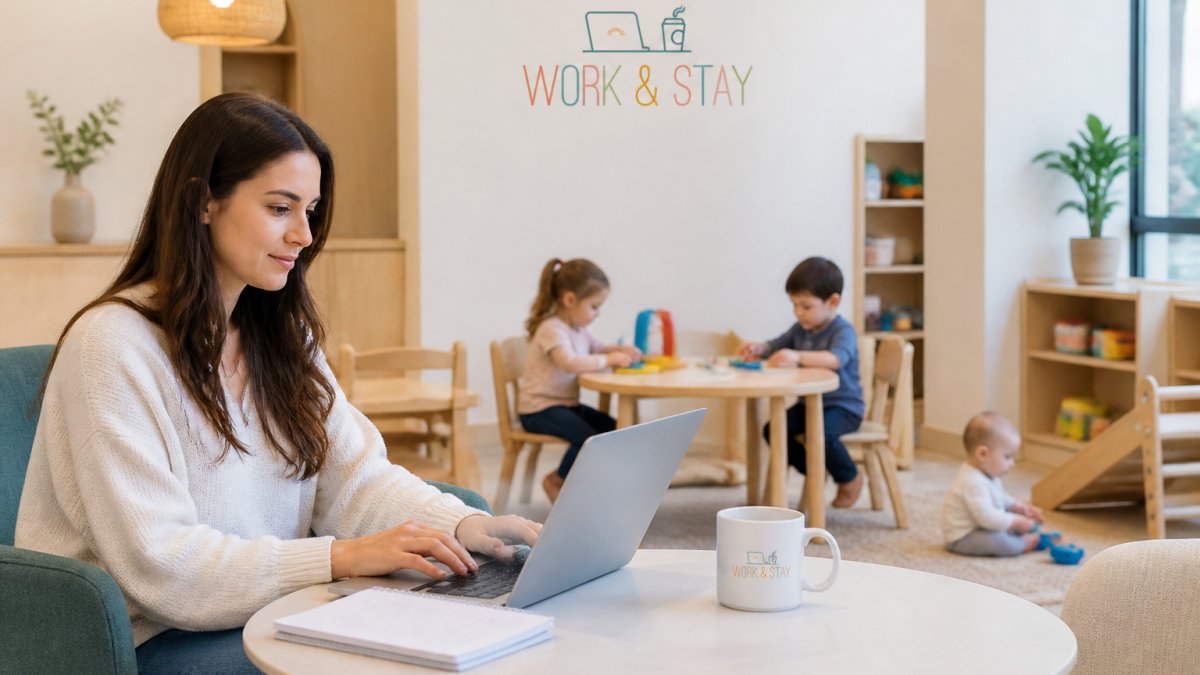
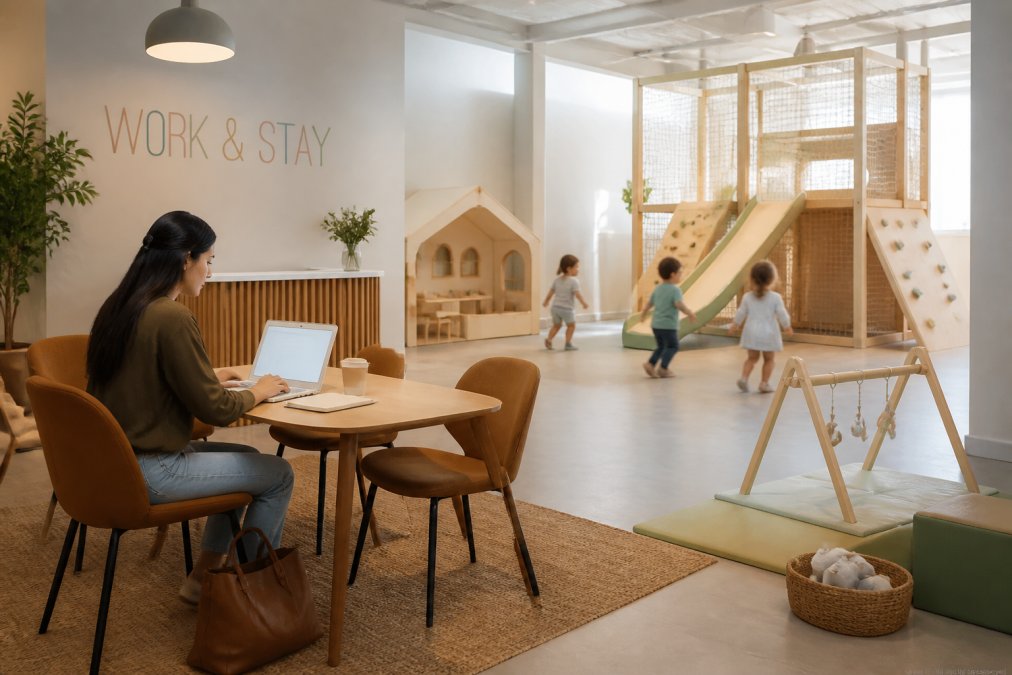
A coworking space with integrated childcare means parents can work in a quiet, professional environment while children play in a supervised area just steps away.
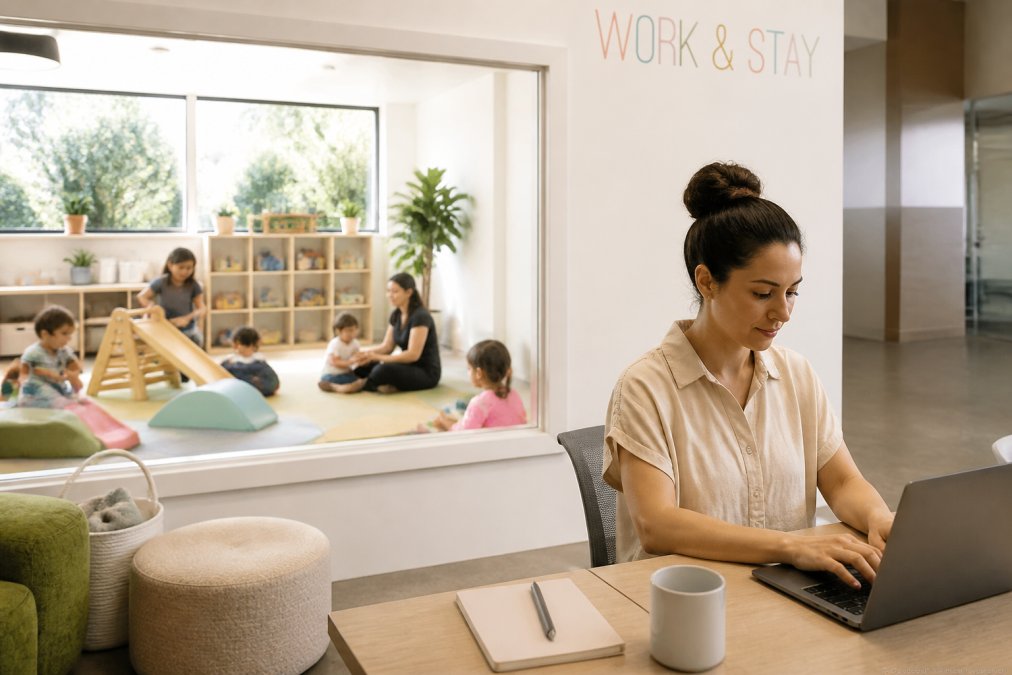
For remote-working parents, this solves a persistent problem: maintaining focus and productivity while responsible for young children. Traditional childcare requires drop-off and pick-up logistics. A combined workspace-and-childcare model lets parents work professionally while knowing their children are safe, engaged, and nearby.
The logistics simplify dramatically. One location. One drop-off. One pick-up. Many facilities include curriculum-based classroom time alongside open play, so children aren't just supervised, they're learning through guided activities like music, arts, and structured play supporting early development. Parents get productive work time; children get educational enrichment.
SIGN UP FOR YOUR MEMBERSHIP TODAY →
Compared to hiring a part-time nanny or paying for multiple childcare arrangements, a coworking space with integrated childcare can offer a different value proposition while providing a professional work environment. Parents avoid isolation, interact with other professionals, and maintain clearer boundaries between work and family time.
Age-Appropriate Zones and Activity Types
The best indoor play areas recognize that an 18-month-old and a 5-year-old need completely different environments. Age-appropriate design is essential for both safety and developmental benefit.
Toddler zones (18 months to 3 years). These areas feature soft play structures, low climbing heights (typically under 4 feet), padded surfaces, and sensory activities. Staff-to-child ratios are typically higher because toddlers need closer supervision. Look for zones including both active and quiet spaces, since toddlers tire quickly.
Preschool zones (3 to 6 years). These spaces include more challenging climbing structures, obstacle courses, interactive walls, and imaginative play areas. Preschoolers have better coordination and can handle higher equipment and greater independence. The best facilities offer a mix of structured and unstructured play.
Sensory play areas. These zones include activities engaging touch, sight, sound, and movement, ball pits, water tables, texture walls, and interactive light displays. Ask whether the facility offers sensory-friendly hours with reduced noise levels, dimmed lighting, and fewer children present.
Quiet and low-stimulation zones. Good facilities include calmer areas with books, puzzles, soft seating, and quieter activities for children who need to decompress or prefer less stimulation. These zones are essential for children with sensory processing sensitivities, anxiety, or autism.
Accessibility features. Quality facilities consider physical accessibility for children with mobility differences, including wheelchair-accessible entrances, accessible bathrooms, and play equipment accommodating limited mobility. Ask whether the facility has ramps, elevators, or accessible routes to all play zones.
Neurodivergent-friendly practices. Ask whether staff are trained in supporting neurodivergent children, including understanding sensory sensitivities, recognizing overwhelm, allowing children to opt out of group activities, and using clear communication. Some facilities offer visual schedules or social stories. These practices benefit all children but are especially important for those with autism, ADHD, or anxiety.
The key is variety. A facility offering multiple zone types and sensory options ensures every child finds something engaging safely.
Birthday Parties and Special Events
For many families, an indoor play area becomes the obvious choice for birthday celebrations. Birthday party packages typically include access to the play space, a dedicated party room, tables, and decorations. Many facilities provide staff to manage the party, serve food, and supervise activities.
Children celebrate in an exciting environment designed for play and movement. Siblings and guests have plenty to do, reducing behavioral issues from boredom. Parents avoid hosting stress and cleanup.
When evaluating party options, ask about group size limits, party duration, what's included, and whether outside food is allowed. Confirm whether the party room is separate from open play areas, ensuring your group gets focused attention.
Conclusion
Finding the right indoor play area requires evaluating safety, age-appropriate design, supervision quality, and flexibility. Parents should prioritize facilities maintaining clear hygiene standards, employing trained staff, offering varied activity types, and providing options fitting their family's schedule and needs.
Play & Stay offers supervised open play, curriculum-based classroom time, and flexible day passes for families in Scottsdale seeking a safe, engaging indoor environment for children ages 0-6. Learn more at playandstayaz.com.
For working parents balancing productivity with childcare, integrated solutions reduce logistical burden while supporting child development and parental wellbeing. Work & Stay brings this concept to life by pairing a professional coworking space with supervised, curriculum-based childcare for ages 0-6, eliminating the need to manage multiple facilities. Explore membership and day pass options at playandstayaz.com to see how flexible childcare can support your family's needs.
Frequently Asked Questions
What are the main benefits of indoor play areas for toddlers and preschoolers?
Indoor play areas support physical development, coordination, and balance while offering a safe environment for active play. They encourage imaginative play, social interaction with other children, and help build confidence and self-esteem. For parents, they provide a controlled setting where children can burn energy and explore, especially valuable during extreme weather or when home space is limited.
How do I know if an indoor play area is safe and clean?
Look for facilities that display cleanliness standards, have clear hygiene protocols, and maintain regular equipment inspections. Ask about staff qualifications, supervision ratios, and incident protocols. Many quality indoor play areas welcome parent questions about safety certifications and cleanliness practices. Visit in person to assess the environment, and don't hesitate to ask staff about their daily sanitization routines and safety measures.
What's the difference between supervised open play and drop-in childcare?
Supervised open play means children play freely in a safe, monitored environment while parents remain on-site or nearby. Drop-in childcare typically allows parents to leave for a set period while trained staff provide supervision and may include structured activities. Some facilities blend both models, offering parents the choice to stay, work nearby, or step away for a few hours.
Can I work while my child plays at an indoor play area?
Some indoor play facilities offer coworking spaces designed specifically for parents. These setups provide a quiet workspace with reliable WiFi while your child plays in a supervised, separate environment. This model works well for remote workers who need focused time for calls and emails while their child gets active play and social interaction.
This article was written using GrandRanker