 listicle
Indoor Amusement Parks Near Me: 2026 Parent's Guide
Table of Contents
- What Counts as an Indoor Amusement Park in 2026
- Indoor Playgrounds and Trampoline Parks: What to Expect
- Birthday Party Venues and Private Party Rooms
- Coworking Space With Childcare: The Parent-Friendly Twist
- Indoor Playground Membership Benefits and Day Passes
- Safety Protocols, Age Restrictions and Sensory-Friendly Hours
- Conclusion: Choosing the Right Indoor Amusement Park
- Frequently Asked Questions
Last Updated: September 17, 2026
What Counts as an Indoor Amusement Park in 2026
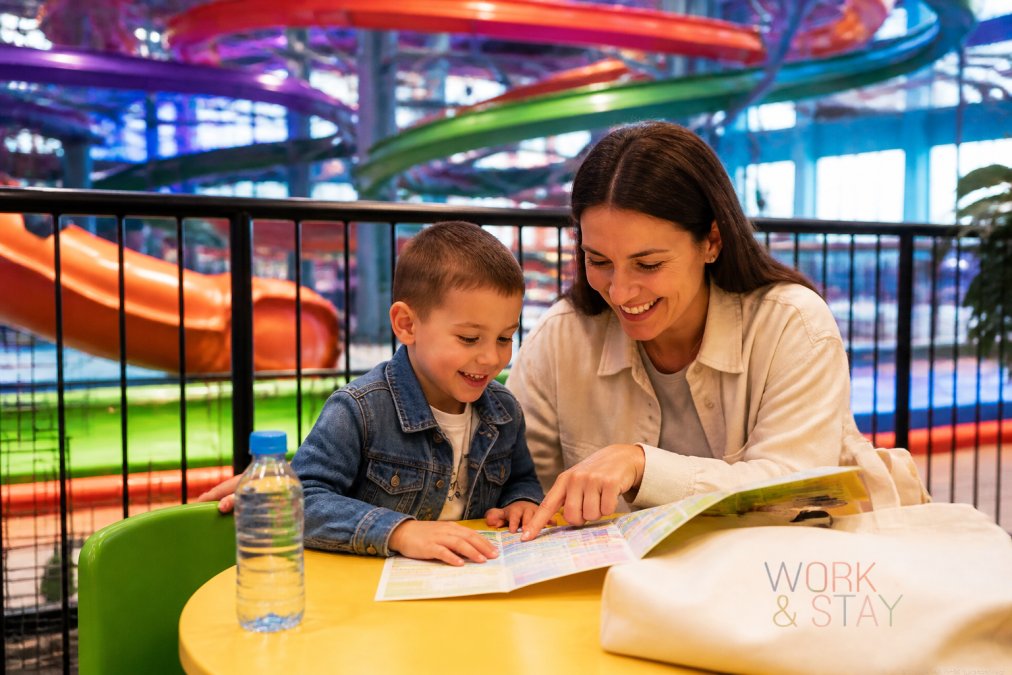
An indoor amusement park is a climate-controlled entertainment venue that combines physical play attractions, arcade games, and party facilities under one roof. For parents in hotter climates, these spaces solve a real problem: kids need to burn energy year-round, not just when the weather cooperates.
This guide from Play & Stay breaks down what families should actually expect when searching for indoor amusement parks near me. The category has expanded well beyond trampolines and ball pits. Today's venues might include ninja courses, virtual reality stations, bumper cars, rock climbing walls, and dedicated toddler areas with soft play equipment.
The key distinction is between pure amusement parks and hybrid family entertainment centers. A traditional amusement park focuses on rides. A family entertainment center layers in arcade games, concessions, and party rooms. Many indoor playgrounds now blur these lines entirely.
CDC guidance on physical activity for children recommends that kids ages 3-5 get active play throughout the day. Indoor venues make that possible when outdoor options disappear.
Indoor Playgrounds and Trampoline Parks: What to Expect
Indoor playgrounds and trampoline parks form the backbone of the indoor amusement category. These venues typically feature padded climbing structures, ball pits, slides, and open jump zones.
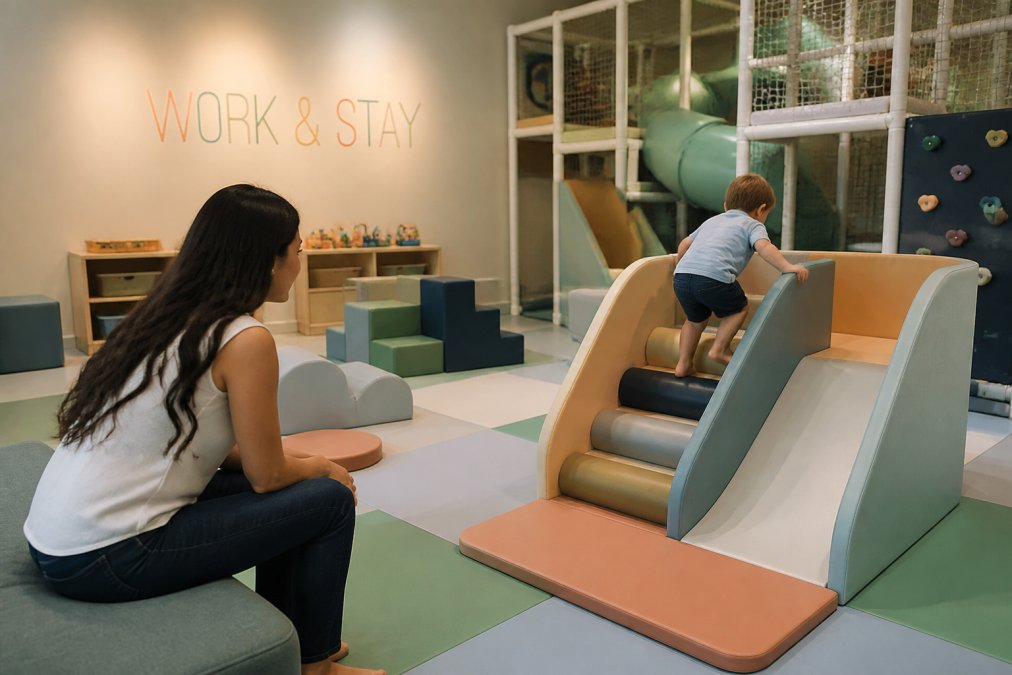
What separates a good indoor playground from a frustrating one? The toddler area. Venues that clearly separate ages 0-3 from older kids prevent the accidental collisions that ruin a visit. Look for gated toddler zones with age-appropriate equipment and sightlines that let parents supervise from a seated position.
Trampoline parks skew older, usually ages 6 and up.
Here's what to check before you go:
- Age restrictions: Many trampoline parks require kids to be at least 3 or 4 years old
- Grip socks: Most venues require them for safety; bring your own or buy on-site
- Waiver requirements: Almost all indoor parks require signed waivers before entry
- Session lengths: Jump sessions typically run 60-90 minutes
- Capacity limits: Weekend afternoons hit capacity fast; arrive early or book online
Birthday Party Venues and Private Party Rooms
- Play time: Usually 60 to 90 minutes in the open play area, sometimes split between structured games and free play
- Private party room: Reserved for a set window, often 30 to 45 minutes for cake and presents
- Dedicated host: One staff member assigned to your party, sometimes shared across two parties booked back-to-back
- Setup and cleanup: Tables, chairs, paper goods, and trash removal handled by staff
- Food add-ons: Pizza, snacks, and drinks are usually optional and priced per child
Guest count caps. Ask for the hard maximum, not the suggested number. A room that seats 15 kids comfortably can feel cramped at 20, and some venues charge per child over the cap rather than turning families away.
For families who want the party and the play space in one place, Play & Stay hosts birthday parties for children ages 0-6 with private room rentals and staff-led activities. You can explore party options and open play to see how the space is laid out before you commit to a date.
Coworking Space With Childcare: The Parent-Friendly Twist
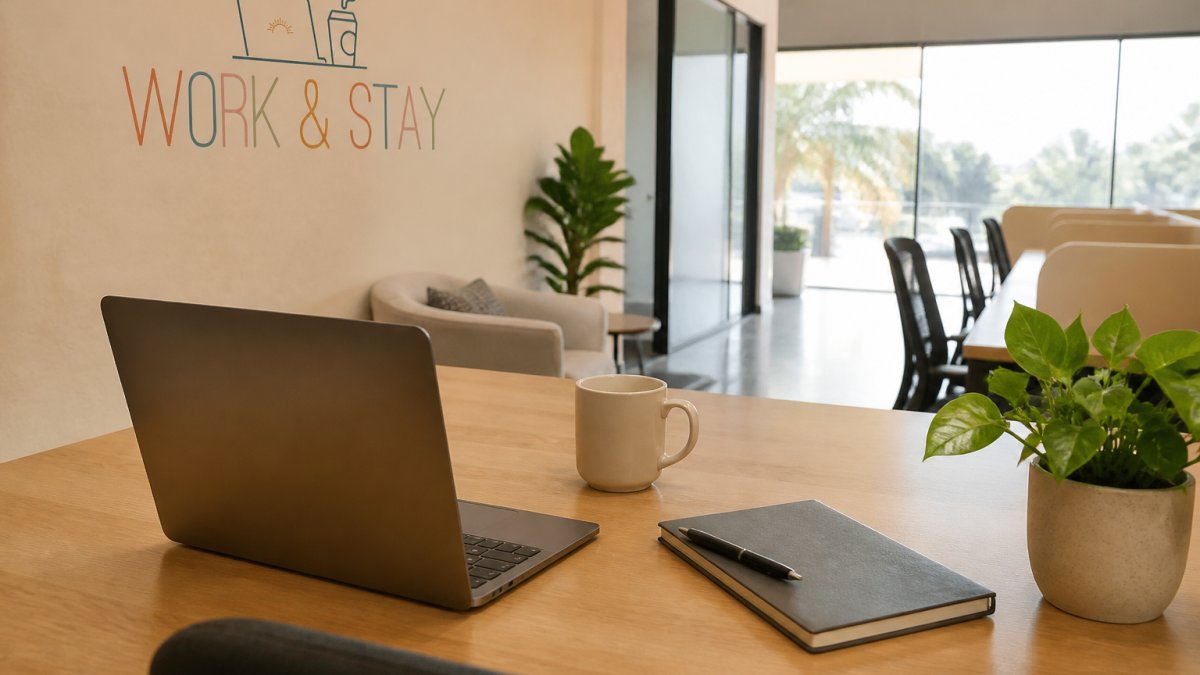
For parents weighing membership against hiring a babysitter, the math often favors the membership. A sitter costs money per hour and offers no workspace. A coworking membership with childcare covers both needs in one place.
Indoor Playground Membership Benefits and Day Passes
Indoor playground membership benefits go beyond unlimited visits. The real value is flexibility: no long-term contracts, no commitment to a specific schedule, and the ability to use the space when it actually fits your week.
SIGN UP FOR YOUR MEMBERSHIP TODAY →
Memberships typically include:
- Unlimited or discounted open play sessions
- Priority booking for birthday parties
- Discounts on guided arts, music, and dance programming
- Access to member-only hours or events
- Guest passes for friends
Safety Protocols, Age Restrictions and Sensory-Friendly Hours
Safety protocols separate professional indoor amusement parks from poorly run facilities. The basics include staff training, equipment inspections, capacity limits, and clear age restrictions for each attraction. But the questions that actually protect your child are the ones most venues don't put on their website, and the answers tell you more than any glossy brochure.
What to ask, and what a good answer sounds like
| Question | What a strong answer includes |
|---|---|
| What are your staff-to-child ratios? | A specific number per age group, not "we always have enough staff" |
| How often is equipment inspected? | Daily walk-throughs plus documented deeper inspections on a set schedule |
| Do you have a sick child policy? | A clear exclusion window (for example, fever-free for 24 hours) enforced at check-in |
| What's your incident protocol? | Named first-aid responders on shift, written reports, and a parent notification step |
| Are staff CPR and first aid certified? | Current certifications, not just "trained" |
| Do you offer sensory-friendly hours? | Specific days and times, with lights and sound adjusted |
If a venue can't answer these in plain language, that's your answer.
Age restrictions by attraction
Age rules aren't arbitrary, they track physical development. Toddler areas typically cap at age 3 or 4 because the equipment is sized and padded for smaller bodies. Trampoline zones usually require ages 6 and up, since younger children lack the coordination to control their landings in a shared jump space. Ninja courses and climbing walls often pair an age minimum with a height requirement, because reach matters more than birthday for those obstacles.
Sensory-friendly hours: the detail most venues don't advertise
This is where the category quietly splits. A standard open play session is loud, bright, and busy by design. For children with sensory sensitivities, anxiety, or autism, that environment can turn a fun outing into an overwhelming one before the parent has even paid for admission.
- Ask for the schedule, not just whether they exist. A venue that offers sensory-friendly hours once a month is very different from one that runs them weekly.
- Confirm the whole space is included. Some venues only quiet the toddler area while the rest of the floor stays at full volume.
- Arrive at the start of the window. Sensory-friendly sessions get busier as they go, and the first 30 minutes are usually the calmest.
- Bring noise-reducing headphones anyway. Even a quiet session has ambient sound from play equipment.
Verify before you trust
Ask to see the inspection log or the staff certification list. Reputable venues keep both and will show them. A venue that deflects the question is telling you something. For parents who need to work while their child plays, the same standard applies to the childcare side of the building, ask about staff credentials, classroom ratios, and check-in procedures before you rely on them.
Conclusion: Choosing the Right Indoor Amusement Park
The right indoor amusement park depends on what you actually need. If your goal is tiring out a 4-year-old on a Saturday morning, a traditional indoor playground works fine. If you need to answer emails while your toddler plays, you need a venue designed for both.
Frequently Asked Questions
How much does it cost for an indoor playground?
Pricing depends on the venue, session length, and whether you choose a day pass or membership. Most indoor amusement parks charge per session or offer unlimited-play memberships. Play & Stay and Work & Stay offer flexible day passes and memberships with no long-term contract; check their website for current rates and any seasonal promotions before you visit.
What are the benefits of an indoor playground membership?
Indoor playground membership benefits include unlimited or discounted open play, priority booking for birthday parties, and access to guided arts, music, and dance programming. Memberships also give your child a consistent social environment, which helps build coordination and confidence. For parents, a membership often works out cheaper than paying per visit, especially during hot or rainy weeks when outdoor plans fall through.
Are there indoor play spaces that offer coworking for parents?
Yes. Work & Stay combines a coworking lounge and private workspaces with supervised, curriculum-based childcare for ages 0-6 just steps away. Parents can take calls or finish projects while their child plays in a separate, staffed environment. It is not a traditional daycare or unrestricted drop-off service; it is a flexible workspace with onsite childcare, available through memberships or day passes.
What age groups are best suited for indoor play centers?
Most indoor play centers welcome toddlers through elementary-age children, but the best fit depends on the venue. Play & Stay is designed specifically for children ages 0-6, with separate areas for the youngest guests and soft play equipment sized for small bodies. Older kids often prefer trampoline parks, ninja courses, and arcade games. Always check age restrictions and height requirements before booking.
Do indoor play centers offer supervised childcare options?
Some do, but the model varies. Work & Stay provides supervised, teacher-led childcare in a separate classroom while parents use the coworking space. This is different from a drop-off daycare: the parent stays on site, nearby but focused on work. If you need backup childcare or a few quiet hours to handle emails, ask whether the facility offers supervised care and what staff-to-child ratios they follow.