 how-to
Drop-In Daycare Without a Contract: A Parent's Guide
Table of Contents
- What Drop-In Daycare Without a Contract Actually Means
- How Hourly Childcare Works: A Step-by-Step Process
- Flexible Childcare Options for Your Family's Schedule
- Backup Childcare Solutions When You Need Immediate Care
- Choosing a Coworking Space With Childcare: What Parents Should Verify
- Registration, Safety Standards, and What to Expect on Day One
- Making Drop-In Daycare Work for Your Lifestyle
- Frequently Asked Questions
Last Updated: September 29, 2026
What Drop-In Daycare Without a Contract Actually Means
A drop-in daycare no contract model is flexible childcare that parents can use on an as-needed basis without signing a long-term agreement. You pay for the hours or days you use, then stop whenever you want. No commitment. No penalty for missing a week or switching schedules.
This model works differently from traditional daycare, which typically requires monthly tuition and a 30-day cancellation notice. With no-contract drop-in care, the flexibility flows both ways. Parents get control over their schedule. Childcare providers get predictable demand without managing empty slots.
The setup is ideal for remote workers who need occasional supervision, parents managing unpredictable schedules, or families testing childcare before committing. Work & Stay combines this flexibility with workspace for parents, supervised childcare for ages 0-6 in a separate, dedicated environment, plus a coworking lounge just steps away. Parents can work while children are in curriculum-based care led by trained staff.
How Hourly Childcare Works: A Step-by-Step Process
Hourly childcare operates on a simple pay-as-you-go model. Here's what the process looks like in practice.
Step 1: Register your child Most facilities require a one-time registration. Parents provide basic information, emergency contacts, and any health or developmental notes.
Step 2: Book your hours Parents reserve time online or by phone, usually in 1-hour, half-day, or full-day increments. Many providers offer same-day booking, though advance notice (24-48 hours) ensures availability.
Step 3: Drop off and pick up Parents deliver their child during the scheduled window and return at the agreed time. Staff confirm the child's name, any special instructions, and pick-up authorization.
Step 4: Pay per session Billing happens after each visit. Parents receive an invoice for hours used. No recurring monthly charge. No unused-time penalty.
What makes this different from traditional daycare:
- Traditional daycare charges monthly tuition whether or not you use all days
- Hourly care charges only for time consumed
- You're never paying for empty slots or forced to commit to a minimum
Flexible Childcare Options for Your Family's Schedule
Flexible childcare comes in several forms. Knowing which one fits your situation saves time and money.
Drop-in open play Best for: Families seeking unstructured play and socialization. How it works: Children arrive during open hours and play in a supervised environment with age-appropriate toys, activities, and staff. No class structure. No curriculum.
Hourly supervised care with curriculum Best for: Parents who want educational structure alongside supervision. How it works: Children participate in guided activities, music, arts, movement, language, led by trained staff. More structured than open play, but still flexible scheduling.
Membership-based flexible access Best for: Families using childcare 2+ times per week consistently. How it works: Parents purchase a monthly membership for a set number of hours or visits. No long-term contract, but billing is monthly rather than per-visit.
Backup childcare Best for: Parents with a primary care arrangement who need emergency coverage. How it works: Parents use childcare only when their regular arrangement falls through, a sick nanny, school closure, or unexpected schedule change.
At Work & Stay, the flexible childcare model combines supervised care with a workspace for parents. Children engage in curriculum-based activities while parents work from a coworking lounge or private office just steps away. This setup eliminates the guilt of dropping off and the chaos of working from home while managing young children.
Backup Childcare Solutions When You Need Immediate Care
Backup childcare saves parents when plans collapse. A nanny cancels. School closes unexpectedly. A meeting runs late. Having a backup option prevents scrambling.
Why backup childcare matters: Many working parents rely on one primary arrangement, a nanny, family member, or traditional daycare. When that arrangement breaks, work stops. Backup childcare fills that gap without requiring a full-time commitment.
How to set up backup care:
- Identify facilities offering same-day or next-day availability
- Complete registration in advance (while you have time and calm)
- Keep contact info and hours easily accessible
- Confirm the facility can accommodate your child's age and any special needs
- Do a trial visit if possible, children adjust better to familiar spaces
What to verify before you need it:
- Hours of operation (especially evenings and weekends)
- Availability on short notice
- Staff training and background checks
- Sick-child policy (can your child attend with a minor cold?)
- Cancellation or short-notice booking fees
- How staff handle your child's routine (naps, meals, comfort items)
Backup childcare works best when parents treat it as a routine option, not an emergency. Familiar faces and spaces help children transition smoothly when parents are stressed.
Choosing a Coworking Space With Childcare: What Parents Should Verify
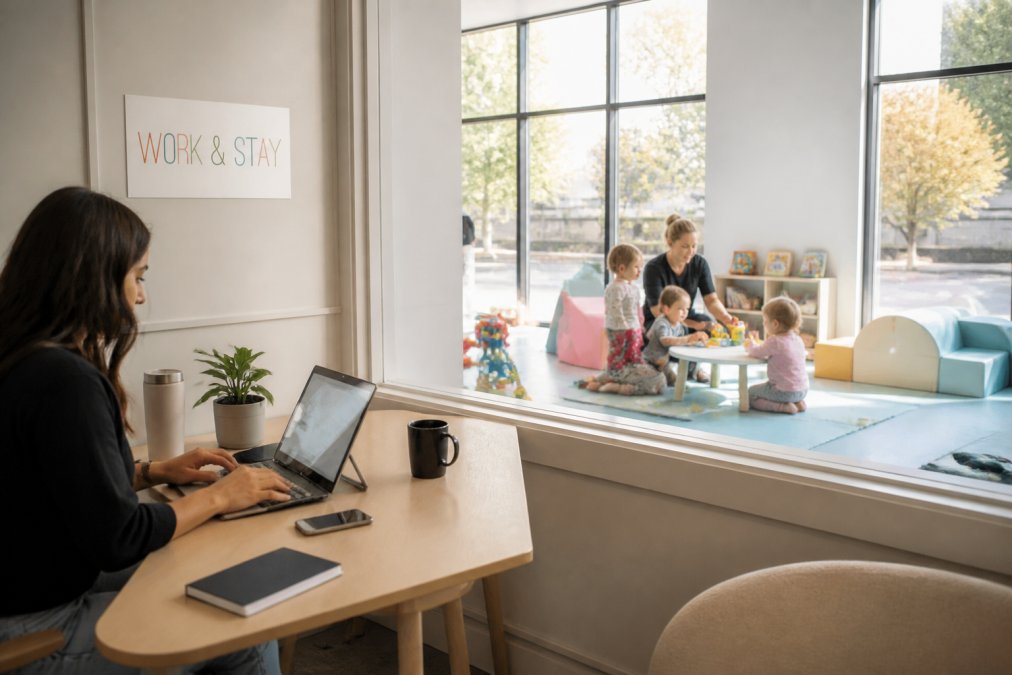
A coworking space with onsite childcare combines workspace and supervision, but not all setups are equal. Here's what to evaluate before committing.
SIGN UP FOR YOUR MEMBERSHIP TODAY →
Physical separation and safety Confirm the childcare area is a separate, secure environment. Children should not wander into the workspace. The space should have:
- Secure entry/exit (prevents unauthorized access)
- Age-appropriate furniture and equipment (no hazards for toddlers)
- Outdoor play area or alternative for movement breaks
- Climate control (important in hot climates)
Staff credentials and ratios Ask about staff-to-child ratios. Infants and toddlers need closer supervision than preschoolers. Verify:
- Background checks for all staff
- CPR and first-aid certification
- Training in child development or early childhood education
Curriculum and activities Beyond supervision, what do children actually do? Look for:
- Guided activities (music, movement, arts, language)
- Free play time
- Outdoor time
- Screen time limits
- Age-appropriate progression
Noise and interruptions This is the unspoken question: Will you hear screaming kids through the walls? Visit during operating hours. Spend 15 minutes in the workspace. Can you take a client call without background noise? If not, the setup won't work for focused work.
Flexibility and billing Confirm the model matches your needs:
- Can you book same-day or do you need advance notice?
- How is billing structured (hourly, daily, membership)?
- What's the cancellation policy?
- Are there minimum commitments?
Health and wellness protocols Ask about illness policies, immunization requirements, and how staff handle health concerns. Understand what happens if your child gets sick during your work session.
Registration, Safety Standards, and What to Expect on Day One
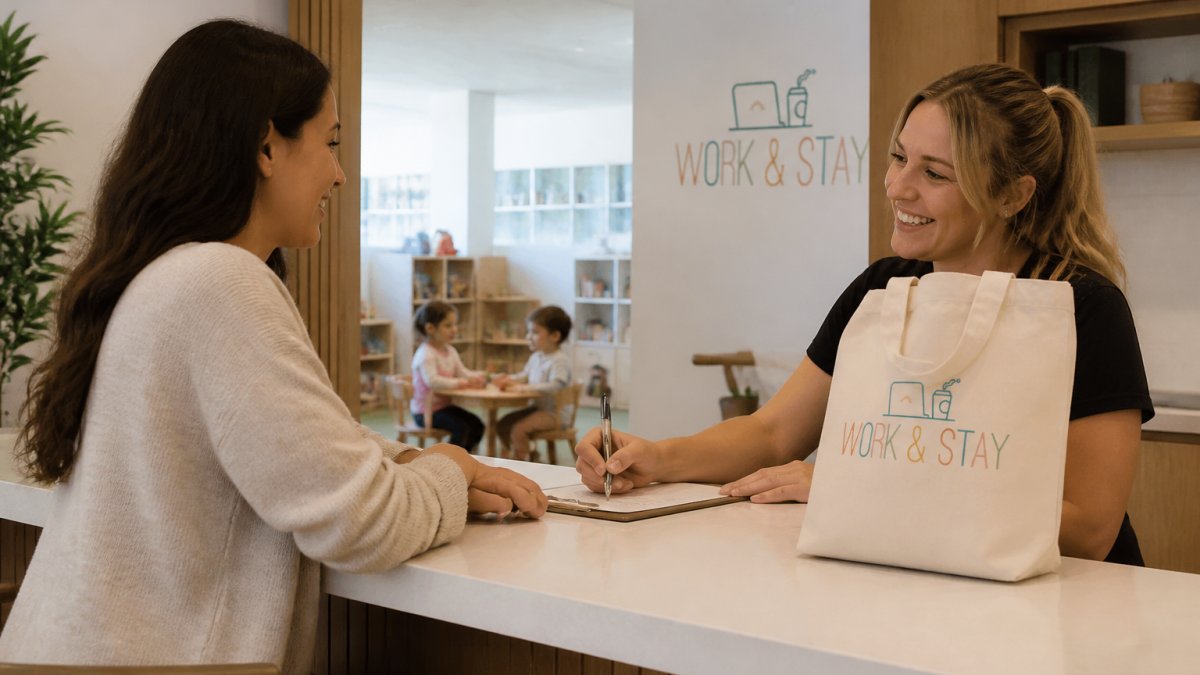
Registration sets the tone. A thorough process protects children and gives parents confidence.
What to bring to registration:
- Photo ID
- Child's birth certificate or proof of age
- Immunization records
- Emergency contact information (at least two people)
- Allergy or health condition documentation
- Insurance information (if applicable)
Information the facility should collect:
- Child's full name, date of birth, and any medical conditions
- Dietary restrictions or food allergies
- Behavioral preferences or comfort items
- Pick-up authorization (who can collect your child)
- Parental consent for photos or activities
Safety standards to verify: Ask whether the facility is licensed by the state. Licensing varies by location, but licensed facilities typically meet minimum standards for:
- Staff background checks
- Staff-to-child ratios
- Health and sanitation
- Emergency procedures (fire, weather, medical)
First-day tips:
- Arrive early to reduce stress
- Bring a comfort item (blanket, toy, photo)
- Keep drop-off brief and matter-of-fact
- Expect tears, this is normal
- Ask staff how your child did (not just "was he okay?")
- Return on time to build trust
Many parents worry about separation anxiety or whether their child will adjust. Staff at quality facilities expect this and have strategies to help. A child who cries at drop-off often plays happily within minutes.
Making Drop-In Daycare Work for Your Lifestyle
Drop-in childcare without a contract only works if it actually fits your life. Here's how to make it sustainable.
Schedule realistically Be honest about how often you need care. If you're using it frequently, calculate whether a membership saves money. If you're using it occasionally, drop-in pricing likely makes sense.
Build a routine Even with flexibility, children thrive on patterns. Visit the same facility at similar times when possible. Familiar staff and spaces reduce anxiety.
Communicate clearly Tell staff about your child's mood, sleep, or eating patterns that day. Share pick-up time changes as early as possible. Ask questions about your child's experience.
Test before committing Use a few drop-in sessions before deciding whether this model works.
Frequently Asked Questions
What is the difference between drop-in daycare and traditional daycare?
Drop-in daycare without a contract offers flexibility traditional daycare cannot match. You pay only for the hours you use, no long-term enrollment, no cancellation fees, and no commitment beyond the time you book. Traditional daycare typically requires a minimum weekly schedule, deposits, and contracts lasting months or years. Drop-in childcare works best for remote workers, parents managing errands, or families with unpredictable schedules. You can book a few hours one week and nothing the next, making it ideal for backup childcare or flexible work arrangements.
How do I verify the safety of a drop-in childcare facility?
Check that staff hold current background clearances and CPR certification. Ask about staff-to-child ratios, typically 1 adult per 3-4 infants or 1 per 5-6 toddlers. Request information on facility licensing and health inspections. Tour the space yourself and observe cleanliness, security procedures (controlled entry/exit), and how staff interact with children. Ask about immunization requirements for enrolled children and incident protocols. Reputable facilities welcome questions and provide documentation of their safety standards, training, and emergency procedures.
Are there flexible workspace options for parents in Scottsdale?
Yes. Coworking spaces with childcare combine a productive workspace for parents with supervised childcare steps away. These facilities offer day passes or memberships with no long-term contract, so you can work during the day while your child is in a nurturing environment with educational curriculum and play-based learning. This setup lets you focus on work calls and emails without interruption while your child develops social skills and engages in age-appropriate activities. It's an alternative to hiring a babysitter or managing childcare logistics separately.
What should I look for in a no-contract childcare provider?
Prioritize drop-in availability and scheduling flexibility, you should be able to book hours when you need them without advance notice. Verify that staff are background-checked and trained in child development. Ask about the curriculum or daily activities, especially for infants and toddlers. Confirm that the facility meets state licensing requirements and maintains current health inspections. Check the registration process: what documents you'll need (immunization records, emergency contacts, medical information). Finally, ask about their supervision protocols, facility security, and how they handle pick-up authorization to ensure only authorized adults collect your child.