 listicle
Benefits of Coworking Spaces for Parents
Table of Contents
- Why Coworking Spaces Matter for Working Parents
- How to Work From Home With Toddlers: The Coworking Alternative
- Flexible Childcare for Remote Workers: Finding Your Balance
- The Productivity Advantage: Why Parents Focus Better Away From Home
- Coworking Space With Childcare: Reducing the Mental Load
- Building Community and Social Connection
- Making the Transition From Home Office to Coworking
- Frequently Asked Questions
Last Updated: September 27, 2026
Why Coworking Spaces Matter for Working Parents
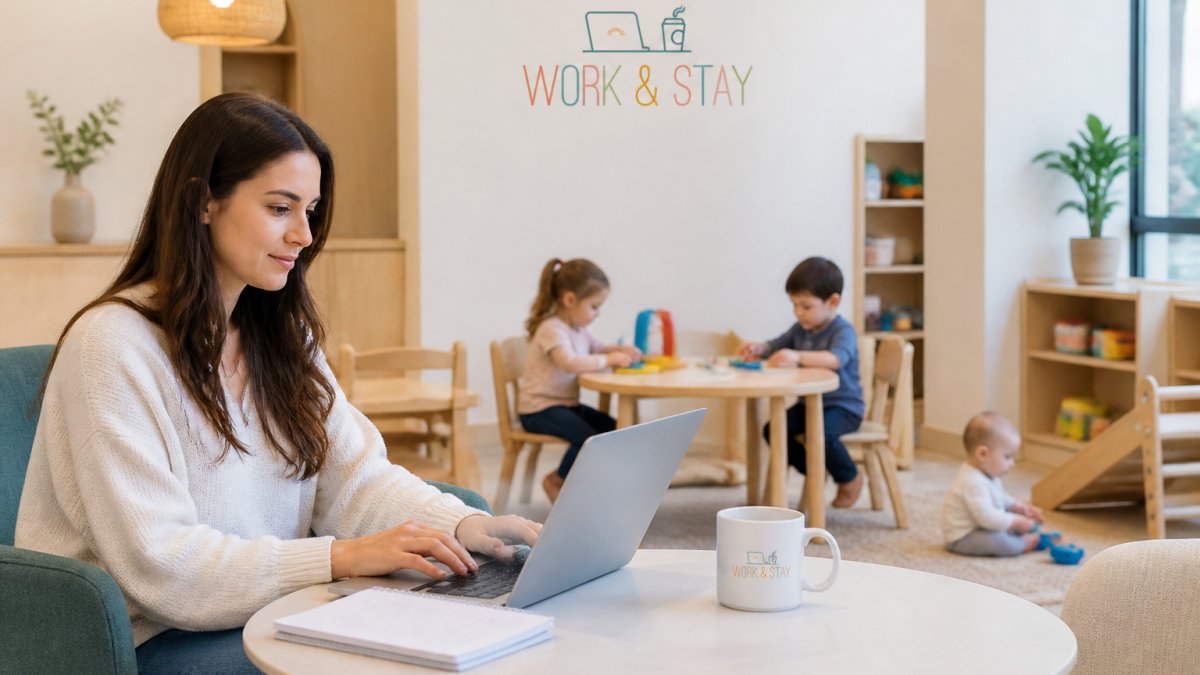
The challenge of balancing remote work with childcare is real. Parents juggle video calls interrupted by crying toddlers, deadlines missed because someone needs a snack, and the constant mental load of splitting focus between two full-time jobs. Coworking spaces for parents solve this by creating a dedicated work environment where children receive supervised care just steps away, not at home, not across town, but within reach. 🎯
This separation matters more than it sounds. When parents work from home with young children present, productivity drops, stress climbs, and the guilt of "not being fully present" in either role lingers. A dedicated workspace changes that equation. The parent gets genuine focus time. The child gets structured activities and social interaction. Both benefit from the psychological shift that comes with physically leaving home to work.
Work & Stay brings this concept to life by combining a professional coworking environment with curriculum-based childcare for ages 0-6 in the same location. The design is intentional: parents work in a quiet, equipped office space while children participate in teacher-led activities and supervised play nearby. No commute between two locations. No worrying about whether childcare is actually happening. Just proximity, peace of mind, and the ability to concentrate.
The benefits ripple outward. Parents report better focus, reduced anxiety about their children's care, and a clearer boundary between work and home life. Children get consistent, age-appropriate programming instead of screen time as a substitute for attention. Families feel less fragmented by the demands pulling them in opposite directions.
How to Work From Home With Toddlers: The Coworking Alternative
Working from home with toddlers is nearly impossible. A toddler doesn't understand conference calls or deadlines. They need attention, snacks, comfort, and entertainment, often all at once. The result: parents either sacrifice work quality or leave their children unsupervised, which creates its own stress. 😰
The traditional solution, hire a babysitter or use daycare across town, works but creates logistical friction. Drop-off and pick-up eat time and energy. If the child gets sick, the parent scrambles. If work runs late, the parent panics. The mental load of managing two separate locations never fully disappears.
Coworking spaces for parents eliminate this friction by bringing childcare to the workspace. Instead of coordinating multiple locations and schedules, the parent walks downstairs (or across the room) and knows exactly where their child is and what they're doing. For toddlers in diapers, changing stations and trained staff handle the basics. For older toddlers, structured activities keep them engaged while the parent works upstairs.
Work & Stay specifically addresses the toddler challenge. Separate areas accommodate children as young as 18 months, with staff trained in diaper changes, feeding, and age-appropriate care. The parent can step away during breaks to check in or handle a fussy moment without the guilt of leaving a child in an unfamiliar place. This proximity reduces anxiety and allows genuine focus during work hours.
The flexibility matters too. Day passes mean parents can try it out before committing to a membership. No long-term contract locks families in. If a parent only needs childcare three days a week, they pay for three days. This matches the unpredictable reality of parenting far better than traditional full-time daycare arrangements.
Flexible Childcare for Remote Workers: Finding Your Balance
Remote workers often assume they can manage childcare and work simultaneously. The reality is harsh: they can't. A parent answering emails while a toddler demands attention is doing neither task well. Both suffer. The solution isn't trying harder, it's changing the setup. 💡
Flexible childcare for remote workers means care that adapts to the parent's actual schedule, not the other way around. Some weeks require full-time care. Other weeks need just a few hours. Seasonal demands shift. Backup situations arise when regular arrangements fall through. Rigid, contract-based childcare doesn't flex. Flexible options do.
This is where Work & Stay's membership and day-pass model creates real value. A parent might use five days per week during a busy project, then drop to two days when deadlines ease. No penalty. No unused contract days wasted. The parent pays for what they use and adjusts as needs change.
Flexible childcare also means care that works around the parent's actual work patterns. If the parent needs to take a call at 2 p.m., they don't have to pull the child from an activity. The child stays engaged in their own thing. If the parent finishes early, they can pick up the child and head home without paying for unused hours. This kind of flexibility reduces both cost and stress.
The mental benefit is equally important. When childcare is flexible and close by, the parent's anxiety about their child's wellbeing drops. They're not wondering if the child is happy at a distant facility. They're not stressed about pick-up times or emergency protocols. They can focus on work knowing their child is safe, supervised, and engaged in age-appropriate activities just steps away.
SIGN UP FOR YOUR MEMBERSHIP TODAY →
The Productivity Advantage: Why Parents Focus Better Away From Home
Working from home sounds ideal until a parent actually tries it with young children in the house. The home is full of distractions: toys, snacks, laundry, the couch. The child is a constant presence, even if someone else is technically watching them. The parent's brain never fully switches to work mode because part of it is always monitoring the child situation. 📊
The productivity data is clear: parents who work in a dedicated space separate from home and childcare focus better and produce more. The physical separation creates a psychological shift. When the parent arrives at a coworking space, they're "at work." When they leave, they're "at home." The boundary is real, not imagined. This clarity reduces context-switching, the biggest productivity killer for remote workers.
Coworking spaces for parents amplify this effect by removing the guilt. A parent working from home might feel bad for ignoring their child. A parent working in a dedicated space with their child in supervised care nearby feels differently: they're both doing their thing, and that's healthy. The parent can focus without the nagging sense that they should be more present. The child benefits from structured activities and peer interaction. Everyone wins.
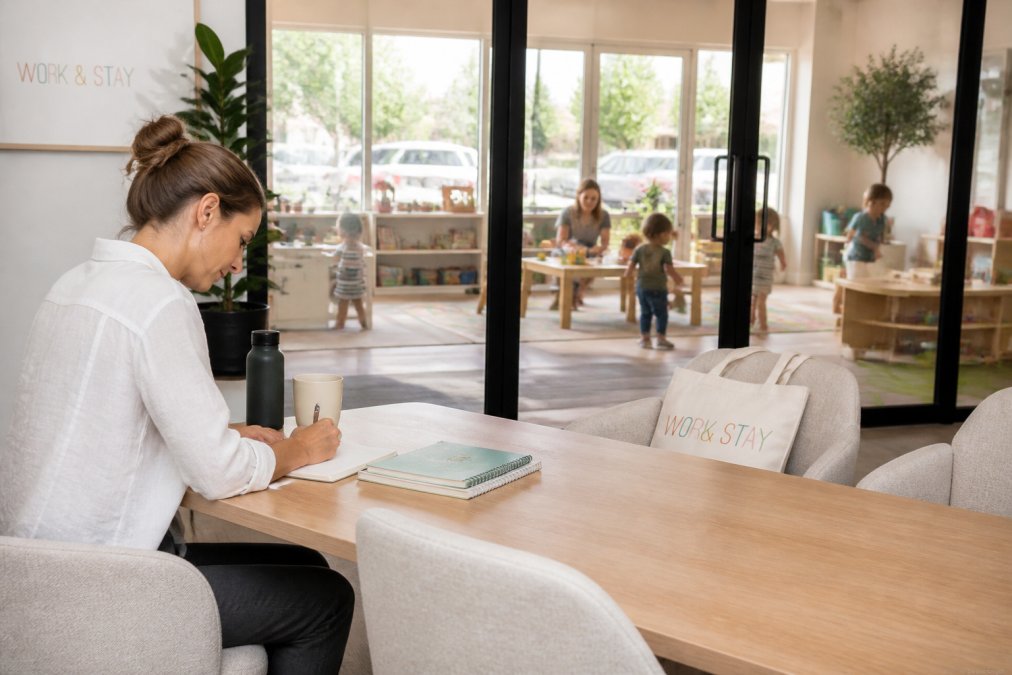
Work & Stay's design supports deep focus. The coworking environment includes quiet zones for concentration, meeting rooms for calls, and high-speed internet. The childcare happens in a separate area with trained staff and curriculum-based programming. The parent isn't distracted by noise or activity. They can take a call without background chaos. They can write code, analyze data, or draft reports without interruption.
This setup also creates natural boundaries. The parent's work hours are work hours. When they pick up their child, work stops. This boundary is harder to maintain when home is the office and the child is upstairs. At a dedicated coworking space, the boundary is built into the environment. The result: parents report less burnout, better focus, and clearer separation between work and family time.
Coworking Space With Childcare: Reducing the Mental Load
The mental load of parenting is invisible but exhausting. It's not just the time spent with the child, it's the constant mental tracking. Where is the child? What are they doing? Are they safe? Are they happy? Are they learning? When is the next meal? When is the next nap? The list never stops. 🧠
Add remote work to this mental load, and the parent is managing two full-time jobs simultaneously. The result is decision fatigue, anxiety, and a sense of never being fully present anywhere. This isn't a productivity problem, it's a wellbeing problem.
Coworking spaces for parents reduce the mental load by removing the need to manage childcare logistics. Instead of coordinating drop-off times, backup plans, and communication with a distant childcare provider, the parent walks downstairs and sees their child in a safe, structured environment. The staff handles the logistics: meals, activities, safety, development.
Building Community and Social Connection
Remote work is isolating. Parents working from home are often alone all day, with only their child for company. The lack of adult interaction, casual conversation, and professional community takes a toll. The child, meanwhile, misses peer interaction and the social development that comes from playing with other children. 👥
Making the Transition From Home Office to Coworking
The shift from working at home to working in a coworking space feels like a big change. A parent might worry about whether their child will adjust, whether the transition is worth the effort, or whether it's too much structure. These concerns are normal. The transition is usually smoother than expected. 🔄
Frequently Asked Questions
What is a coworking space with childcare?
A coworking space with childcare combines a professional work environment with supervised, on-site care for young children. Unlike traditional coworking, these spaces integrate childcare directly into the facility so parents can work productively while their children remain nearby in a separate, curriculum-based learning environment. Work & Stay exemplifies this model, offering flexible memberships and day passes with no long-term contracts, allowing parents to access professional workspace and supervised childcare for ages 0-6 simultaneously.
How can parents balance remote work and childcare in a coworking space?
Coworking spaces designed for parents solve the balance challenge by eliminating the need to manage both responsibilities simultaneously at home. Parents can focus on work in a dedicated, quiet workspace while children receive structured, supervised care just steps away. This separation creates clear work-life boundaries, reduces distractions, and allows parents to be productive without guilt. The proximity means you can check in quickly if needed, and the flexible membership or day-pass model lets you adjust usage based on your schedule.
Is coworking with childcare a good alternative to traditional daycare?
Coworking with childcare serves a different purpose than full-time daycare. It's ideal for remote workers, freelancers, and flexible-schedule parents who need occasional, reliable care paired with a productive work environment. If you need full-time, year-round childcare for a 9-to-5 job, traditional daycare may be more suitable. However, if you work from home, have unpredictable hours, or want to combine professional focus time with proximity to your child, coworking with integrated childcare offers flexibility and peace of mind that traditional daycare cannot match.
What should I look for in a coworking space for parents?
Prioritize spaces that offer separate, safe childcare environments with qualified supervision and curriculum-based programming rather than just supervised play. Look for flexible membership or day-pass options with no long-term contracts, so you can adjust usage as your needs change. Check that the facility accommodates your child's age and developmental stage, includes amenities for infants and toddlers (changing stations, age-appropriate activities), and maintains sound insulation so work areas remain quiet. Finally, verify that the space offers both open lounge areas and private workspaces, giving you options based on your focus needs each day.